Turkish cuisine is often presented as a finished inheritance, as though it arrived at the table complete. The more accurate story is movement: pastoral communities finding durability in dairy and meat; Seljuk routes enlarging the pantry; Ottoman kitchens turning supply, labour and ceremony into an institution; ports and migrations undoing every neat boundary.
Before the recipe, preservation
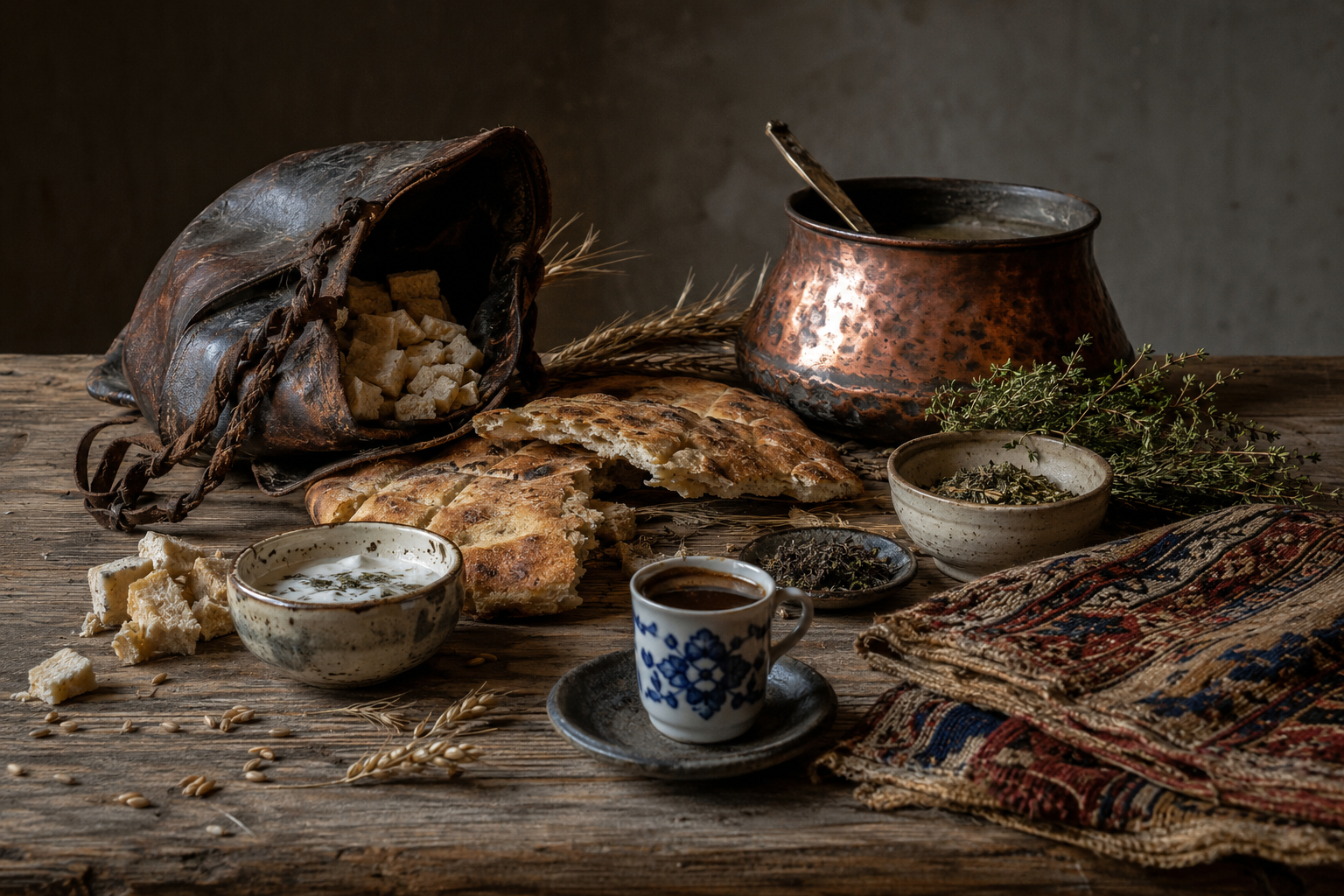
Kurut, yogurt, dried meat, grain and flatbread were not quaint traditions. They were technologies for distance. The flavour we now call heritage was often the taste of food made portable, stable and shareable.
The caravan does not respect borders
Spice, rice, sugar, fruit, technique and language travelled together. Anatolia’s strength was never isolation; it was its ability to receive an ingredient, argue with it, and make the result feel local.
The palace as a system
Ottoman court kitchens mattered not simply because they were luxurious, but because they specialised labour and recorded scale. Separate teams, storerooms and ceremonial demands refined techniques that later moved between palace, market, lodge and home.
New crops, old confidence
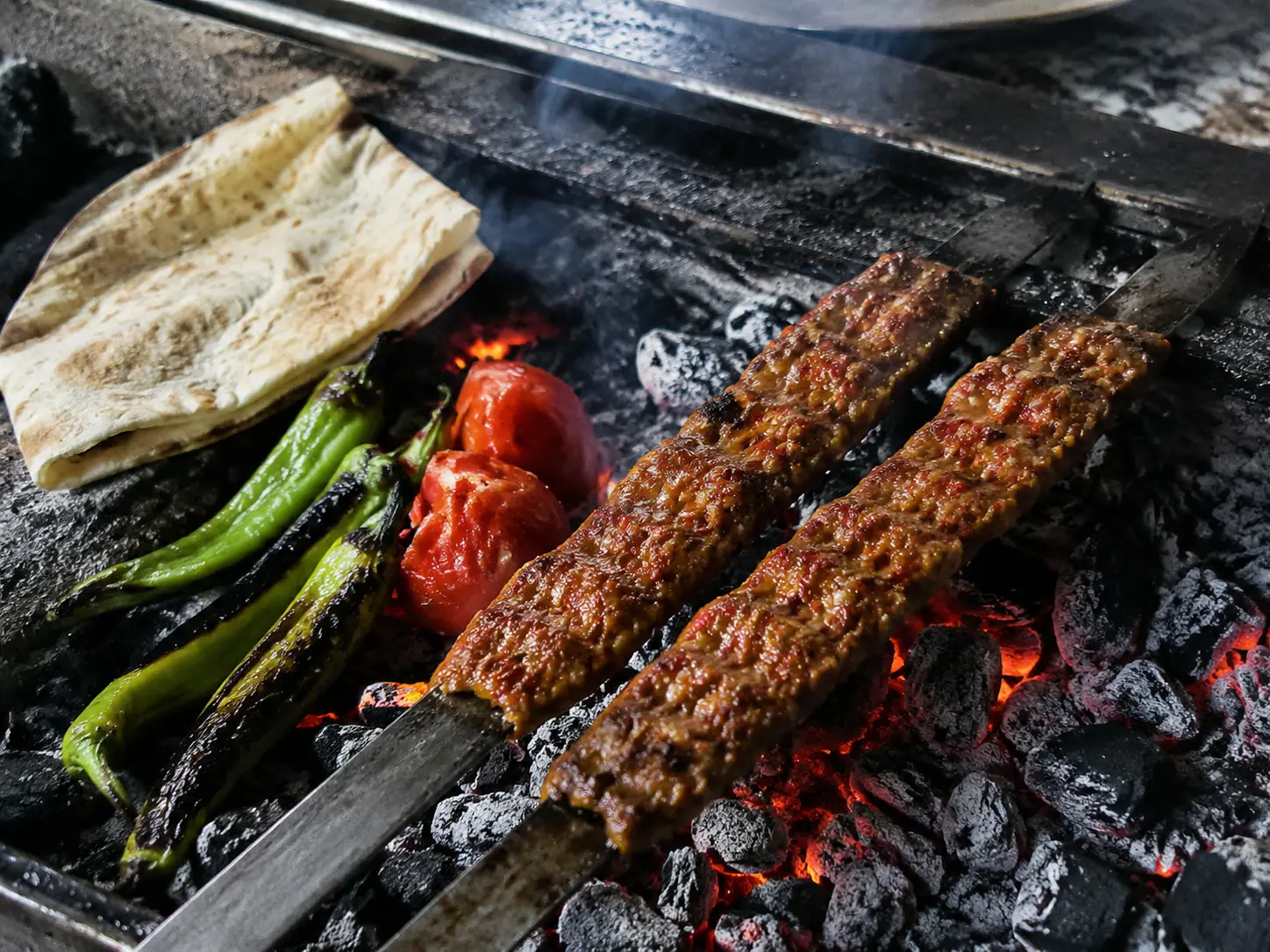
Tomato and pepper arrived after the Americas entered the Eurasian pantry. Today both seem inseparable from Turkish cooking. That apparent contradiction is the point: authenticity is sometimes an ingredient loved long enough to become memory.
The communal bowl
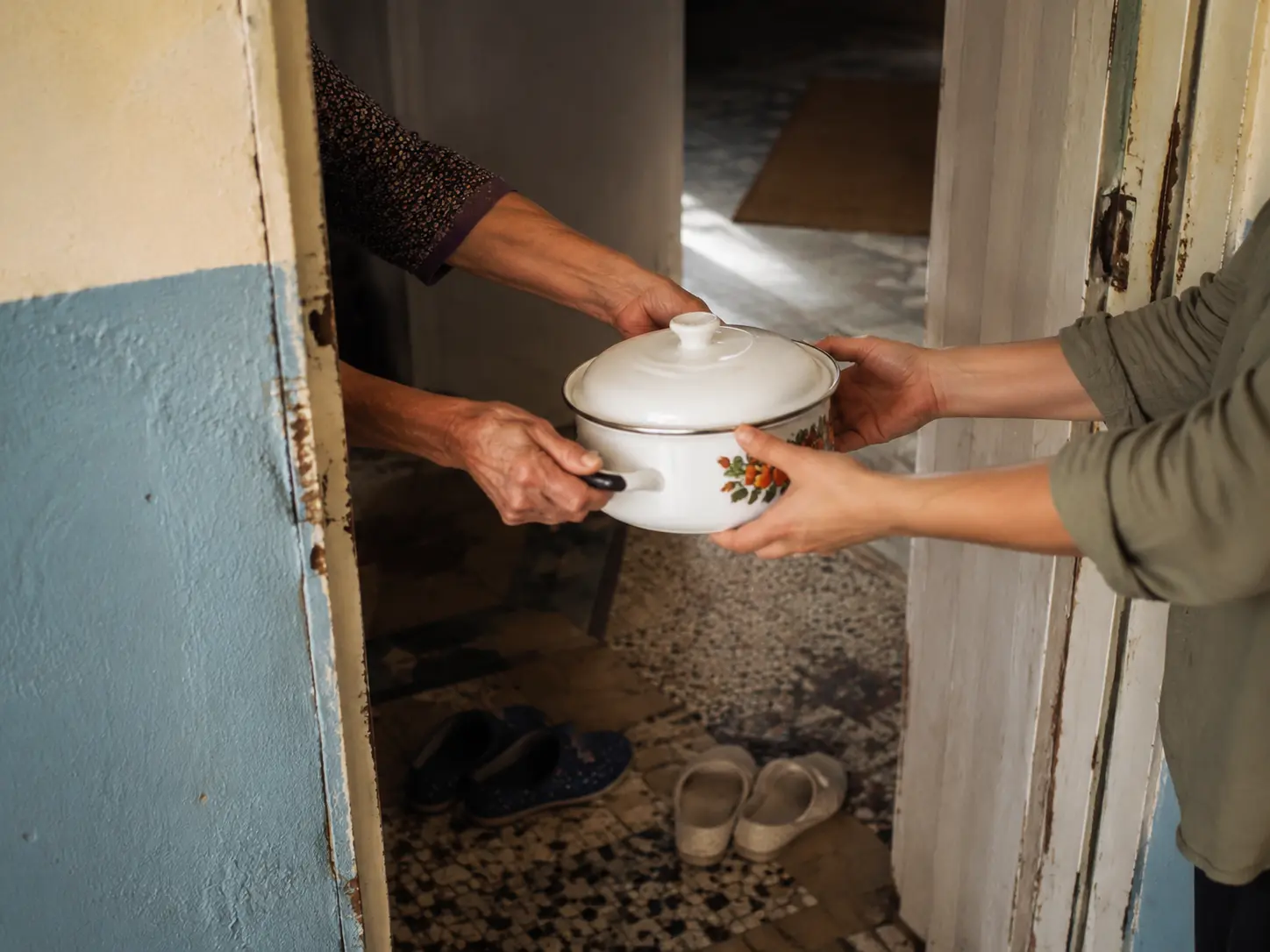
Aşure, toy feasts, wedding food, funeral helva and the everyday pot turn eating into social structure. Food does not merely express belonging; it distributes obligation — who cooks, who is served first, what is sent to the neighbour, what must never return empty.
Cuisine survives not by staying unchanged, but by making change legible at the table.