Regional cuisine begins with rain, altitude, soil and what can survive the journey to market. It becomes culture when people decide what to preserve, what to celebrate and what to cook for a stranger.
Mediterranean
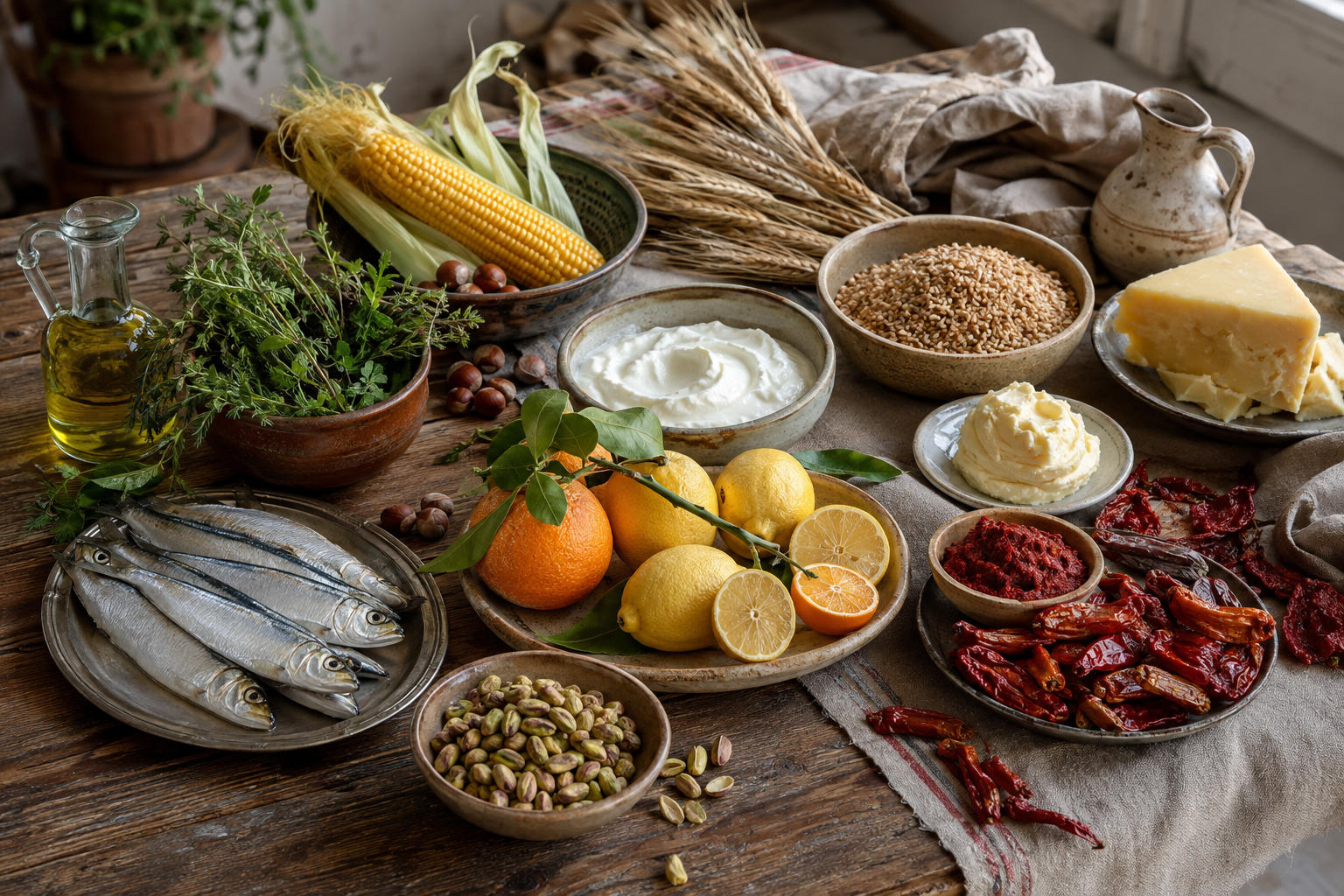
Citrus, wild greens, sesame, goat’s milk and the clean heat of pepper make this coast feel bright even when the cooking is slow. The useful verb here is to sharpen: lemon over fish, sumac through onion, pomegranate molasses against meat.
Aegean
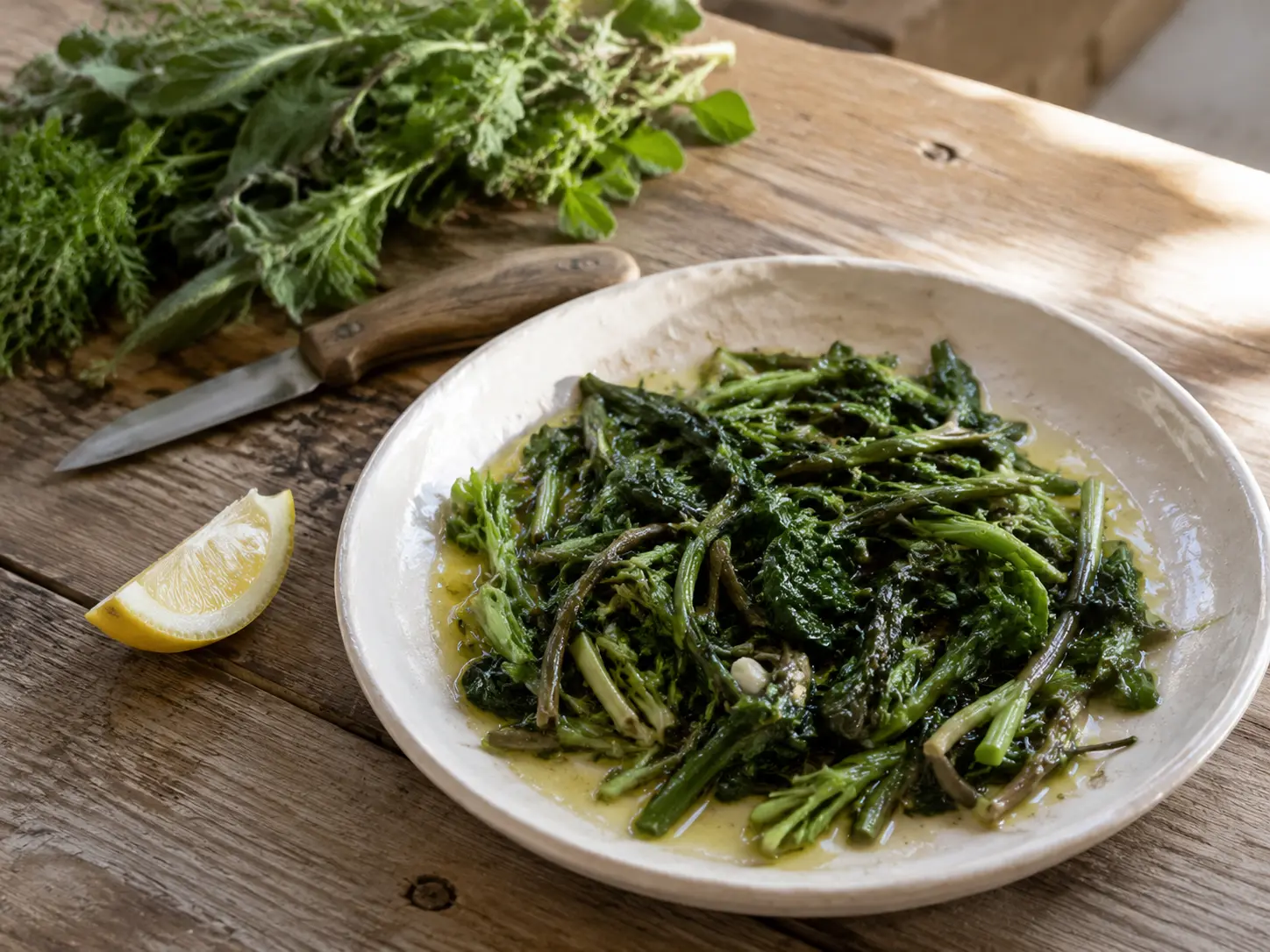
Olive oil is not a finish but a cooking environment. Artichoke, beans, courgette flowers and bitter greens arrive at the table cool, patient and tasting unmistakably of the field.
Marmara
A meeting place rather than a single pantry: Bosphorus fish, Thracian dairy, Balkan pastry, palace technique and the working lunch of İstanbul all overlap without becoming one cuisine.
Black Sea
Rain writes the menu. Corn, collards, beans, anchovy, tea and hazelnut answer a steep, wet landscape where preservation and speed matter as much as abundance.
Central Anatolia
Wheat, yogurt, pulses and meat become architectural: mantı pinched to the size of a thumbnail, yufka dried for winter, bulgur made to carry broth, and ovens that organise a town’s appetite.
Eastern Anatolia
Altitude brings cultured dairy, clarified butter, grains, herbs and long winters. The food is sustaining but never mute: kurut adds acidity, mountain greens bitterness, and smoke a record of the season.
Southeastern Anatolia
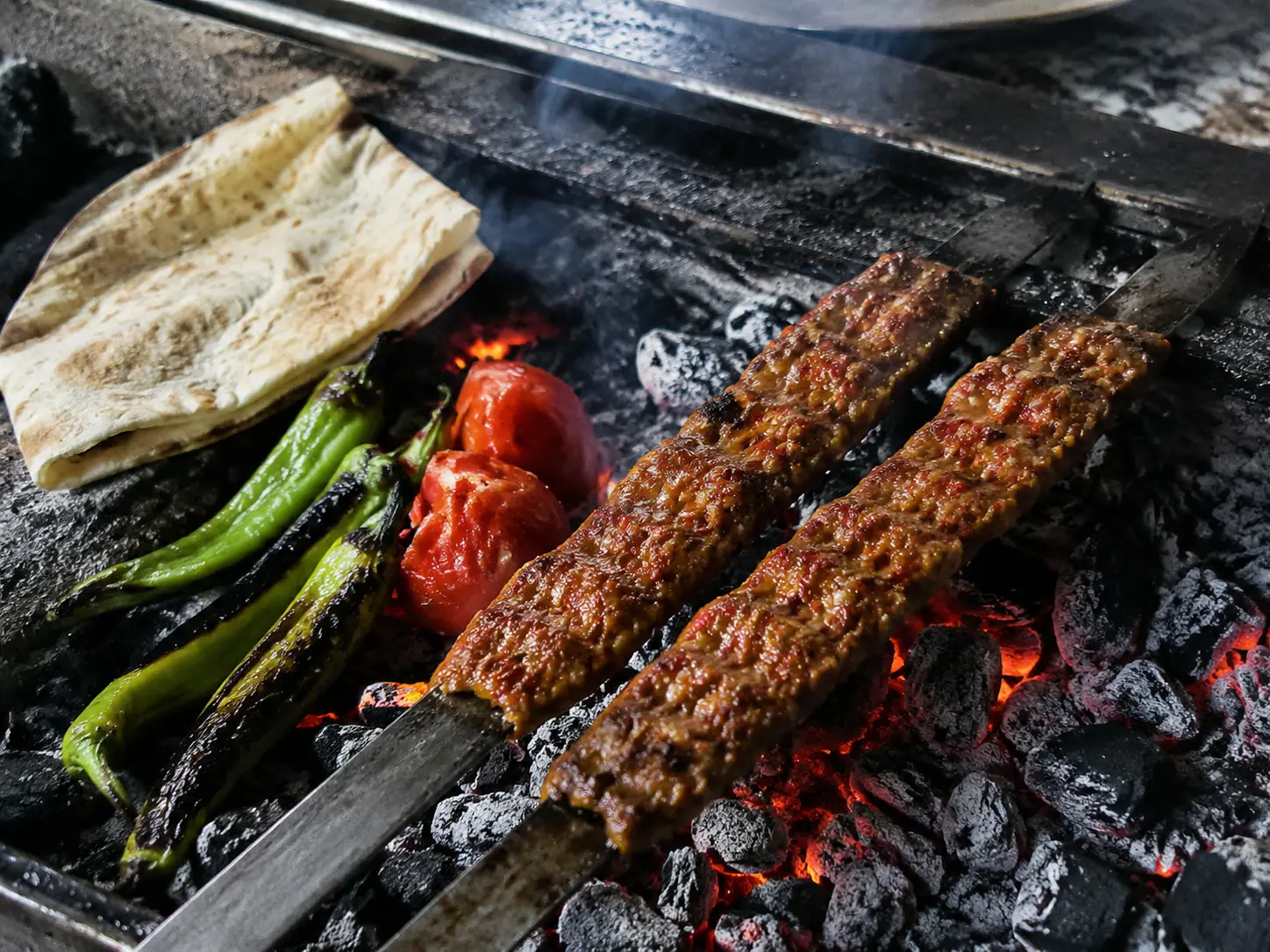
Pepper, isot, pistachio, bulgur and lamb are handled with astonishing precision. Sweetness, smoke, sourness and heat sit in the same sentence; hospitality supplies the punctuation.
The borders leak — fortunately
No family cooks a statistical region. Circassian, Kurdish, Armenian, Greek, Arab, Jewish, Balkan, Levantine and countless local histories cross the clean lines on a school map. Read geography as pressure, not destiny.