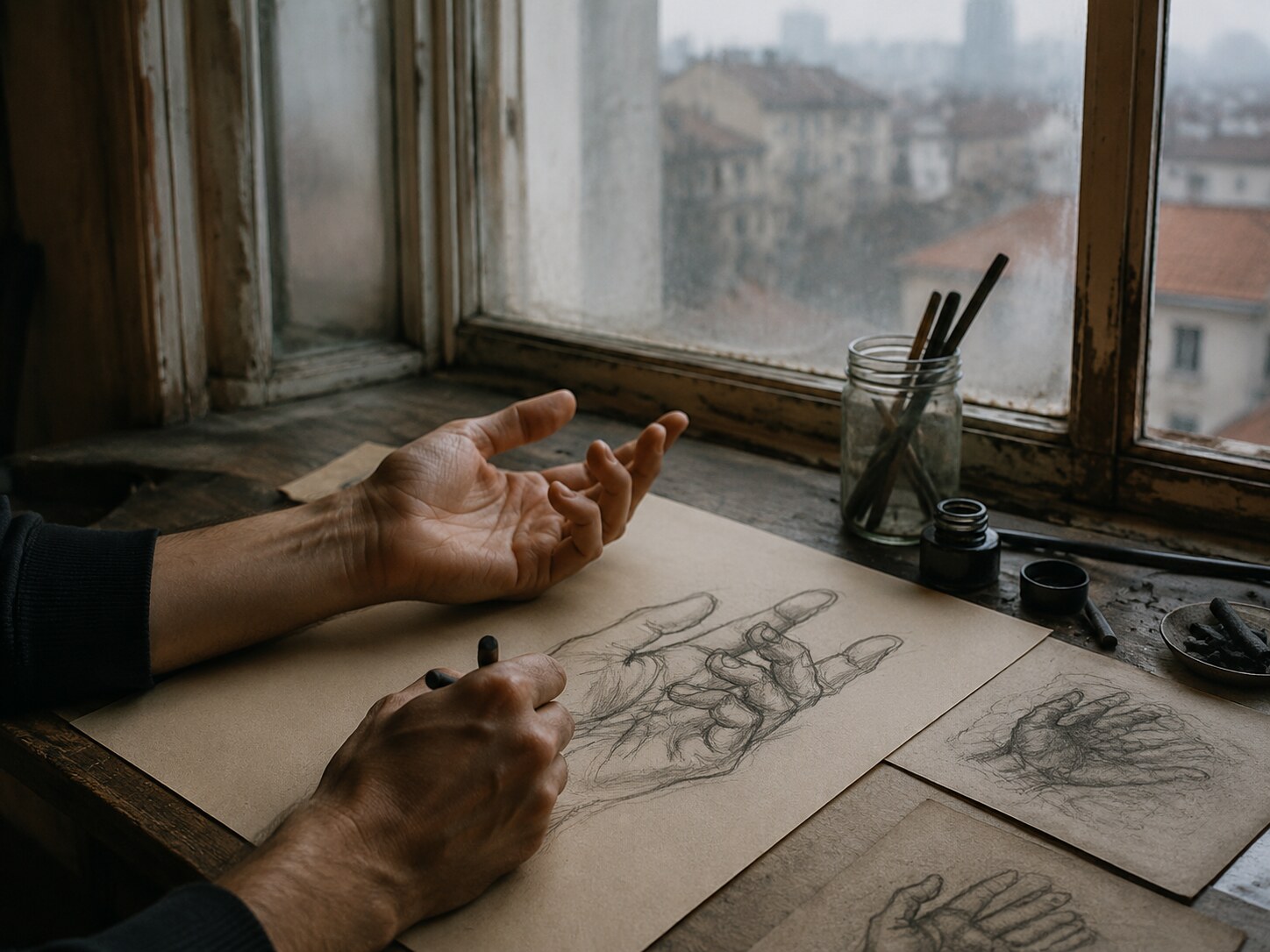
Abidin Dino moved restlessly between drawing, painting, film, writing, theatre and political life. The hand became one of his most persistent forms because it could carry all those disciplines without choosing between them.
A portrait without a face
Hands reveal work and age, but also hesitation. Folded, clenched, touching or drawing, they make interior life visible without the explanatory authority of facial expression.
Line as speed of thought
Dino’s drawing matters because line remains provisional. It can change direction, accumulate, interrupt itself and stay open. That economy is not simplicity; it is attention stripped of ceremony.
Happiness, drawn indirectly
The famous cultural memory around Dino and Nazım Hikmet’s question about drawing happiness survives because it understands an artist’s problem: happiness is not an icon. It is a relation—between bodies, work, time and the freedom to imagine otherwise.