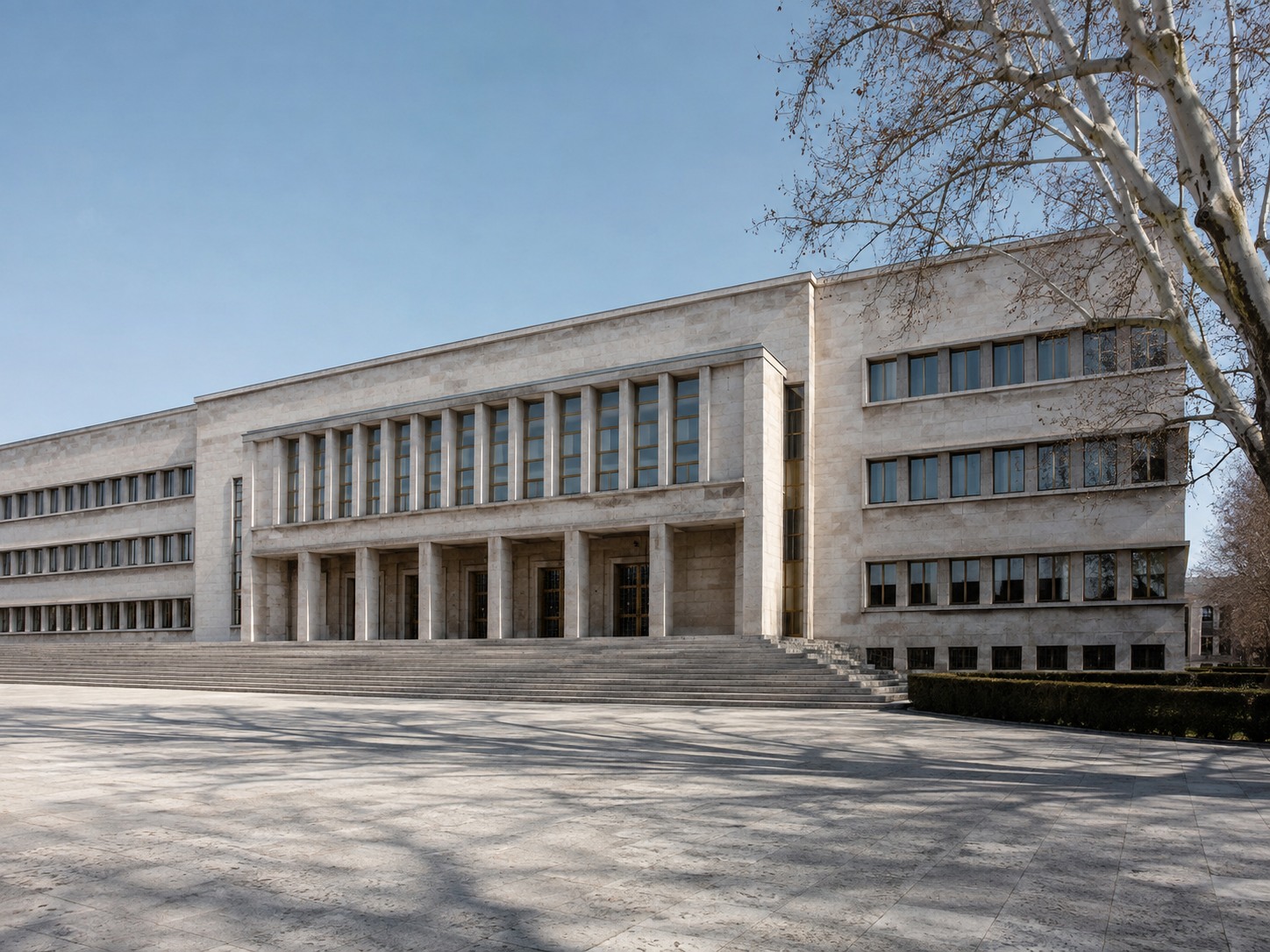
Ankara’s early republican architecture was asked to do more than house ministries, schools and stations. It had to make a new public future visible—through proportion, circulation, material economy and the confidence of institutions built to last.
Modernism as civic instruction
Clean façades were only the outward sign. Plans taught new relationships between citizen and state, teacher and student, street and park. The city itself functioned as a classroom in secular public life.
Demolition is not the only loss
Insulation panels, new glazing, oversized signs and careless interior renovation can erase a building while leaving it technically standing. Conservation must include detail, furniture, landscape and use—not only the photogenic elevation.
Keep the argument visible
These buildings are valuable not because the republic was uncomplicated, but because architecture made its ambitions concrete. Losing them removes the evidence needed to debate what that project promised and whom it excluded.