Architecture in Türkiye has never moved along a neat line from “traditional” to “modern”. It has advanced through returns, arguments, state commissions, family houses, public interiors and buildings that learned to negotiate a difficult site rather than conquer it. These eight names form one route through that history—not a sealed canon.
The most revealing building is rarely the one that looks most new. It is the one that changes what its moment believes architecture is allowed to do.
1. Mimar Sinan — Geometry that makes weight disappear
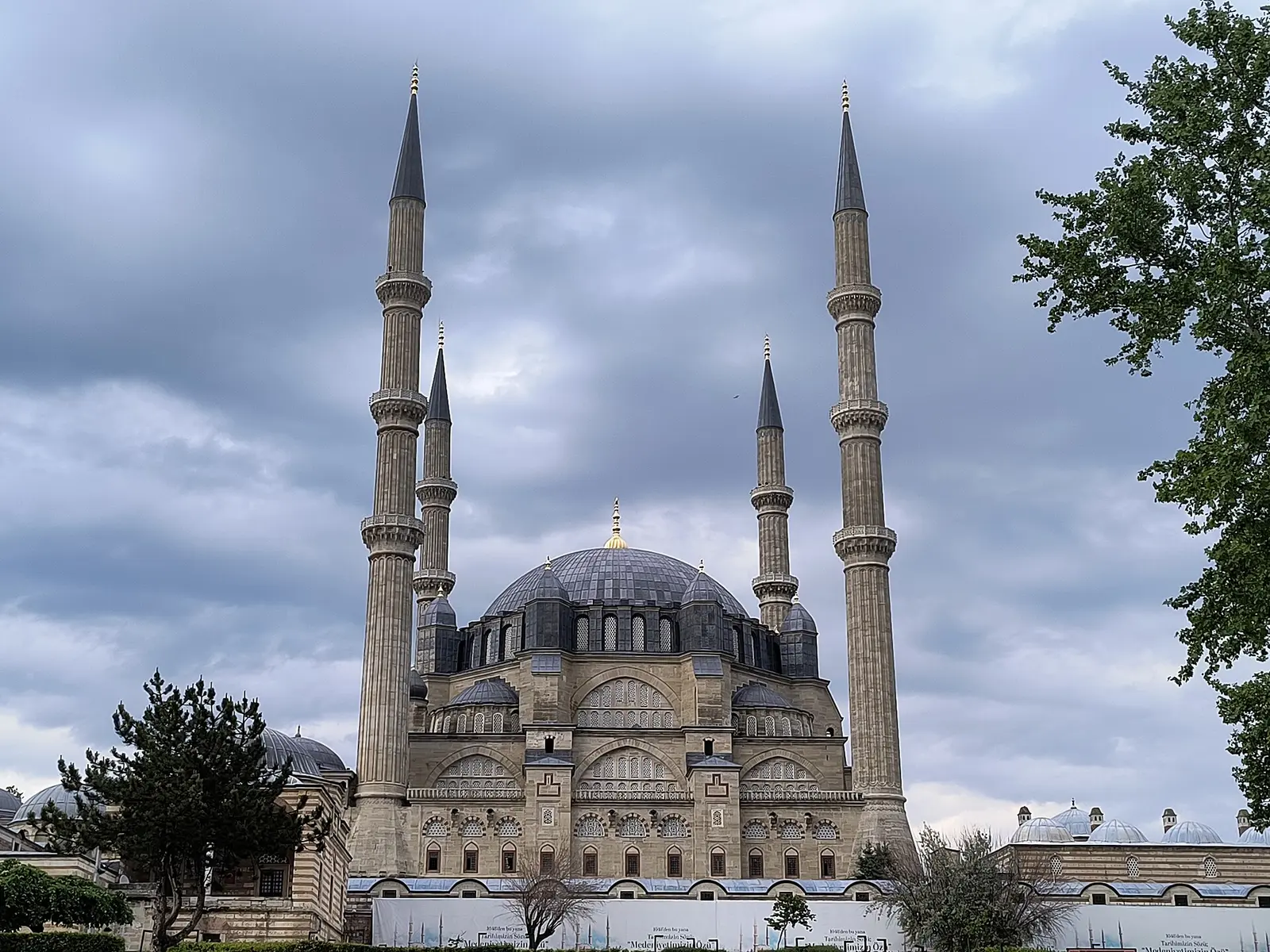
Sinan’s mosques are often remembered first as silhouettes. Their deeper intelligence is sectional: domes, half-domes, piers, galleries, windows and circulation organised until an immense masonry structure begins to feel almost unburdened. Selimiye in Edirne is the clearest late statement. A great dome rests on an octagonal support system while light dissolves the boundary between structure and atmosphere.
Calling this work “timeless” risks hiding the labour and experimentation that made it possible. Sinan did not repeat an inherited formula. Across Şehzade, Süleymaniye and Selimiye, he kept revising how a centralised prayer space could gather a crowd, address a city and remain structurally legible.
2. Vedat Tek — A national style before the nation-state
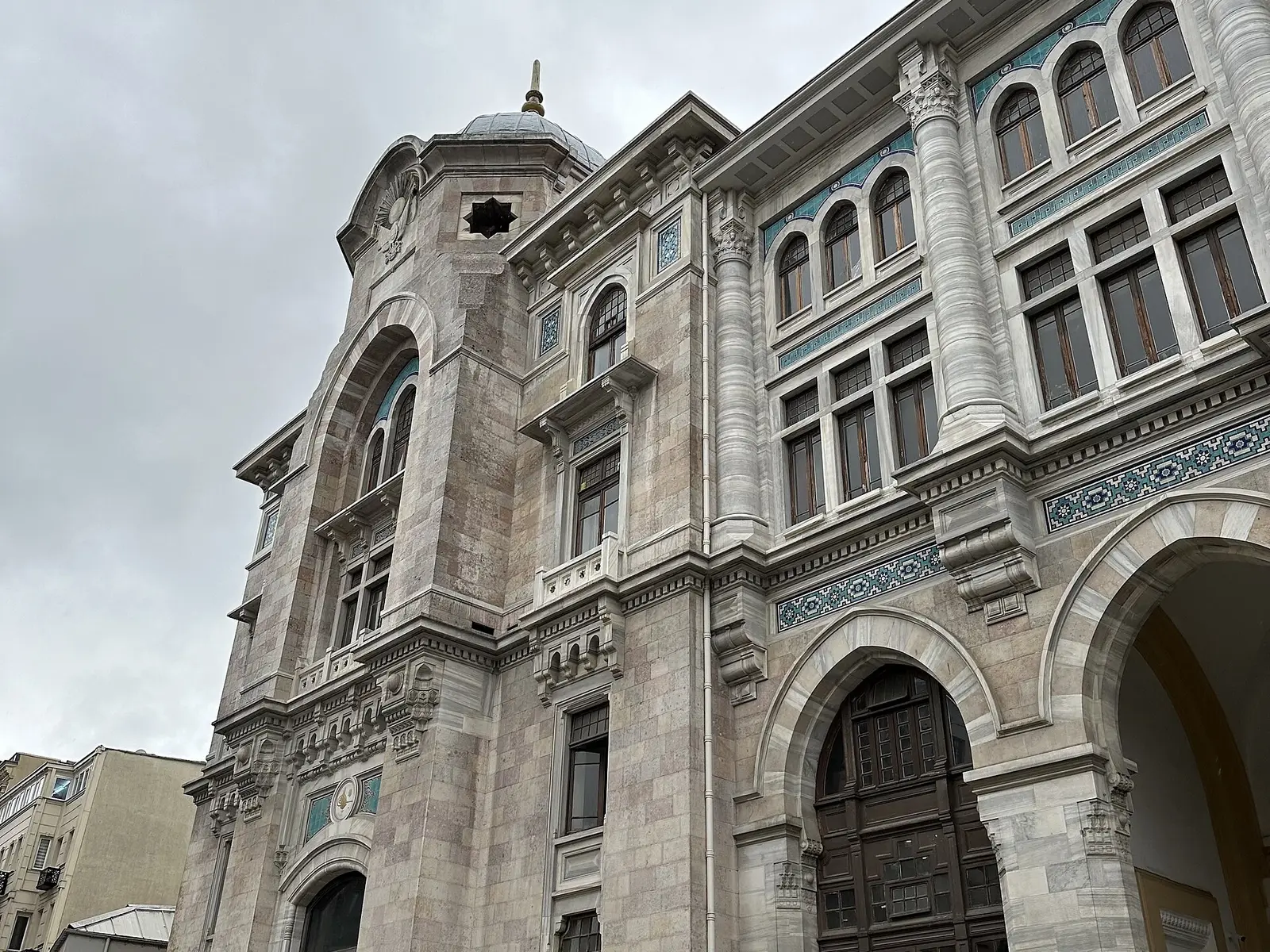
At Istanbul’s Grand Post Office, Vedat Tek turned a modern communications building into a debate about identity. Pointed arches, tile panels, carved stone and a highly composed façade do not disguise the programme; they give a new institution a public face assembled from selected Ottoman forms.
This was neither archaeological reconstruction nor simple nostalgia. It was an attempt to make contemporary bureaucracy look locally authored at the end of the empire. The tension remains visible: a rational urban block carrying an ornamental language asked to represent belonging.
3. Mimar Kemaleddin — Modern institutions wearing historic memory
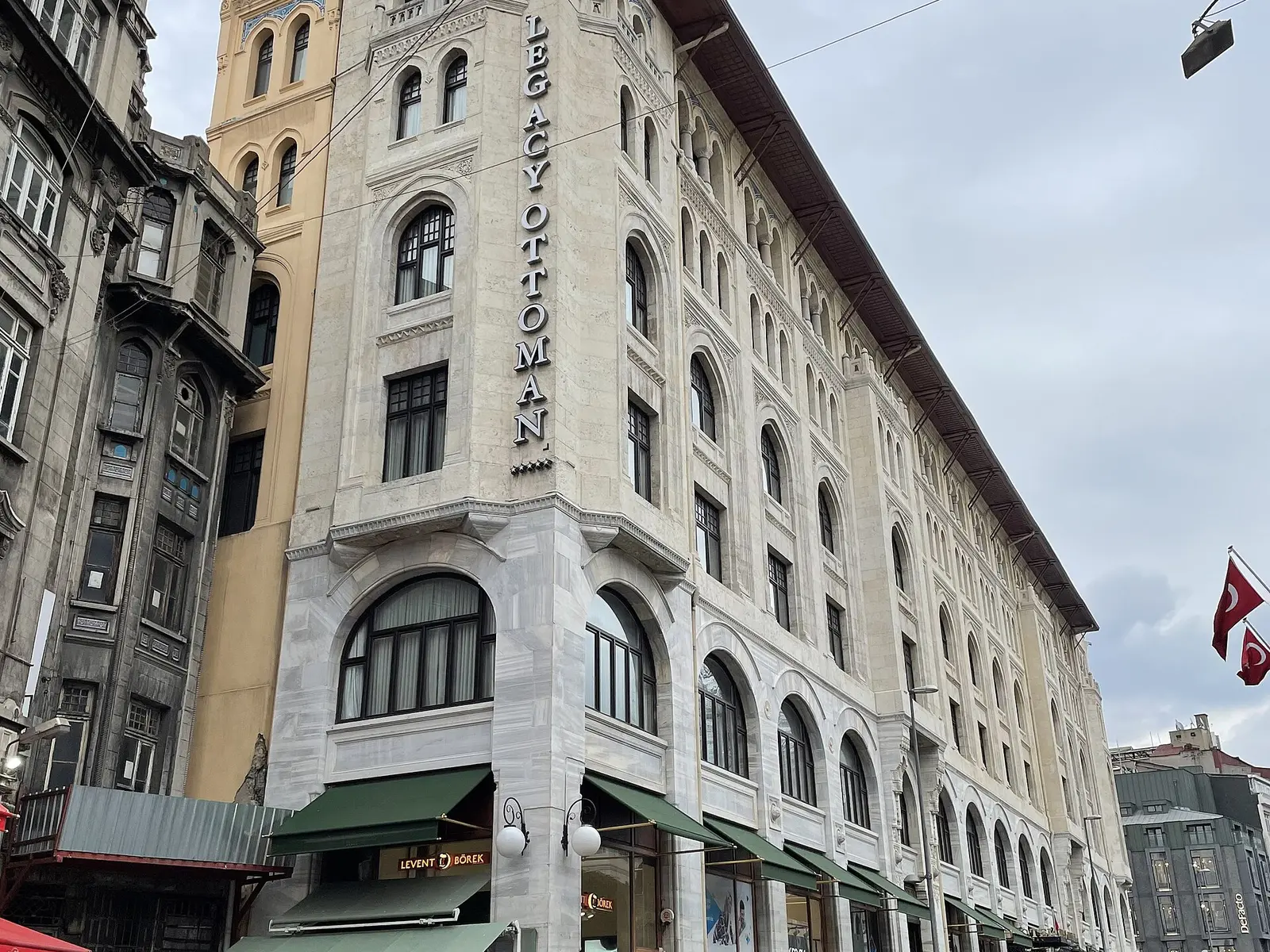
Kemaleddin Bey shared the First National Architecture movement’s search for continuity, but his best buildings are more than decorated statements. The Fourth Vakıf Han in Istanbul uses a disciplined commercial frame, then calibrates proportion, arches, stonework and corner emphasis to make the block participate in the older city without pretending to be old.
His schools, apartment buildings, stations and foundation offices reveal the real scale of architectural modernisation: not one monument, but an expanding network of institutions. Style mattered because public life was being rebuilt through types of buildings that had to become familiar quickly.
4. Sedad Hakkı Eldem — Context before “context” became a slogan
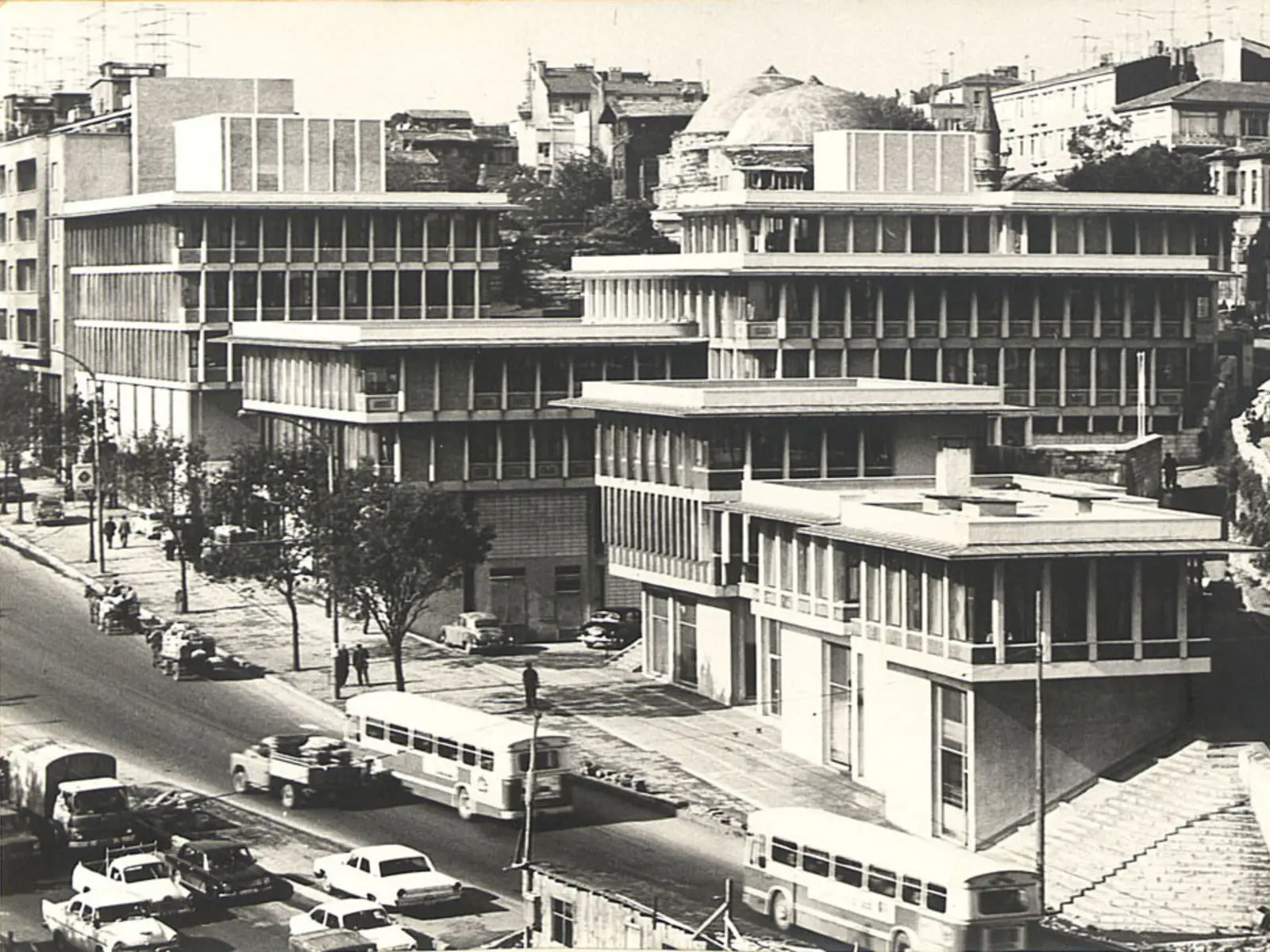
Eldem’s lifelong study of the Turkish house was not a request to copy bay windows indefinitely. It was a search for durable relations: room and threshold, shade and view, timber scale and urban topography. The Zeyrek Social Security Complex translates that research into reinforced concrete without costume.
Its stepped masses accept the slope, break an institution into a neighbourhood scale and frame the surrounding city instead of erasing it. The project’s importance lies precisely in that difficult middle ground: recognisably modern, unmistakably situated, and unwilling to reduce context to surface pattern.
5. Turgut Cansever — Ethics as a design material
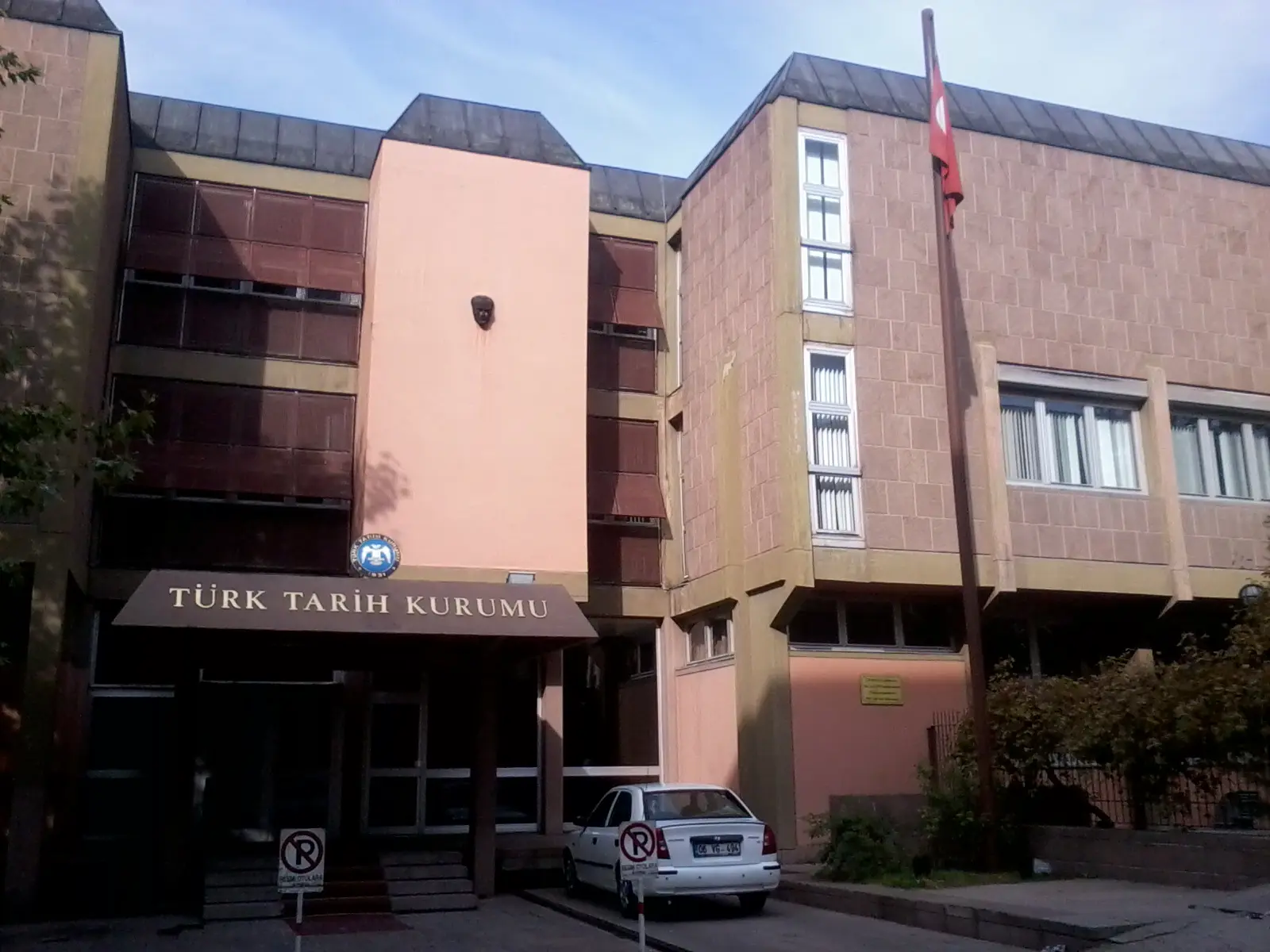
Cansever treated architecture as a moral and civic practice long before “place-making” became professional shorthand. At the Turkish Historical Society in Ankara, designed with Ertur Yener, a compact exterior protects a luminous internal court. Movement, books, work rooms and gathering spaces orbit a centre whose calm recalls the social logic of a madrasa without reproducing one.
The same ethic extends from the restored Ertegün House to Demir Holiday Village: build in increments, work with the ground, allow inhabitants to complete the life of a place. Cansever’s architecture is demanding because its beauty cannot be separated from restraint.
6. Emre Arolat — Subtraction instead of icon
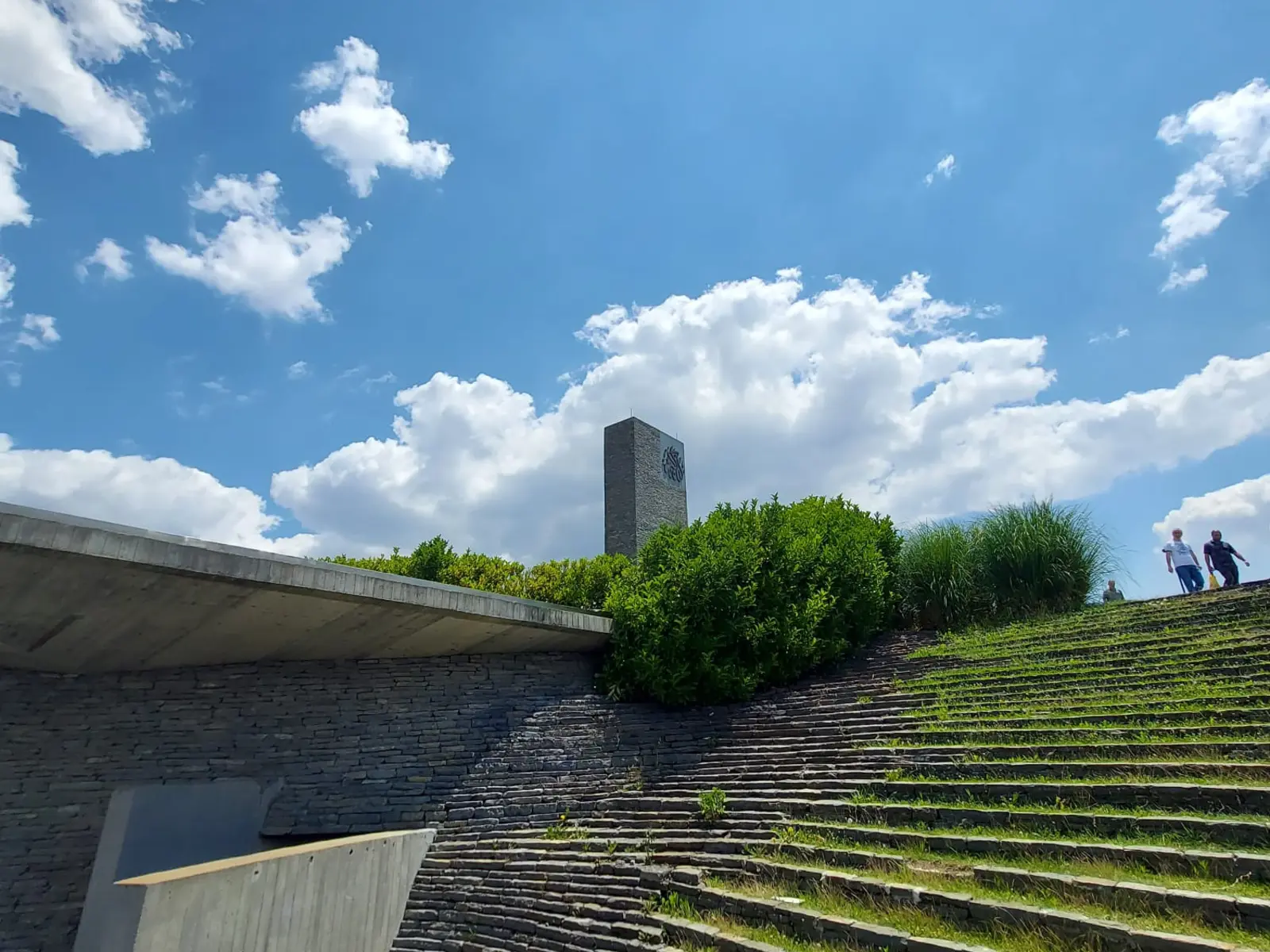
Sancaklar Mosque begins by refusing the familiar mosque image. The building lowers itself into the terrain; walls, steps and a single stone prism are what remain visible from the approach. Inside, daylight at the qibla wall becomes the primary ornament, making time perceptible without adding an object.
The project’s strength is not that it is minimal. It is that subtraction has an argument: religious space need not depend on the literal repetition of historical form. The landscape does not decorate the mosque; descent, earth and horizon organise the act of entering it.
7. Han Tümertekin — Small scale, exact consequence
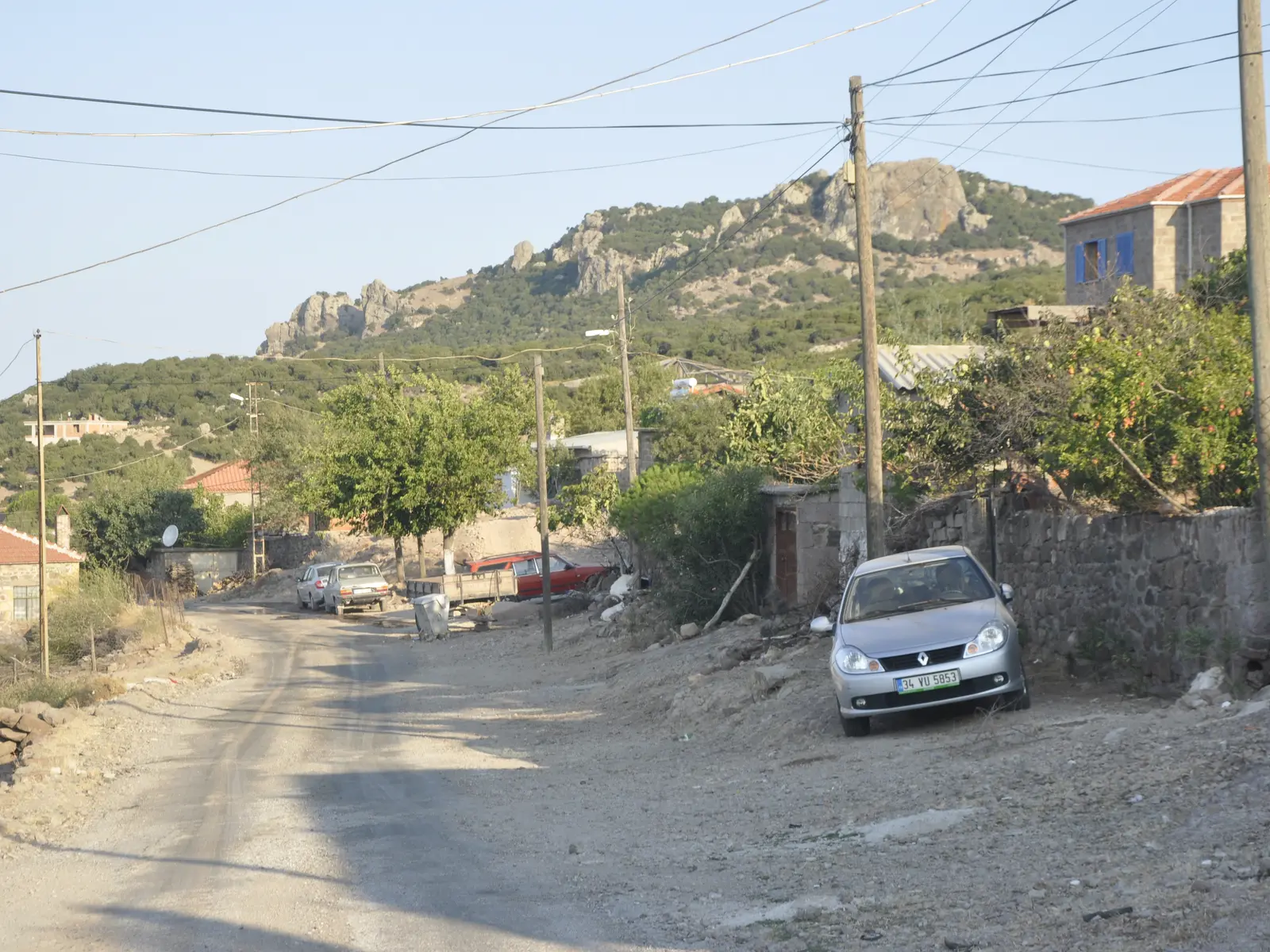
B2 House at the edge of Büyükhüsun is a useful correction to architecture’s obsession with spectacle. Its force comes from exact decisions: how a house touches a village edge, how concrete meets local stone, how a long view is framed, and how a contemporary interior can belong to a rural landscape without staging rusticity.
The house received the Aga Khan Award for Architecture in 2004, but the award is less interesting than the lesson. A small commission can carry a complete position about settlement, material and measure. The photograph here shows Büyükhüsun itself rather than reproducing restricted project photography: context is not the background to B2 House; it is the subject.
8. Zeynep Fadıllıoğlu — The interior as a public argument
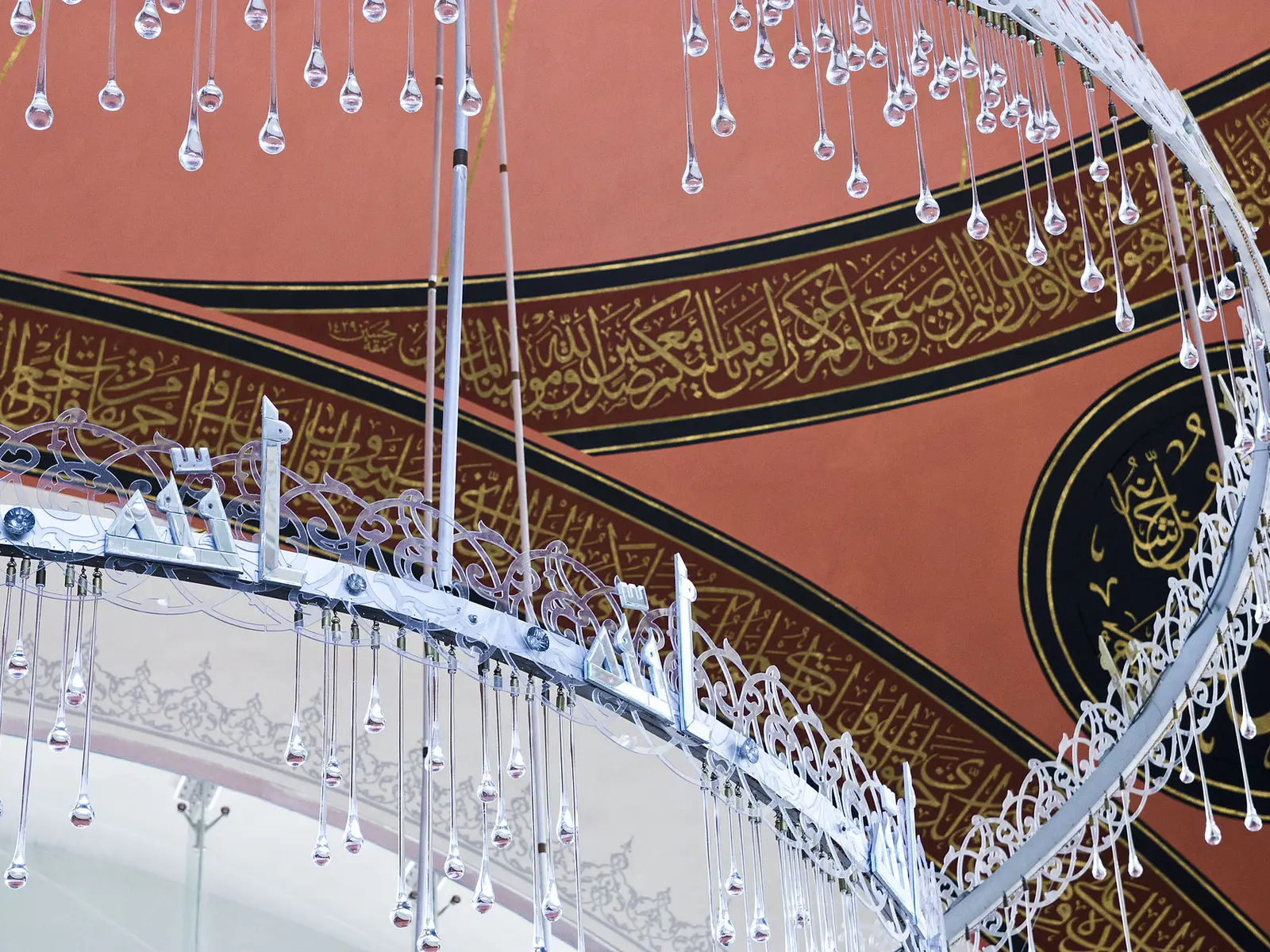
Şakirin Mosque is often compressed into a headline about a woman designing a mosque. The more accurate story is collaborative: the building architecture is by Hüsrev Tayla, while Zeynep Fadıllıoğlu led the interior design and worked with artists and makers on its visual programme. Accuracy does not diminish her contribution; it makes the cultural shift more legible.
A suspended raindrop chandelier, transparent surfaces and a carefully reconsidered women’s gallery turn interior design into an argument about visibility. The project asks who is allowed to shape sacred space, whose experience is treated as central, and how craft can be contemporary without becoming anonymous luxury.
Eight is a route, not the whole map
This selection leaves important doors open: Leman Cevat Tomsu, Behruz and Altuğ Çinici, Cengiz Bektaş, Nezih Eldem, Utarit İzgi and many younger practices require their own chapters. The useful outcome is not a definitive ranking. It is a sharper way to look—at structure, institution, context, collaboration and the politics hidden inside the apparently neutral word “modern”.
Image credits and reuse
Every historical or contemporary building photograph in this story was imported from an explicitly reusable public archive. Crops are identified in the captions; the original records and applicable licences remain available below.