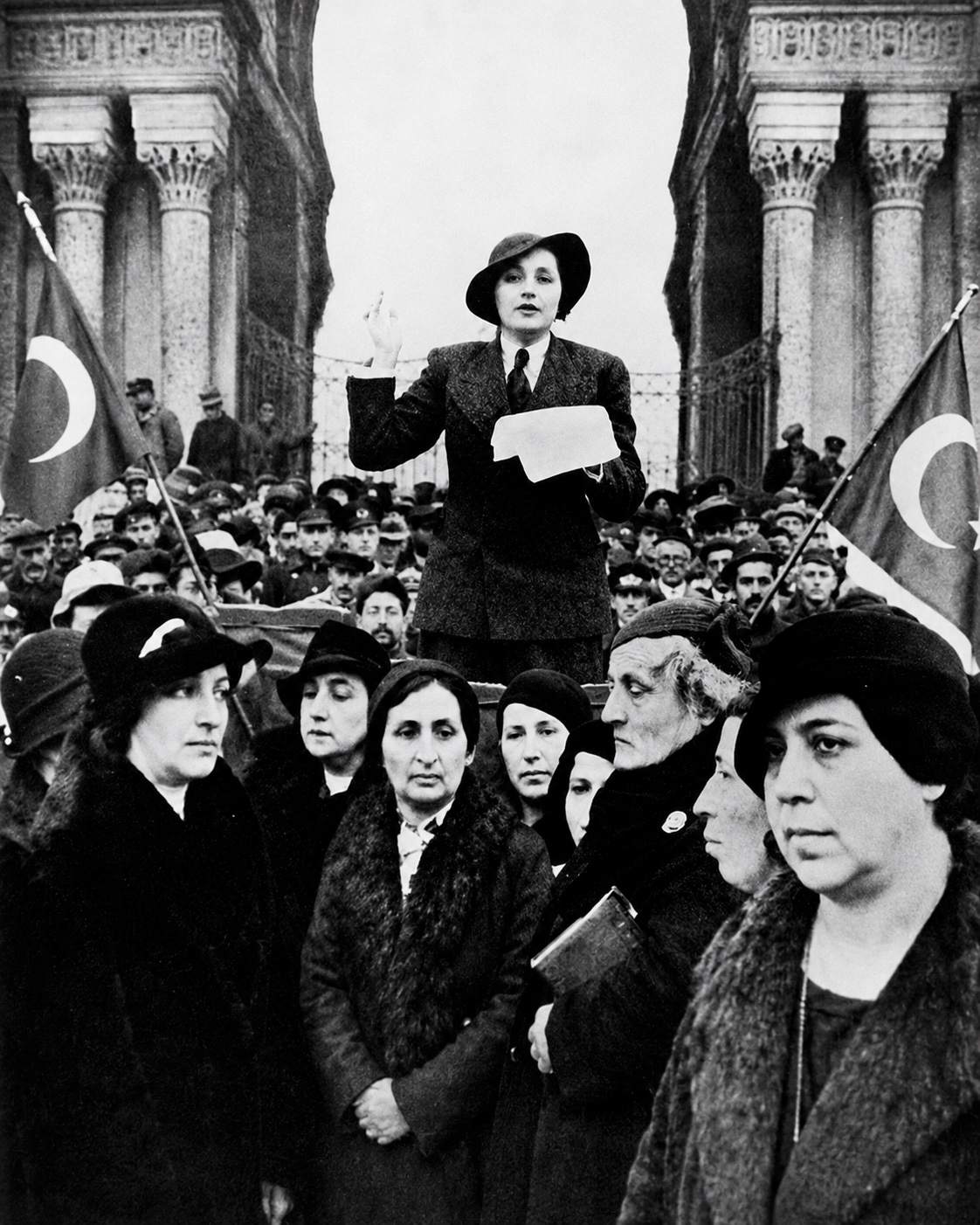
The 1935 election brought eighteen women into the Grand National Assembly. The number is repeated frequently because it gives reform a visible outcome. Yet collective visibility can create another kind of disappearance: eighteen biographies compressed into “the first women MPs.”
Teachers, organisers, professionals
Their routes into politics differed. Education, local public work, professional networks and the structures of the single-party period shaped who could be selected and how authority could be exercised. They entered a parliament transformed by law but not detached from the hierarchies of its time.
Representation is a beginning, not a conclusion
The photograph of the first cohort should be read as a threshold image. It marks an opening and invites the next question: which women remained outside, which issues could be spoken, and how long it would take for exceptional presence to become ordinary power.
Count the eighteen. Then learn their names. A number becomes history only when its people return.