One of the smallest details recorded at Fatih’s Wednesday market is a hook in a wall. In her 2018 study of neighbourhood markets, urban design researcher Elif Sidar Ökdemir documented the nails and hooks that held traders’ awnings in place. They remained after the stalls came down. Where a building had been demolished, traders stretched a net across the gap and attached their covers to it. Even a missing building had to be accounted for on Wednesday. 1
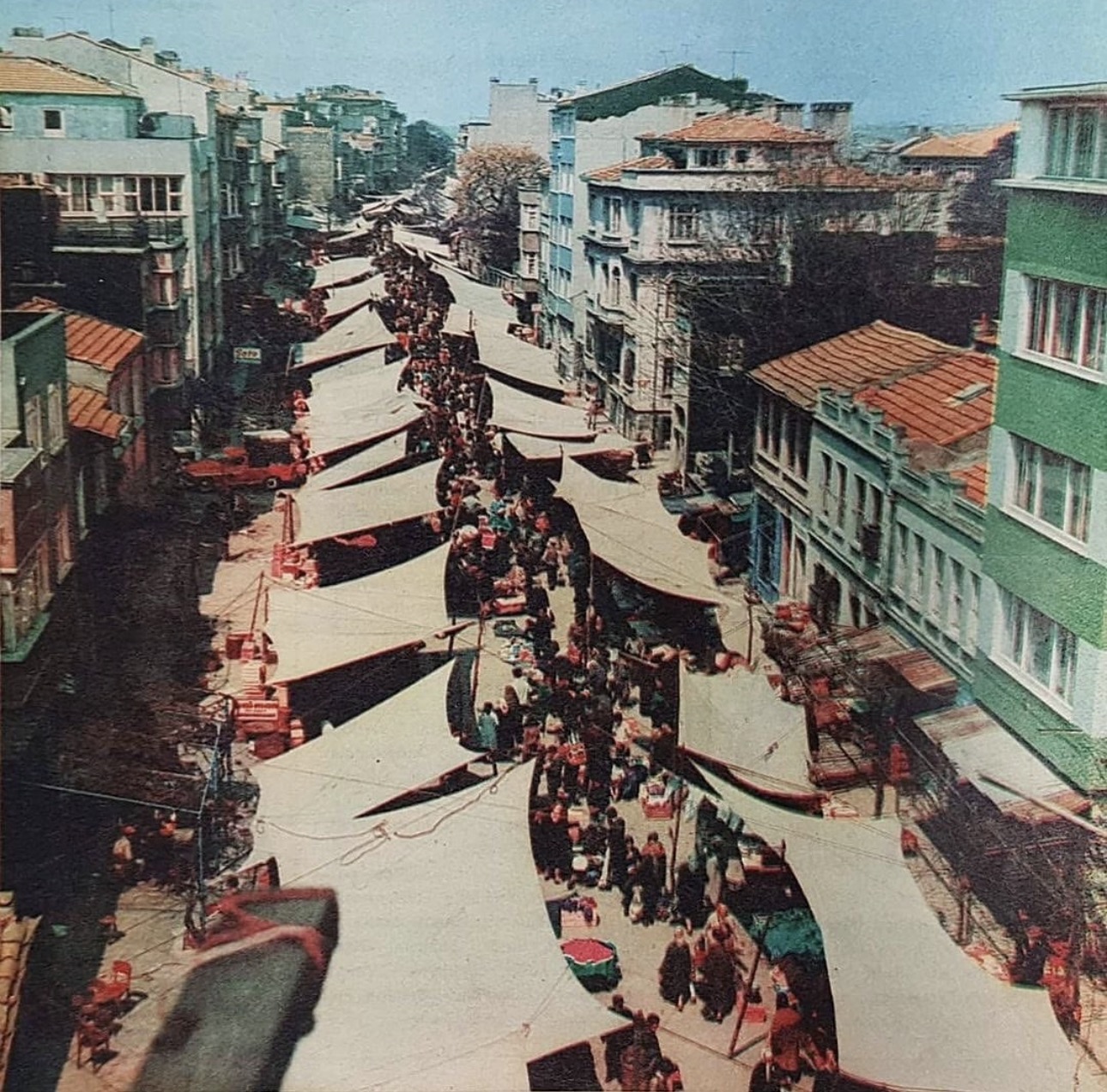
It is a useful introduction to Çarşamba Pazarı. Seen from above, the market looks like a length of cloth laid through the neighbourhood. At street level, that cloth is a roof over hundreds of separate decisions: where to put the tomatoes, how to hang the clothes, which gap will let a neighbour reach the door. The weekly shop takes place inside a street that still has other work to do.
Begin at the mosque, then follow the stalls
Çarşamba means Wednesday. The market occupies streets around the Fatih Mosque complex, extending through Ali Kuşçu and Zeyrek. Boyacı Kapısı, one of the mosque gates, is a useful place to begin; Darüşşafaka Caddesi is another landmark to save on your phone. Think of these as points of orientation within a spreading street market, rather than entrances to a single enclosed hall. 2, 3
In Ökdemir’s fieldwork, Refah Sokak was associated with shoes and Yesarizade with fabric. Other traders served the stallholders: tea sellers and carrier-bag vendors circulated between stands. A person could spend the morning on the same patch of pavement while supplies came to them. Her account captures the small supporting trades that keep a market working. 1
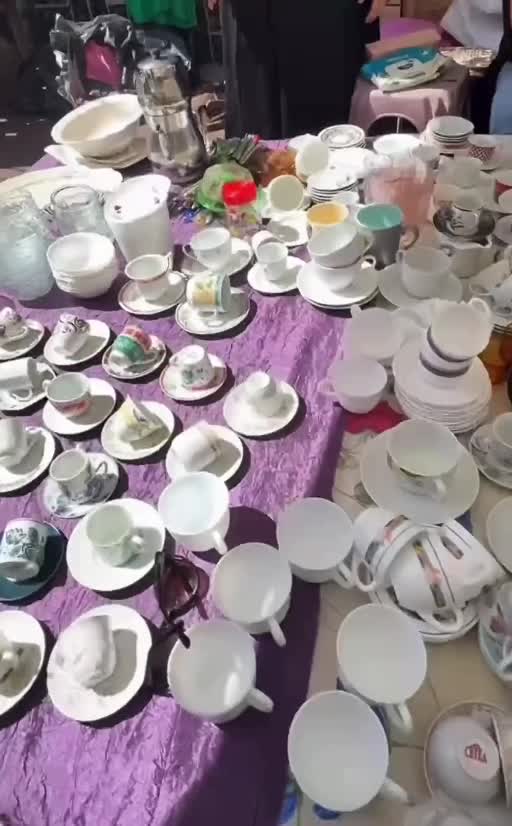
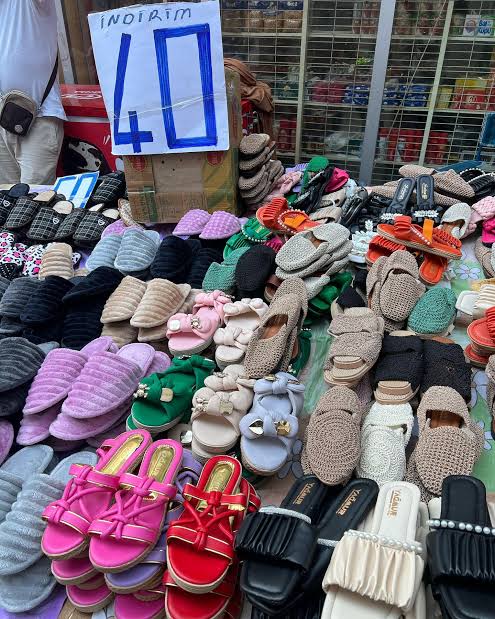
For a first visit, the variety is the point. A turn can take you from a food stall to a table of crockery, or from fabric to a row of slippers. If something catches your eye, remember the nearest street sign or fixed shopfront. A particular canopy is a less dependable landmark when the next turning is full of them.
There is expertise behind the vegetables
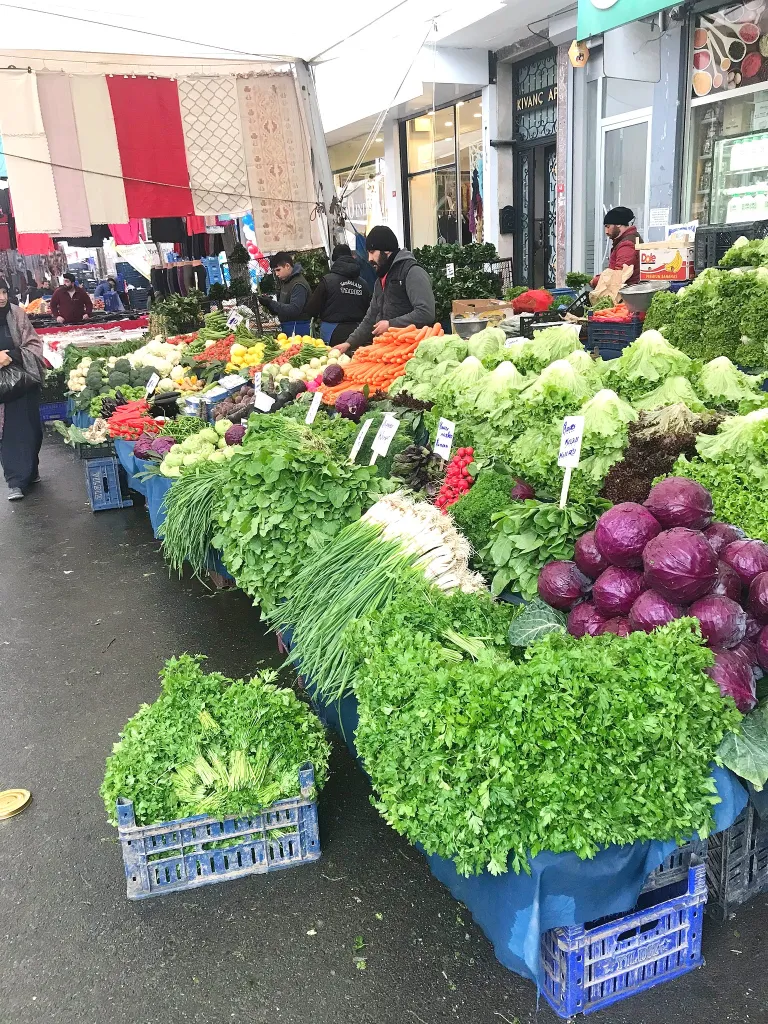
When Oylum and Onur Yüksel reported from Fatih in 2017, they met two traders called Ramazan. One sold baby clothes; the other sold root vegetables and greens. Hamza Bey specialised in vine leaves and had been in that trade for thirty years. He favoured the leaves from Tokat for sarma, the small stuffed rolls: they came blanched, cooked easily and, in his experience, were less salty than those from İzmir. That is a fair amount of expertise to receive with a handful of leaves. 2
The question to take from their reporting is a useful one at any food stall: what makes this one different? With vine leaves, ask whether they need soaking. With olives, ask about the variety and saltiness. If a taste is offered, it may tell you more than the largest sign on the stall.
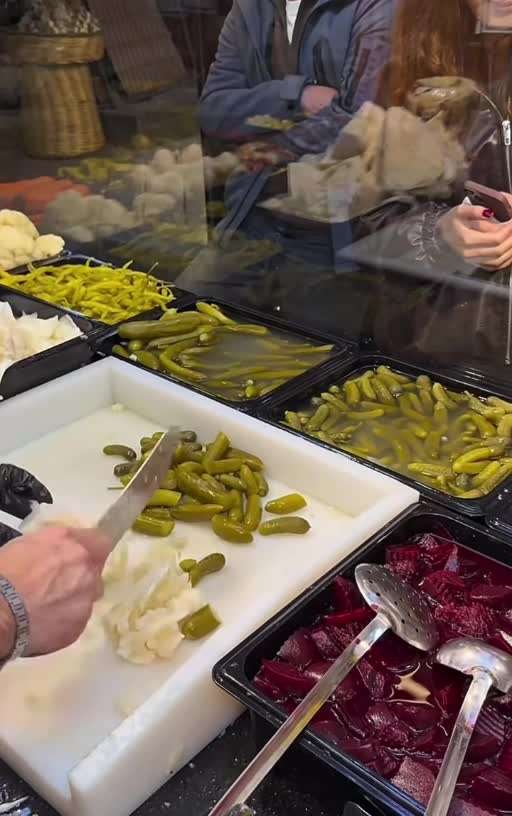
Turşu—pickled vegetables—offers another reason to pause. A mixed portion lets you choose across the trays, but ask how it is priced and packed before the container is filled. For anything in brine, a secure lid matters once it is sharing a bag with your other purchases. Buy delicate herbs and heavy vegetables with the journey home in mind; a bunch of parsley will appreciate being kept above the potatoes.
A place to try selling something
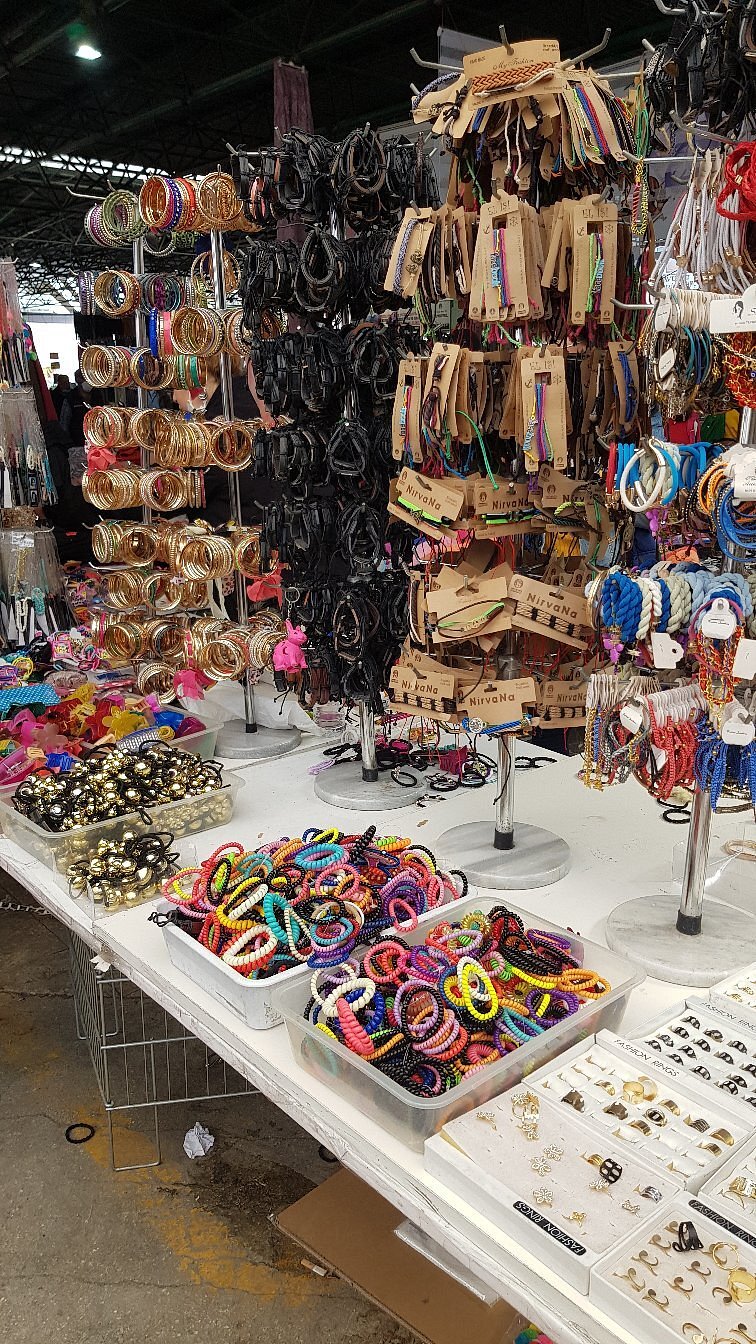
The market also provides a route into trading. In a May 2026 announcement, Fatih Municipality described stalls for participants in its KARINCA craft courses. Each week, students from two disciplines could offer their work, including knitted bags, jewellery, macramé and embroidery. The arrangement gave them practice in pricing, selling and talking to customers, as well as a chance to earn from their work. 4
For a maker, a market table offers unusually direct feedback. People pick something up, ask a question, compare it with another piece, then decide. For the person browsing, it is a reason to ask who made an object and how. Allow time for that conversation without assuming that every accessory on every stall is handmade.
The order inside the commotion
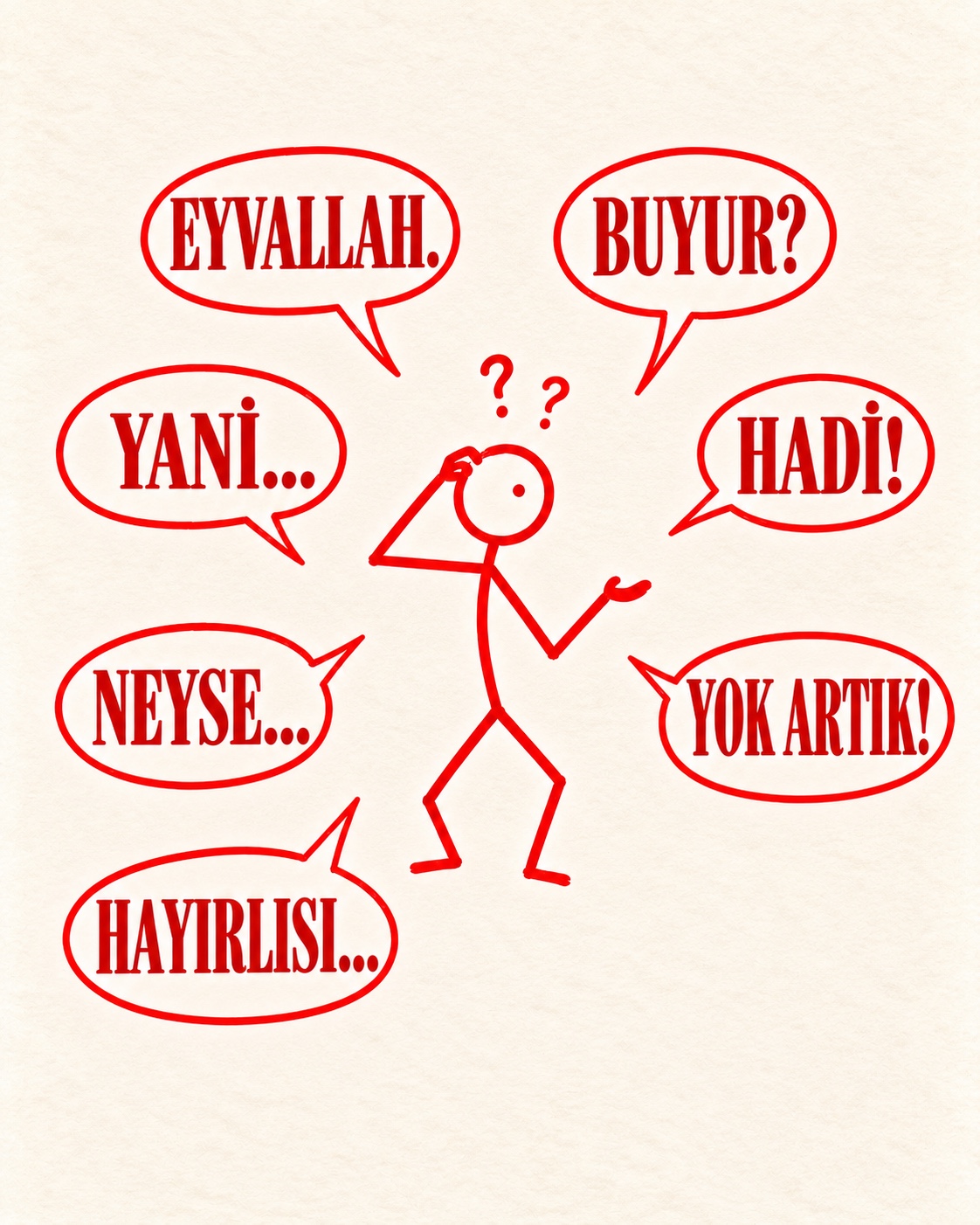
In Turkish, a room in magnificent disarray can be said to have turned into the Wednesday market: çarşamba pazarına dönmek. An account of Istanbul idioms connects the expression to the crowded market around Fatih Mosque. The comparison is easy to understand, though the traders might have grounds to object. Someone has to know where the stock goes and which rope holds the roof. 5
That is worth remembering when you visit. Leave doorways clear, step aside to check your phone and ask before making a person the subject of a photograph. A shopping street works through small courtesies. You are sharing it with people carrying dinner home and people whose working day has several hours left to run.
Plan your Wednesday
| Plan | Our suggestion |
|---|---|
| Day | Wednesday. This is the weekly street market around Fatih Mosque. |
| Arrival | Aim for around 9–10 am. This is our suggested visiting window, not an official opening time. |
| Time to allow | Set aside roughly 90 minutes to two hours for an unhurried first browse; longer if you plan to shop. |
| Starting point | Fatih Camii, near Boyacı Kapısı. Save Darüşşafaka Caddesi as a second point of orientation. |
| Bring | A reusable bag, some Turkish-lira cash and comfortable shoes. Ask about card payment before choosing a large purchase. |
| Access | Expect slopes, uneven surfaces and narrow passages between stalls. A busy market can be difficult with a wheelchair or pushchair. |
A morning visit gives you more room in the day. Traders set up early, but the sources consulted do not establish one dependable closing time for every stall. Avoid building a first visit around the last hour of the afternoon. For a holiday or a day of severe weather, check local notices before setting out.
Getting there
From Sultanahmet, take the T1 tram towards Bağcılar and get off at Aksaray, then walk uphill towards Fatih Camii. From Yenikapı, either the M1A or M1B serves Emniyet–Fatih. Both options involve a walk: the station name does not mean you emerge directly into the market. Check the walking route to the mosque before boarding, particularly if hills or steps are a concern. 6
Buying well
Check what the marked price buys: a kilo, half a kilo, a bundle or a single piece. Ask before handling produce. For clothes, confirm the size and any exchange arrangement before paying. For cups and plates, look at rims, handles and the number of matching pieces, then ask for wrapping. Comparing two or three stalls is often more useful than arriving with a fixed idea of what everything ought to cost.
- At a produce stall: Kilosu ne kadar? (How much is a kilo?)Confirm the unit as well as the price.
- Buying a smaller quantity: Yarım kilo alabilir miyim? (Could I have half a kilo?)
- Before paying: Kart geçiyor mu? (Do you take cards?)
- Before photographing a person or their stall: Fotoğraf çekebilir miyim? (May I take a photograph?)
Leave some space in the bag, and some flexibility in the plan. The best purchase may be the one that makes Wednesday’s dinner easier. The second-best may be a cup you had no intention of looking for.
Reading & practical sources
- Market structures, circulating sellers and streets associated with particular goods; fieldwork published in 2018
Elif Sidar Ökdemir · Gündelik müdahaleci eylemlerin kurduğu geçici, değişken kamusal mekanlar: semt pazarları, MSGSÜ - The 2017 reporting on Ramazan Bey, Hamza Bey and the Boyacı Kapısı approach; the encounters are attributed to the original reporters
Oylum & Onur Yüksel · İstanbul Semt Pazarları, Baya İyi - The Wednesday listing and street addresses in Ali Kuşçu and Zeyrek
Pazar Yeri · Çarşamba Pazarı, Fatih - The municipality’s account of rotating market stalls for craft-course participants, 21 May 2026
Fatih Municipality · KARINCA at Çarşamba Pazarı - A cultural account of the expression çarşamba pazarına dönmek
İstanbul Deyimleri ve Muhteşem Öyküleri · hosted by İstinye University - Official T1, M1A and M1B station lists; suggested arrival and browsing times are editorial recommendations
Metro Istanbul · T1 · Metro Istanbul · M1A · Metro Istanbul · M1B