Füreya Koral’s decisive move was not simply to modernise ceramics. It was to refuse the idea that ceramic belonged only to a shelf. Her large panels entered hotels, hospitals, markets and public buildings, where art had to negotiate architecture rather than wait for museum silence.
A material that remembers fire
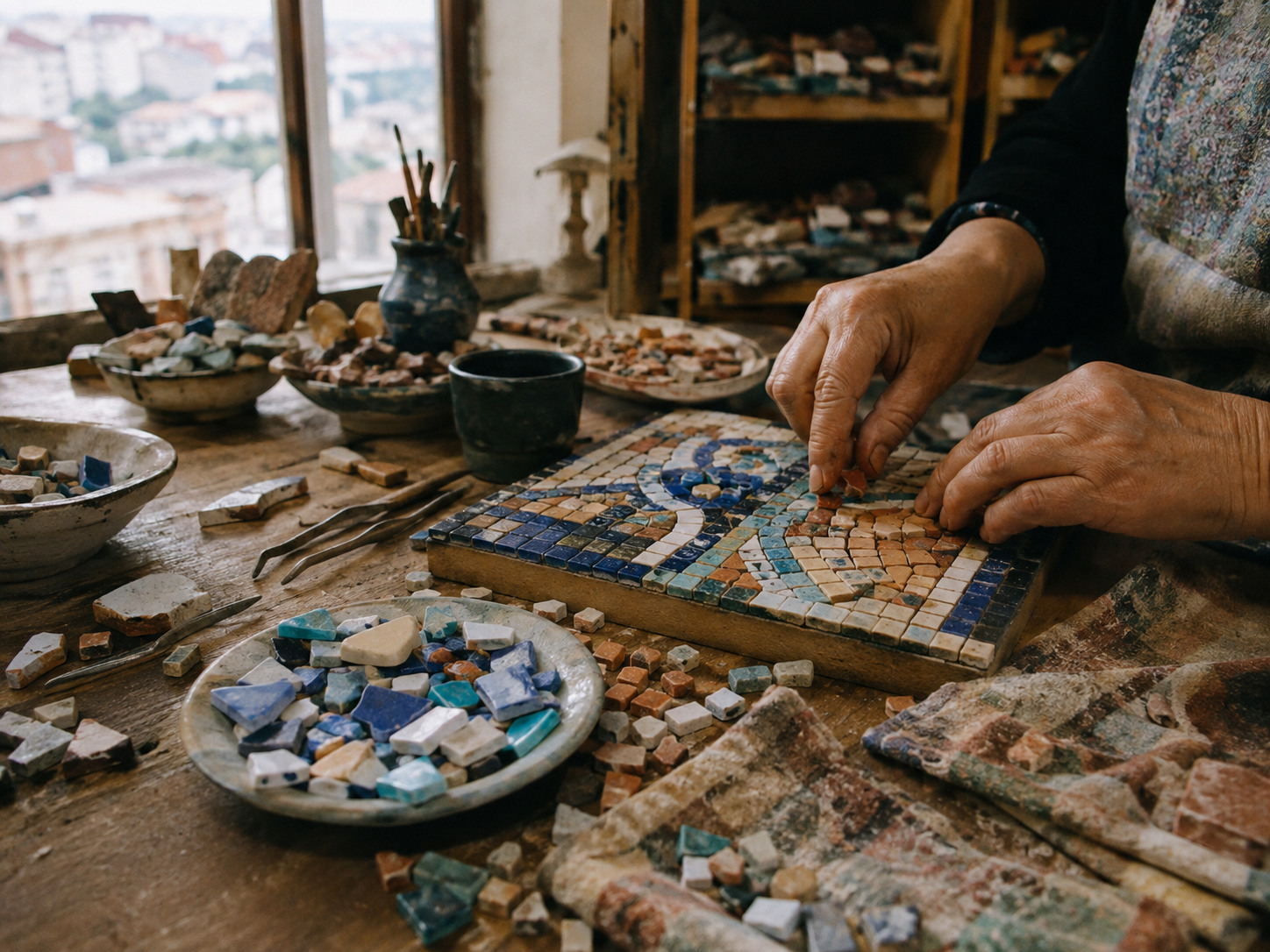
Clay records pressure, glaze records heat and every module admits the hand that made it. On a wall, these small decisions accumulate into scale without losing intimacy. The surface can be read from across a foyer and then again from a few centimetres away.
Public, not decorative
Calling the panels decoration misses their argument. They alter circulation, colour institutional space and give modern concrete a tactile counterweight. Their value lies partly in being encountered accidentally: on the way to work, treatment, lunch or a train.
The conservation question
Architectural ceramics are vulnerable because buildings change owners, functions and tastes. To protect the work, we must treat the wall, its light and its public setting as part of the artwork—not a disposable support.
A mural is not an object placed in a building. It is a building taught to speak at human scale.