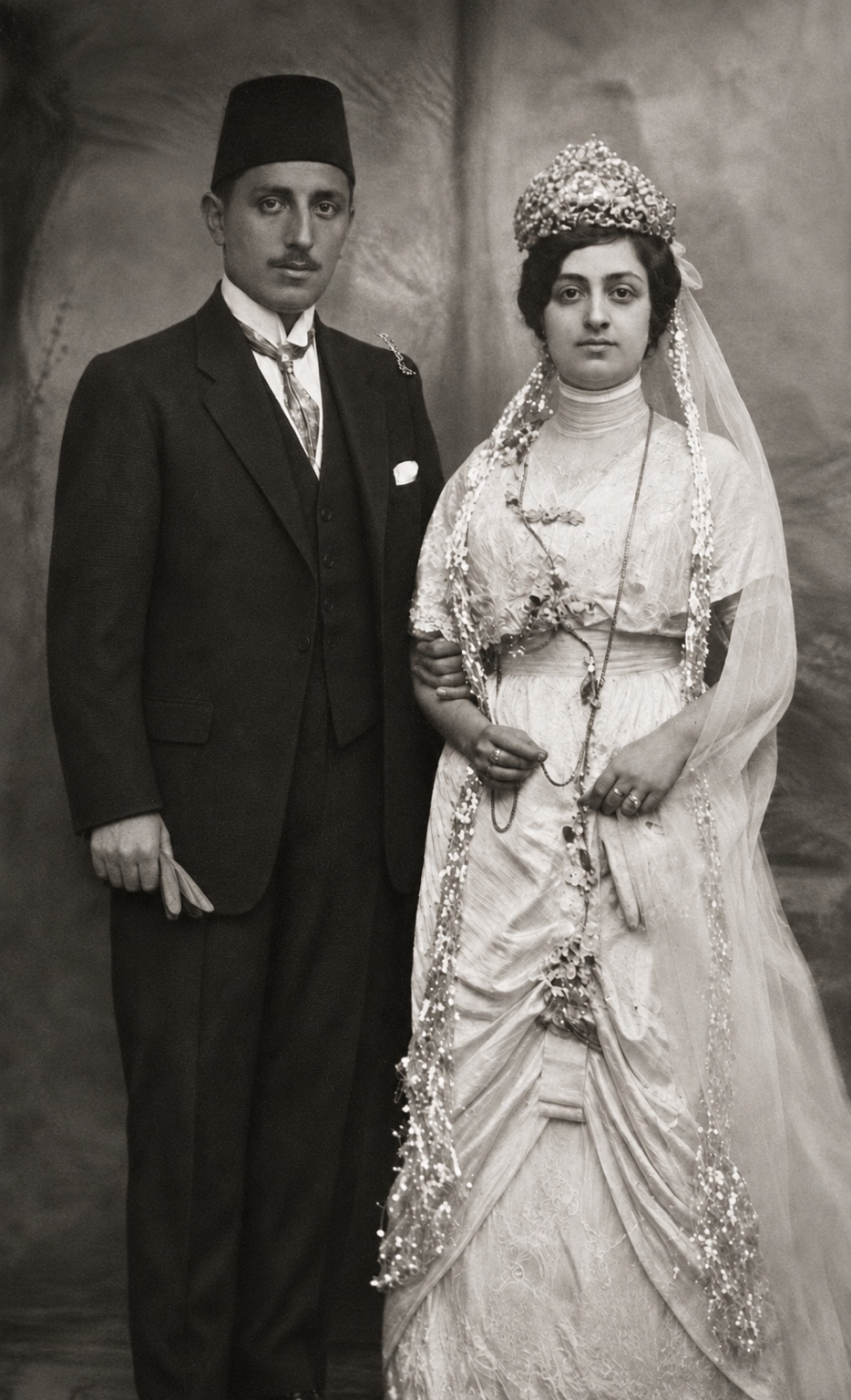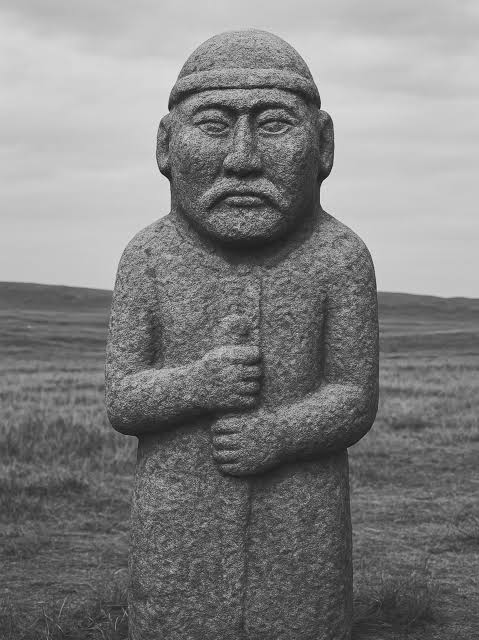
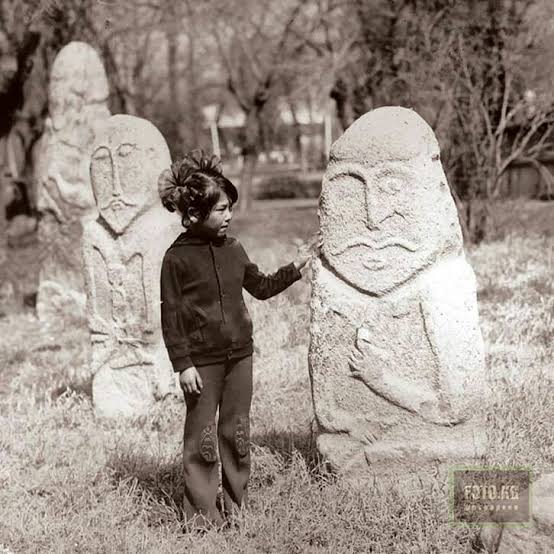
The moustache is carefully marked. So are the cap, the hands and the vessel held against the chest. Even in a weathered stone figure, someone has taken the trouble to make a person recognisable. That attention to an ordinary human gesture is a useful place to begin a story about the dead.
Across the Turkic world, mourning left traces in monuments, ceremonies and the things placed beside a body. Some practices have inviting parallels in Türkiye today. Following them, however, means crossing considerable distances in time. The early medieval Göktürks, the much older populations buried at Pazyryk, and Muslim communities in Anatolia belong to different historical settings. Their customs become more interesting when we allow each its own context.
The person in the stone
Human-shaped stone monuments survive across a broad stretch of Eurasia. Among the medieval Turkic examples, clothing, belts, weapons and drinking vessels help give the figures a social identity. A carved cup can suggest participation in a commemorative feast; a belt or weapon can mark rank. These are interpretations of objects, supported by their archaeological setting, rather than a single code that unlocks every statue. 1, 2
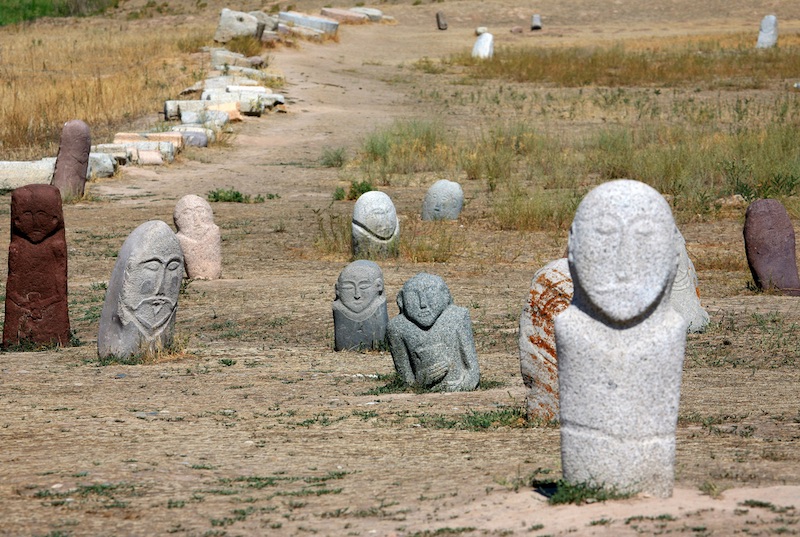
The word balbal needs particular care. It is often used casually for almost any such figure. Archaeologists commonly distinguish the sculpted image associated with the person being commemorated from simpler stones extending away from a memorial. Early inscriptions link some balbals to defeated enemies. Their meanings remain debated, and an unfamiliar face in stone should not automatically be introduced as an enemy condemned to serve someone in the afterlife. 1, 2
Before the Göktürks: the frozen tombs of Pazyryk
Pazyryk, in the Altai Mountains, preserves an extraordinary earlier chapter of steppe life. Its Iron Age burials belong to the Scythian-period cultural world, centuries before the emergence of the Göktürk state in the sixth century CE. They offer valuable comparisons with later traditions. Describing every Pazyryk object as simply “ancient Turkish”, though, would settle a question of identity that the objects alone cannot answer. 3, 4
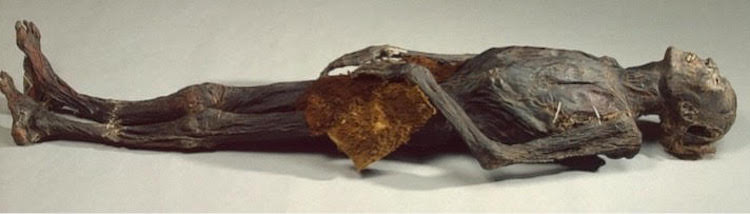
Beneath the burial mounds—kurgans—were timber chambers containing bodies and carefully selected possessions. Frozen conditions preserved materials that usually disappear: felt, leather, wooden fittings and textiles. Some bodies also show deliberate preparation. Preservation therefore has more than one explanation, and these finds cannot support a general claim that all early Turkic people embalmed their dead while waiting for a burial season. 3, 4
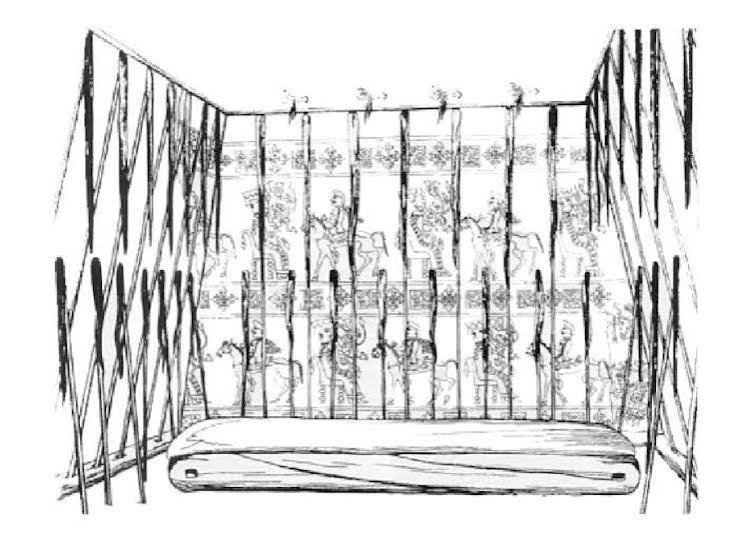
A furnished grave gives us a rare view of what a community chose to accompany the dead. It also leaves a question open: which objects belonged to everyday life, which displayed status, and which were made specifically for the funeral? An impressive burial can contain all three. Its richness should not be mistaken for a portrait of how everybody lived.
A horse prepared for the funeral
Horses were a substantial part of some Pazyryk burials, equipped with harnesses and elaborate decorations. Among the surviving objects are headpieces that transform the outline of a horse with antler-like forms and fantastic animals. Their workmanship makes clear that the funeral required preparation, skilled labour and considerable resources. 3, 4
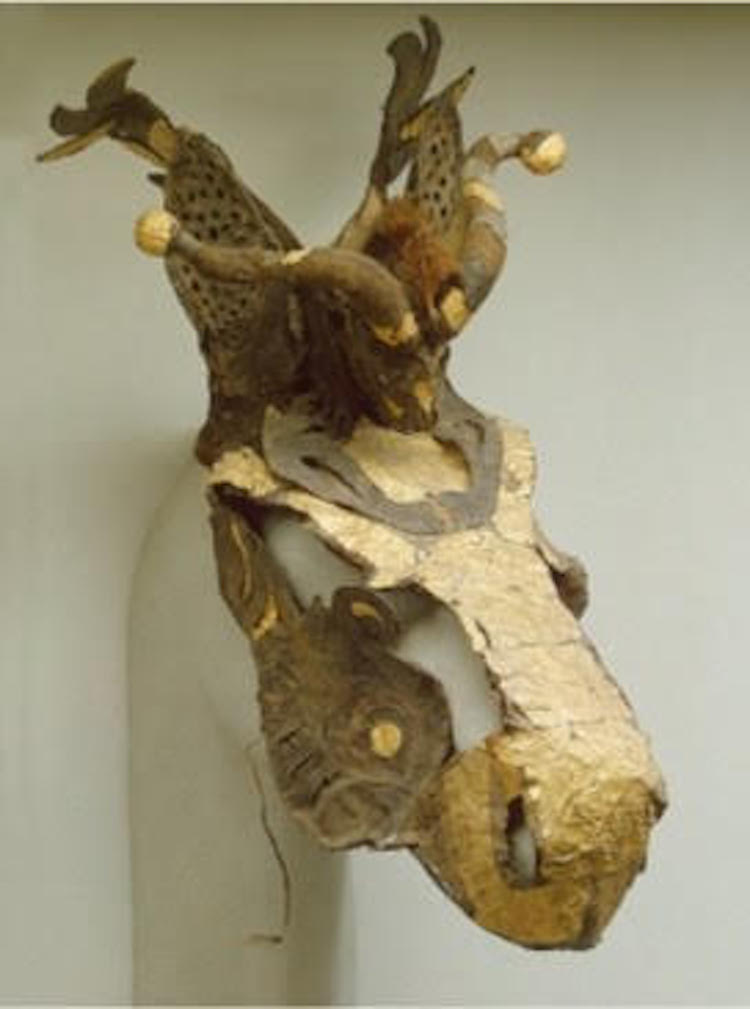
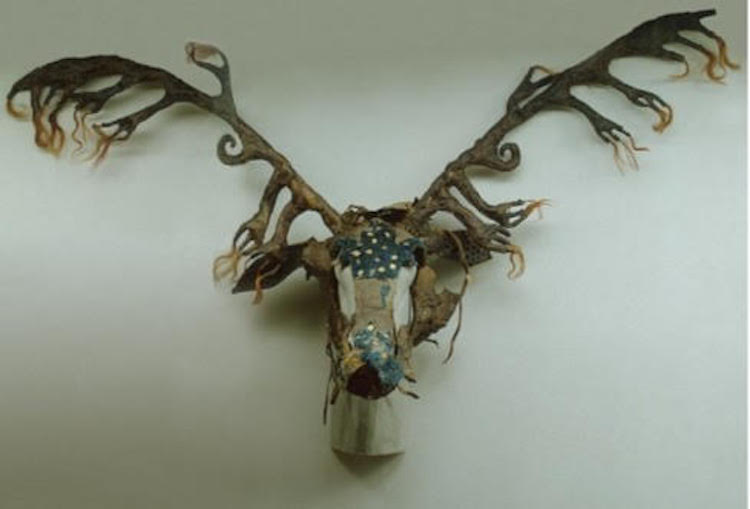
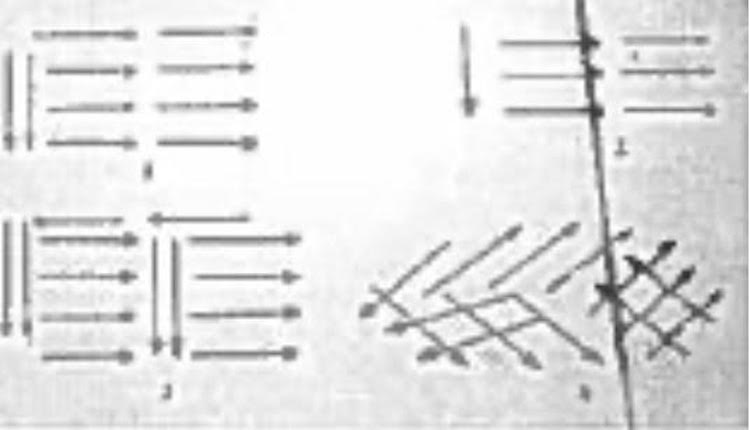
The horse carrying its rider into another existence is a compelling interpretation. It should still be presented as an interpretation, alongside the animal’s place in wealth, mobility and prestige. The positions of horses within a tomb can help archaeologists reconstruct a ceremony, but a diagram of their arrangement does not, by itself, tell us what the mourners believed.
Mourning had a public shape
Chinese dynastic histories describe particular Göktürk funerals in which a body was placed in a tent, relatives offered animals, and riders circled the tent seven times. The accounts also describe mourners marking their faces in grief. They record a ceremony visible to the wider community, with repeated actions through which loss was publicly acknowledged. 5
Some of those accounts describe cremation followed by the later burial of ashes. They associate that burial with seasonal changes in vegetation. This is a much more specific claim than saying that every early Turkic community left an intact body waiting from spring until autumn. The same historical literature records different treatments of the dead among neighbouring peoples. 5
Changes to a horse’s tail, the cutting of hair and altered clothing also appear in accounts of mourning across different Turkic settings. Such details show how bereavement could interrupt the familiar appearance of people and their animals. They do not establish a single origin for every later custom—or for the modern Turkish word dul, meaning widowed. 5
A ceremony, and a language for leaving
Yuğ, also written yoğ or yog, names the funerary ceremony and is associated with commemorative meals. It gives us a reminder that burial was one part of a wider response to death. Gathering and feeding people could make remembrance a shared obligation, bringing the dead person’s place in the community back into view. 6
The early inscriptions also use the language of flight and ascent in speaking of death. Forms of uçmak, “to fly”, offer a striking way of expressing departure. Scholars have explored what this vocabulary suggests about the relationship between the dead and the sky. A phrase in a memorial text, however, cannot supply a complete map of the afterlife for every Turkic-speaking population. Religious ideas changed across places and centuries, as the ceremonies did. 6
What remains around the funeral table
In Anatolia, some of the most familiar practices concern the days after burial. Regional records from Çanakkale describe Qur’an readings, mevlit recitations and the preparation of helva on the seventh, fortieth and fifty-second days. They also record neighbours bringing food to the bereaved household. A calendar gives people a reason to return after the first gathering has dispersed. 7
The observances are documented; the neat explanations sometimes attached to their numbers are much less secure. Seven planets, forty weeks of pregnancy and fifty-two weeks in a year do not, on their own, establish the origins of these funeral dates. Nor does the existence of an earlier commemorative meal prove that a present-day family understands its gathering in the same way.
Even a small object can acquire different explanations. In Çanakkale’s folklore record, placing a knife or scissors on the body is connected with preventing another death. A Zonguldak record gives the stated purpose as preventing swelling. These are recorded local beliefs, not medical recommendations. Their variation is a reason to be cautious about assigning every use of iron to one ancient fear of spirits. 7, 8
Islamic practice also has its own substantial history here. Washing and shrouding the body, funeral prayer and burial are established parts of Muslim funerary observance. Bringing food to a grieving household has a place in Islamic teaching too. Fixed commemorative dates and local customs require separate consideration. Treating all of this as an older religion wearing a new name would miss what the practices mean to those who carry them out. 9
A resemblance worth investigating
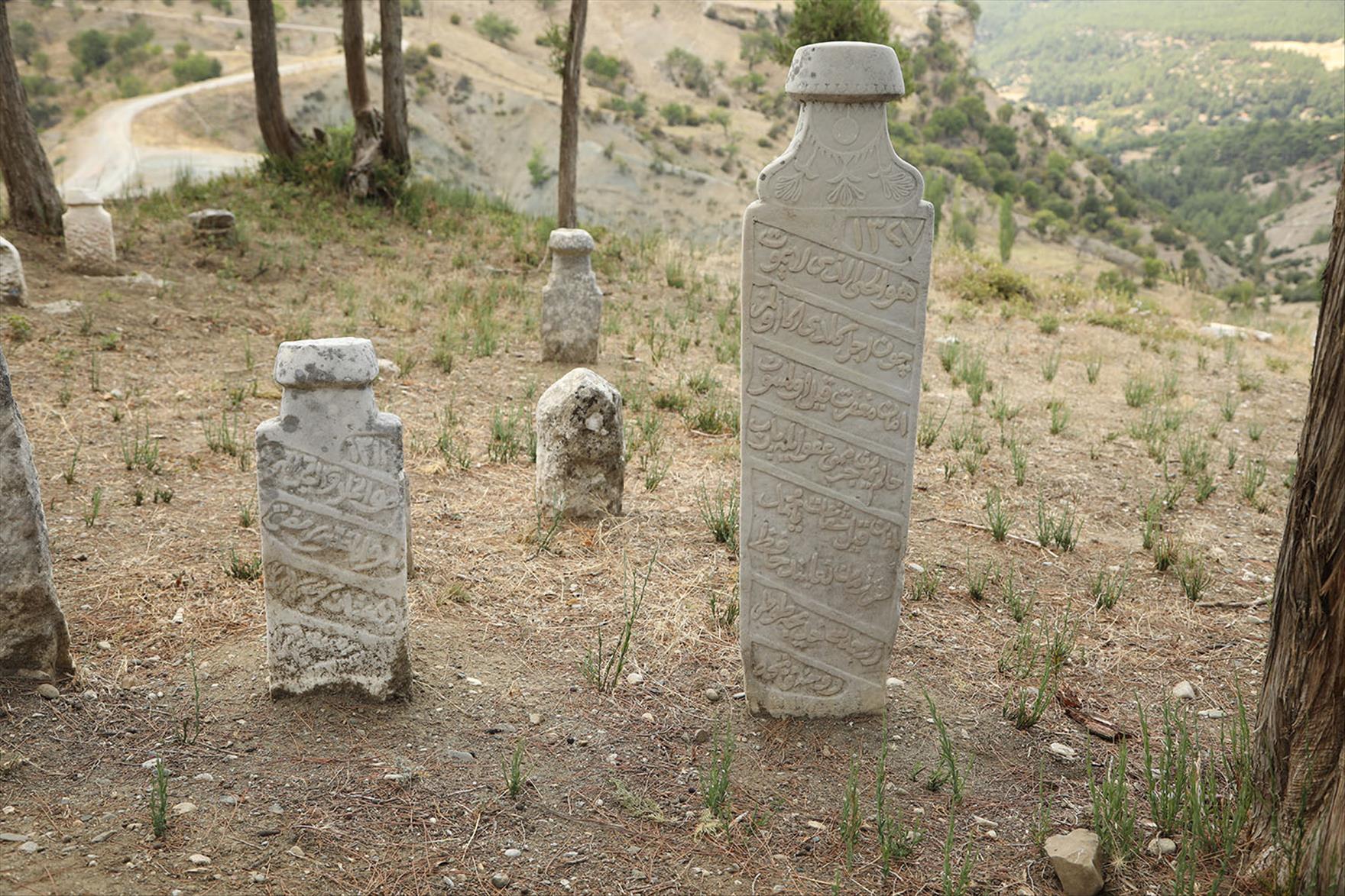
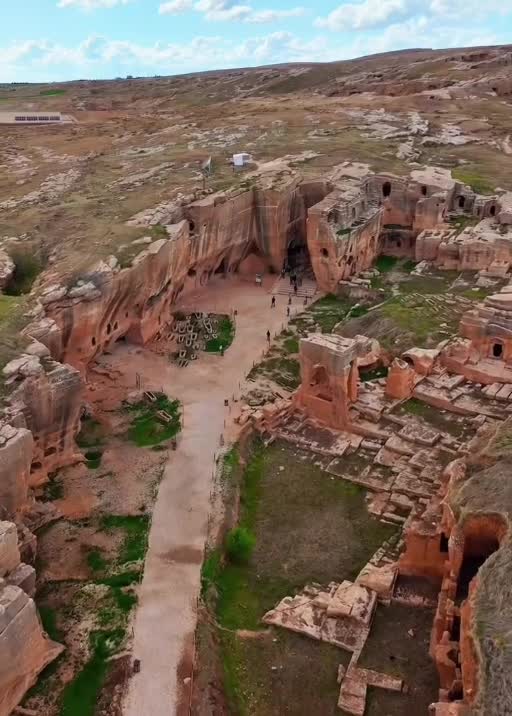
Some comparisons can be investigated object by object. Research at Kale-i Tavas in Denizli has examined eleven gravestones bearing human features or details resembling clothing and accessories. The study interprets them in relation to older Central Asian traditions of human-shaped stone monuments. Its observations give the discussion something concrete: particular stones, particular forms and, in some cases, dates. 2
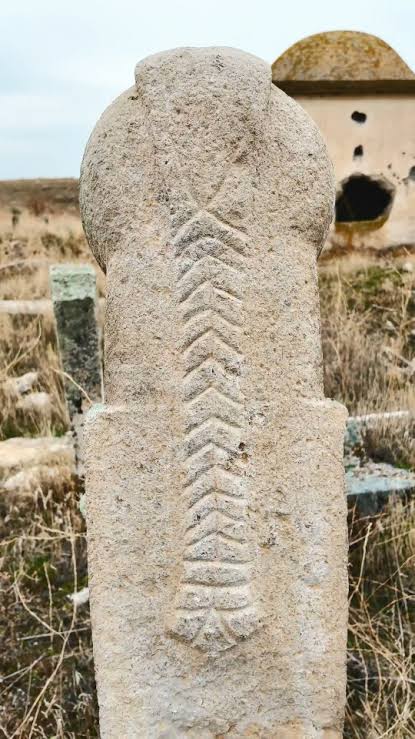
That is the scale at which continuity becomes convincing: a carefully examined detail, compared with evidence from elsewhere. Similarity can begin an investigation. It cannot finish it. The cup held against a stone chest deserves that patient attention, just as a remembered meal or a visit to a grave does. Each tells us something about the work people have done to keep a place for their dead.
Reading & context
- Human-shaped statues, balbal stones and their different interpretations
TÜBA-AR · Stone Statues and Balbals in Turkic World - Fieldwork on eleven gravestones at Kale-i Tavas; the connections proposed are the study’s interpretations
Höyük · Kale-Yukarı Mezarlık Alanında Heykel, Balbal, Taş Baba Geleneğinin Yansımaları (2025) - Pazyryk chronology, burial chambers and frozen preservation
Treasures of the Pazyryk Culture · Russian Federation’s UNESCO Tentative List submission - Catalogue of Pazyryk objects in the State Hermitage Museum, with excavation references and revised dating
University of Washington · Silk Road Seattle: Pazyryk - Chinese dynastic accounts of funerals, seasonal burial and differences between neighbouring communities
Tarih Araştırmaları Dergisi · Çin Kaynaklarına Göre Türk Kültür Çevresinde Evlenme ve Cenaze Gelenekleri (2015) - Funerary vocabulary and interpretations of ascent in the early inscriptions
International Journal of Old Uyghur Studies · Runik Türk Yazıtlarında Yükselme Riti: yog Kelimesi Üzerine (2019) - Regional documentation of commemorative dates, meals and the use of metal objects
Ministry of Culture and Tourism · Çanakkale Ölüm Gelenekleri - A different local explanation for placing a knife on the body
Ministry of Culture and Tourism · Zonguldak Ölüm Gelenekleri - Washing, shrouding, prayer, burial and food brought to the bereaved in Islamic practice
TDV İslâm Ansiklopedisi · Cenaze