Spending a good day in Istanbul has become steadily more expensive. Some of the city’s finest cultural spaces, however, still open their doors to anyone who walks in.
These are not overlooked corners on the edge of the city. They include buildings that recorded the Ottoman Empire’s first experiments with industry and finance, collections that trace the making of Turkish art, a mansion above the Bosphorus and institutions that keep the city’s memory in order.
Some are free whenever they are open; others on one day of the week. What follows is a selection for the last days of November, chosen for buildings and collections that repay the visit on their own terms.
Feshane: a fez factory on the Golden Horn
The name gives the building’s first purpose away. Feshane was the house of the fez, founded in the reform years of Mahmud II to make the headgear of a newly uniformed army, and it grew into one of the empire’s early industrial plants on the shore of the Golden Horn.
For much of its life it was simply a place of production. After a long restoration by the city, it reopened in 2023 as Artİstanbul Feshane, one of the largest public art spaces in Istanbul.
The restoration kept the industrial character of the place. The broad production halls now hold paintings, sculpture and installations, and the building’s own brick and iron are part of what you come to see.
There is a particular reason to go now. Memory of the Collective: İBB Collections brings together 627 works by 187 artists, from the late Ottoman period to the Republic: works held across the municipality’s own institutions, among them the Atatürk Library, the Aşiyan Museum and the City Museum, shown alongside pieces that entered the collection by donation.
The collection’s institutional roots go back to 1925, to an attempt to found a Museum of the Revolution in the Atatürk House in Şişli. The exhibition is therefore about two things at once: the periods of Turkish art, and the way a city slowly assembled a memory of itself.
Allow at least two hours. Afterwards the Golden Horn shore leads on foot towards the old streets of Eyüpsultan.
| Where | Eyüpsultan, on the Golden Horn |
|---|---|
| Open | Tuesday to Sunday, 10.00–20.00 |
| Entry | Free |
| Exhibition | Memory of the Collective, until 13 December 2026 |
| Getting there | T5 tram, Feshane stop |
Salt Galata: the bank with two faces
Bankalar Caddesi in Karaköy is one of the most architecturally coherent streets in Istanbul, and its most imposing building is the former headquarters of the Imperial Ottoman Bank, now Salt Galata.
Alexandre Vallaury designed it, and it opened in 1892. It housed the bank until 1999: an architectural statement of the empire’s ties to international finance.
Look at both sides. The façade on Bankalar Caddesi speaks the monumental neoclassical language of European banking; the façade towards the Golden Horn turns to an Orientalist vocabulary. One building addresses two audiences.
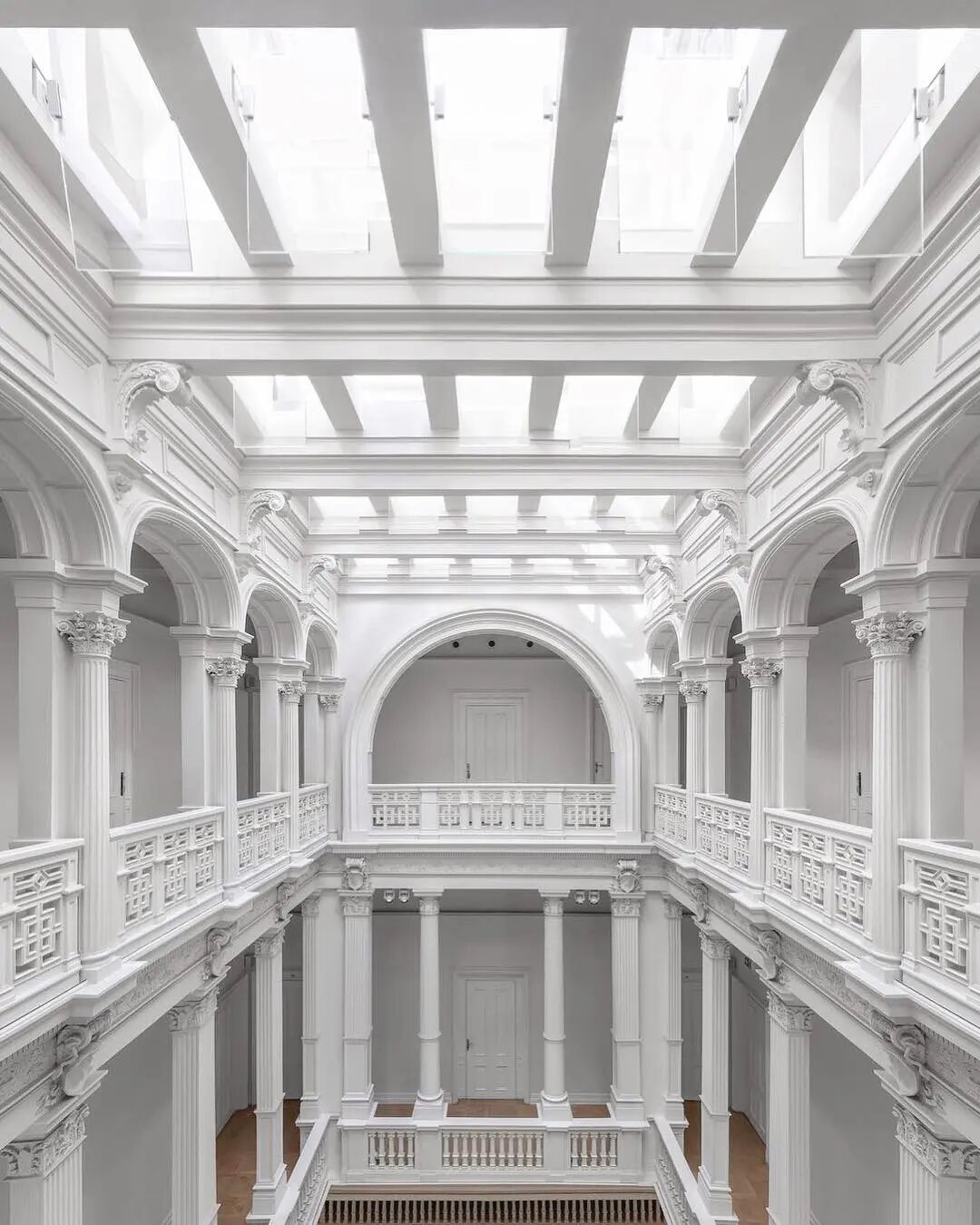
Since 2011 the building has served as a centre for culture and research, with exhibitions, a library and archives open to all. Entry to the building and its programmes is free.
Do not miss the Ottoman Bank Museum, set in and around the old vaults. Banknotes, ledgers and documents offer an unusual way into the economic and social history of the late empire.
On the way out, climb the Kamondo Stairs towards Galata. A few hundred metres are enough to see how much the city changed in the nineteenth century.
| Where | Bankalar Caddesi 11, Karaköy |
|---|---|
| Open | Tuesday to Saturday 11.00–19.00, Sunday 11.00–18.00 |
| Entry | Free |
Sakıp Sabancı Museum: a Tuesday in Emirgan
On the European shore of the Bosphorus, on the slope above Emirgan, stands the Atlı Köşk: a mansion built in 1925 for Prince Mehmed Ali Hasan to a design by the Italian architect Edouard De Nari, and named for the bronze horse in its garden.
The Sabancı family lived here for decades. Since 2002 it has been the heart of the Sakıp Sabancı Museum.
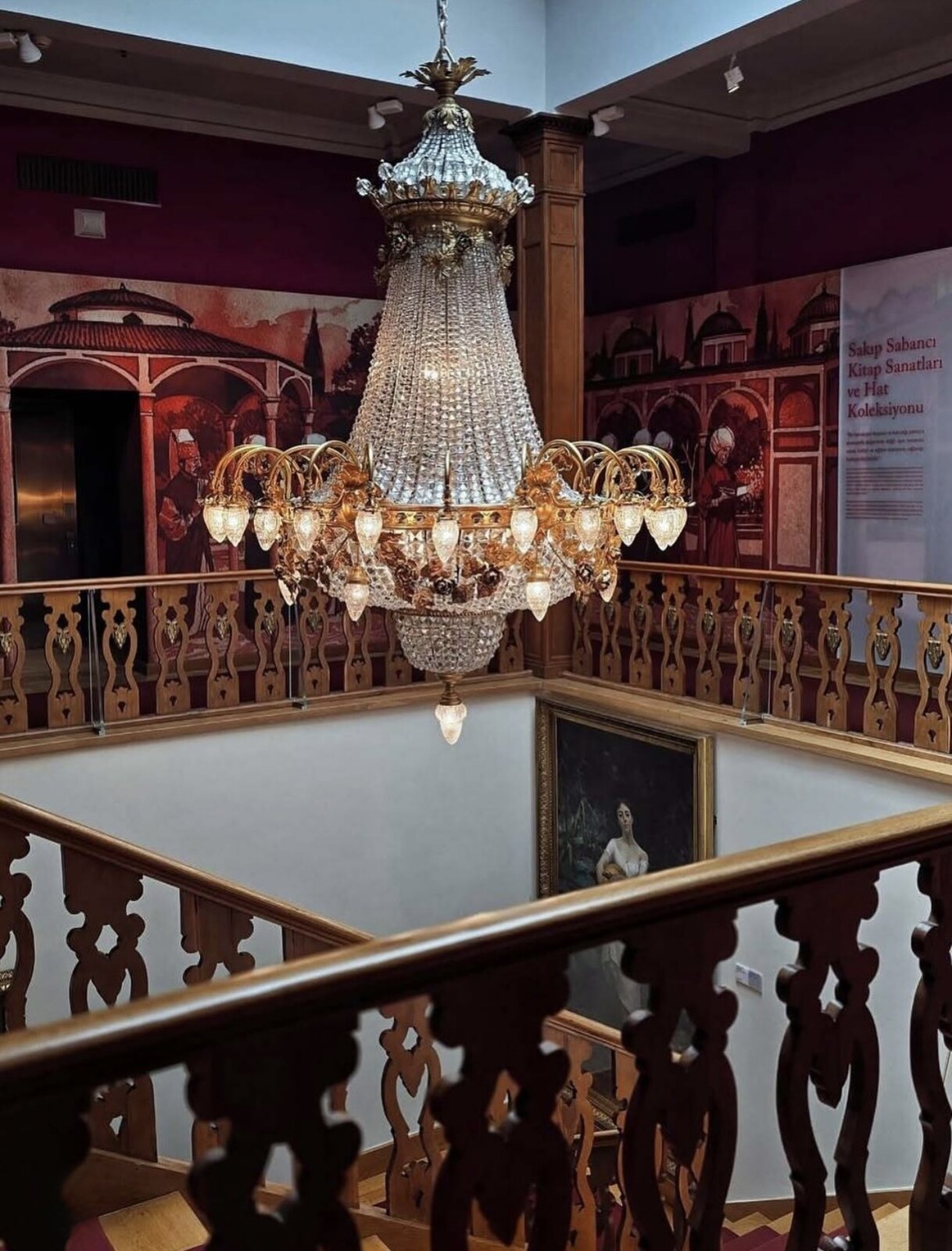
The collections cover the arts of the book and calligraphy from the fourteenth century onwards, and a painting collection that follows Turkish painting across more than a century.
What makes the museum especially worth the trip this season is Yoko Ono: Insound and Instructure, on view until 27 December 2026. Organised with MUSAC in León, it is the most extensive Ono exhibition yet held in Türkiye, and it spreads beyond the galleries into the Atlı Köşk and the garden.
Ottoman book art and international conceptual art under one roof: that range is the museum’s particular strength.
Make the garden part of the visit. With its view over the strait, it says as much about the Bosphorus mansion as the rooms do. The museum is free all day on Tuesdays; afterwards, the shore at Emirgan is the natural way to end the day.
| Where | Sakıp Sabancı Caddesi 42, Emirgan |
|---|---|
| Free | Every Tuesday, 10.00–18.00 (last entry 17.30) |
| Exhibition | Yoko Ono: Insound and Instructure, until 27 December 2026 |
Yapı Kredi Kültür Sanat: a last weekend on İstiklal
In the crowd of İstiklal Caddesi, the Yapı Kredi Kültür Sanat building at Galatasaray keeps alive the street’s older role as a place of publishing, art and argument.
Its galleries change often, and the current one is closing. Yüzyılın İzleri: Koç Topluluğu ve Sanat, an exhibition on a century of the Koç Group’s involvement in art, publishing and museums, has been on view since April and closes on 29 November.
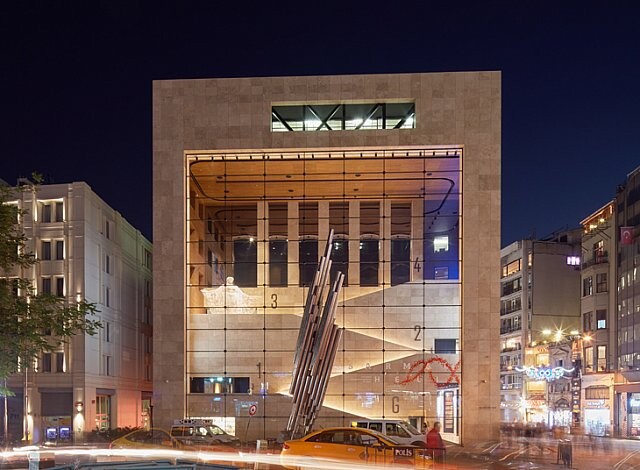
If you are in Istanbul this weekend, this is the one to prioritise.
To treat İstiklal only as a shopping street is to miss what made it. Institutions like this one show that its long relationship with books, images and ideas has not ended.
| Where | İstiklal Caddesi 161, Beyoğlu |
|---|---|
| Entry | Free |
| Exhibition | Yüzyılın İzleri, last day 29 November 2026 |
A week of open doors
Several other museums open free on particular days. Combined with the places above, they make a week.
| Tuesday | Sakıp Sabancı Museum, all day. İstanbul Modern, 10.00–14.00, for 18–25-year-olds resident in Türkiye |
|---|---|
| Thursday | İstanbul Modern, 10.00–14.00, for all residents of Türkiye |
| Friday | Pera Museum, 18.00–22.00, for all visitors |
| Tuesday to Sunday | Artİstanbul Feshane, Salt Galata and Yapı Kredi Kültür Sanat, whenever open |
Free hours and conditions vary between institutions and change from season to season, so check the current programme before you set out.
- Artİstanbul FeshaneFree, Tuesday to Sunday
- Salt GalataFree, Tuesday to Sunday
- Sakıp Sabancı MuseumFree on Tuesdays
- Yapı Kredi Kültür SanatFree; current exhibition until 29 November
- İstanbul ModernFree on Thursdays 10.00–14.00 for residents of Türkiye
- Pera MuseumFree on Fridays 18.00–22.00
Seeing the city again
Most people who live in Istanbul walk past dozens of buildings they have never entered.
A bank on Bankalar Caddesi, a factory on the Golden Horn, a mansion in Emirgan: each belongs to a different Istanbul, with its own economy, its own society and its own idea of what a building should say.
Knowing the city better does not always require a new neighbourhood. Sometimes it is enough to go through a door you have passed for years, and this time there is no ticket to buy.
The Istanbul Edit is a BeingTurkish series on the city’s culture, architecture, food and everyday life. Visiting information is correct as of November 2026; programmes and free-entry conditions may change.