James Baldwin arrived in Istanbul in October 1961 carrying more than luggage. Another Country had followed him through years of revision, and the United States had made writing inseparable from the exhausting demand to explain himself. Istanbul did not remove race, sexuality or politics from his life. It changed their distance—and, for a time, the conditions under which he could work.
The city did not offer disappearance. It offered another angle from which to become legible to himself.
A room far enough away
The actor Engin Cezzar helped open the city to Baldwin. Through him came homes, tables, rehearsals and a circle that included Mine and Cevat Çapan, the photographer and filmmaker Sedat Pakay, David Leeming and many figures from Istanbul’s artistic life. This was not the sealed retreat of the solitary expatriate. It was a working refuge assembled through friendship.
Distance mattered because Baldwin’s public role in America had become almost continuous. In Istanbul he could still be recognised, stared at and misread, yet he was not required every morning to enter the same national argument. The pause was neither innocent nor permanent. It was productive.
The novel reached its last line here
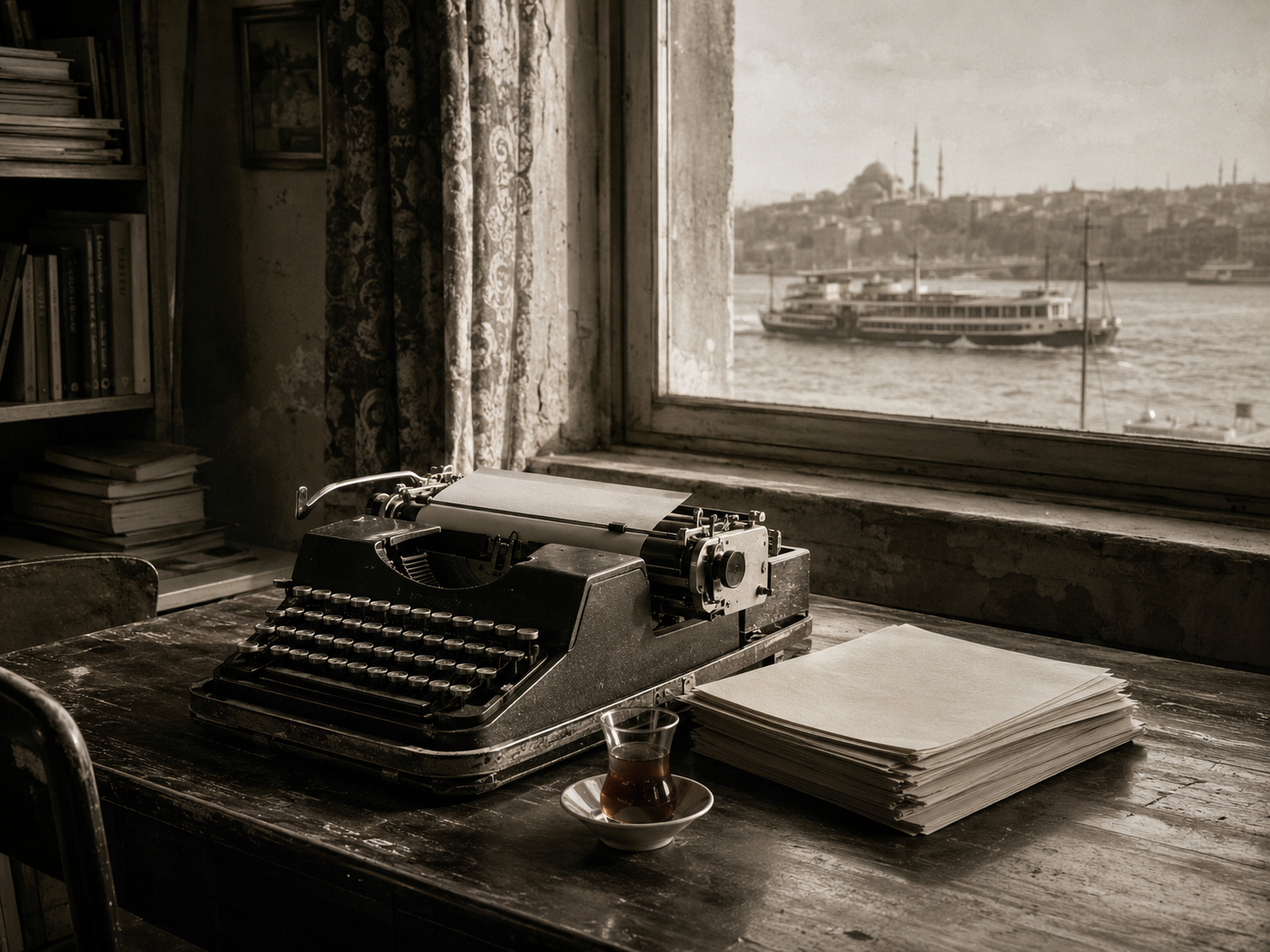
On 10 December 1961, Baldwin completed Another Country in Istanbul. The date turns the city from colourful biographical scenery into part of the book’s material history. Its rooms, ferry crossings and long conversations did not become a disguised Turkish setting; they made possible the concentration required to finish a New York novel about desire, race, damage and intimacy.
He would return repeatedly over the next decade, writing and revising essays and major books while moving between Istanbul and other places. The city became less a destination than a recurring interval: somewhere thought could continue before the next public demand arrived.
Sedat Pakay’s second city
Pakay’s photographs refuse the grand exile portrait. Baldwin appears inside a lived Istanbul: at tables, in domestic rooms, among friends, thinking, laughing, waiting. Their value is not that they prove he was here. They restore duration—the unheroic hours from which a decade is actually made.
The carousel remains hosted with its original Instagram post so the photographic source and context travel with the images. Pakay’s film James Baldwin: From Another Place extends the same idea: Istanbul is not a backdrop behind a famous visitor, but a place from which Baldwin speaks differently.
Stages, ferries and borrowed homes
Baldwin’s Istanbul years also belonged to theatre. He directed Fortune and Men’s Eyes in the city and entered a cultural world in which translation, performance and late-night conversation moved easily across forms. His Istanbul was held together by people more than monuments: apartments, rehearsal rooms, restaurants, the changing view from a ferry.
That social texture matters. The familiar story of the writer saved by elsewhere can erase the labour of hosts, translators, collaborators and friends. Refuge is rarely found ready-made. Someone lends a room, introduces a city, translates a joke, stays at the table and makes another day of work possible.
Not a simple sanctuary
To call Turkey a paradise would flatten Baldwin’s own experience. He encountered racialised language, homophobia and violence here too; a serious attack outside Istanbul belongs to the record. He never became fluent in Turkish, and his freedom as a foreign writer did not mirror the political conditions faced by everyone around him.
This complication is essential. Istanbul offered Baldwin relief from one structure of surveillance without placing him outside power altogether. The city could be generous and brutal, intimate and illegible—qualities his work was already equipped to recognise.
What the city remembers
There is no single Baldwin monument in Istanbul capable of containing these years, and perhaps the missing monument is instructive. Memory survives in photographs, a film, dedications, interviews, friends’ accounts and the knowledge that one of the twentieth century’s most consequential writers finished a novel in a room here.
The better route is therefore archival rather than touristic. Read the work, look at Pakay’s contact with everyday life, notice the networks around the celebrated name, then cross the city without pretending every view is evidence. Istanbul’s Baldwin years remain powerful because they were never only about Istanbul. They were about what another place can make possible—and what it cannot solve.