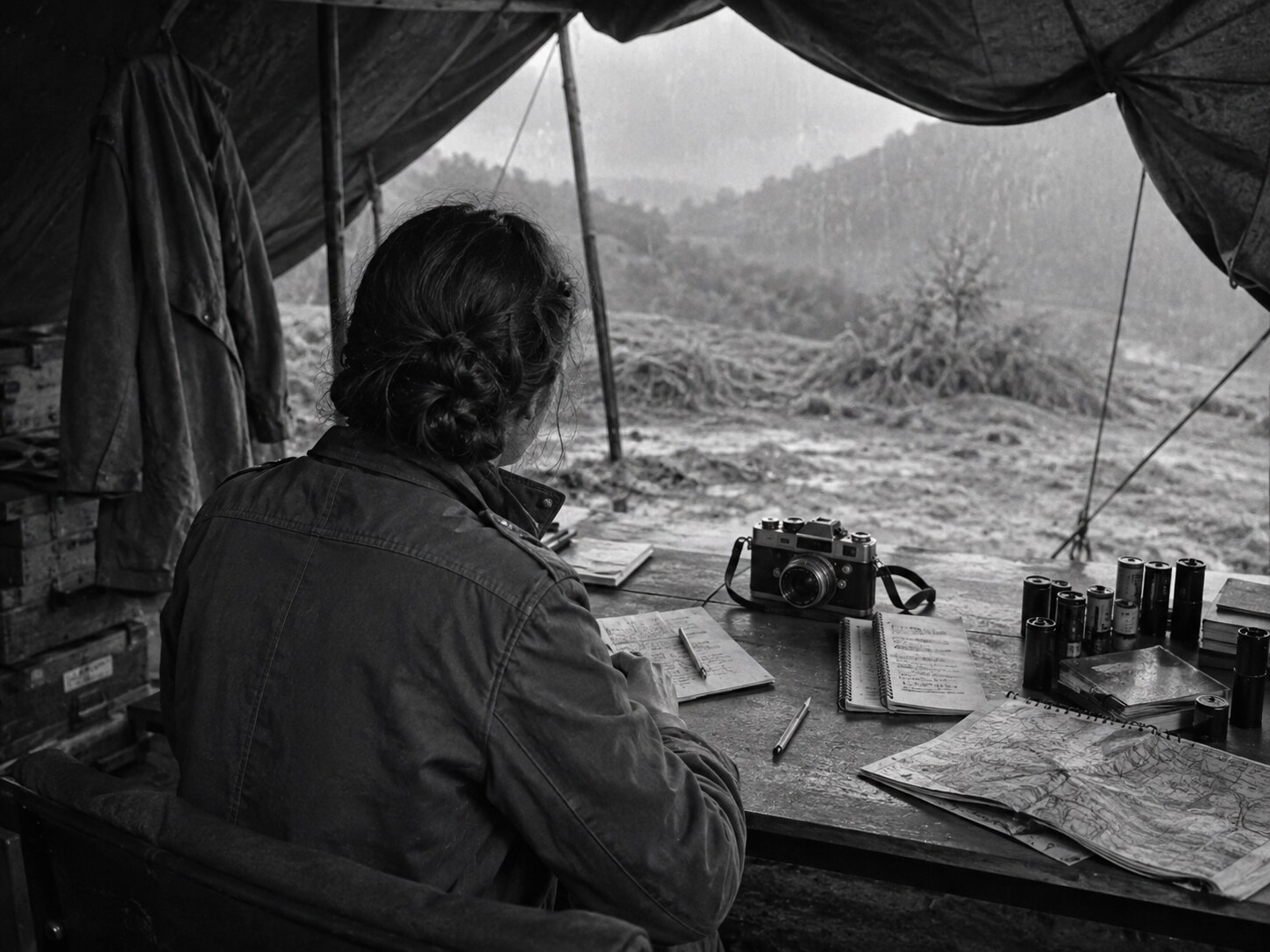
Semiha Es entered professional photography through travel with her journalist husband, Hikmet Feridun Es, then worked in the Korean War as the first woman travel and war photographer of the Turkish press. The biography sounds triumphant. The archive complicates it.
Two wars in one contact sheet
War photography is shaped twice: first by where the camera stands, then by what the editor prints. Research on Es’s Korean photographs shows the tension between images of military heroism and photographs that made civilian suffering, exhaustion and death harder to avoid.
Gender behind the camera
Calling her “the wife who learned photography” explains access but can erase authorship. Es developed the capacity to work in extreme conditions, choose a frame and sustain a visual record. Partnership does not cancel practice.
What an archive withholds
The unpublished image is not silent. It tells us what a newspaper, nation or period could not incorporate into its preferred story. Re-reading Es means studying selection as carefully as exposure.
The history of photojournalism is also the history of photographs that editors decided the public should not see.