Müjdat Gezen asked Sezen Aksu to write the music for his television series Azmi. The song had been written and recorded. All that remained was to put a name on the screen. Gezen was about to credit Sezen as the composer when she stopped him. She had got stuck on the B section, she explained, and taken it to Onno, who had sorted it out in two minutes. Both their names went into the credits. By the time Gezen told this story in Cumhuriyet in the summer of 1996, Onno Tunç had been dead for several months. 1
Whenever I sit down to write something harsh about Sezen Aksu, those two minutes come back to me. Could there be a contribution easier to forget? The credits of a television series, gone in a few seconds. A friend who found a way through one passage. A producer quite happy to put your name on it. And yours, after all, is the voice people will hear. You could let your name stand alone. Sezen wouldn’t.
Years later she spoke about the country with such sweeping certainty that I sometimes struggled to recognise the same woman. How could an ear that knew exactly whom those two minutes belonged to fail to hear the hesitation in the voice of a fellow citizen? I wouldn’t ask that of someone I didn’t love. Affection is what has kept me waiting so long for an answer.
Then there is the matter of what to call her. I write her full name the first time. By the second mention she is Sezen again, and I haven’t even noticed. In Turkish, adding Hanım after a woman’s first name puts a little courtesy, sometimes a little distance, between you. I have never met her. She owes me no friendship. Ours is the oddest intimacy a musician can have with a listener. She knows nothing about me. There are things I have been able to say in my own life only because I heard her say them first. Ask me who the greatest woman in Turkish pop is and I still give her name. No stage, no costume, no sales record comes to mind. I remember a remark I once made in the happy belief that it was my own, until I realised where I had learnt it.
Another name on the label
Turkey first knew her as Sezen Seley. Her first 45, released in 1975, had Haydi Şansım on one side and Gel Bana on the other. There is a little joke in the first of those titles now. Here was a young woman urging her luck to come on, knowing nothing of the day when other musicians’ fortunes would turn on a decision of hers. That day she had a record in her hand. The future we so readily read back into it was still hers to find out. 2
She was born Fatma Sezen Yıldırım in Sarayköy, a district of Denizli, and grew up in İzmir. Her mother, Şehriban, taught science. Her father, Sami, taught mathematics. After İzmir Girls’ High School she enrolled in the agriculture faculty at Ege University, then left for Istanbul to make records. A life can be made to turn very neatly on a decision like that. I find myself wondering about the two teachers whose daughter had taken such a sharp turn away from the future they had imagined for her. What was it like, afterwards, to hear her voice wherever they went in Turkey? We don’t know. Years later their daughter would publicly invoke her parents’ opinion on a political question. Whatever we make of what she said that day, the seats at that family table in İzmir were theirs. 2
In 1976 came Olmaz Olsun and Vurdumduymaz. In 1977, Allahaısmarladık and Kaybolan Yıllar. She wrote both the words and the music of Kaybolan Yıllar, “Lost Years”. I still find it astonishing that a woman barely into her twenties could address lost time with the familiarity of someone who had known it for years. The song asks another person to do an impossible thing. A lover can come back. Something borrowed can be returned. How do you give somebody back their time? When you are young you know exactly which former lover you would like to put that to. Some years later you play it again and remember what you did with those years yourself. A fair few of them you squandered with your own two hands. 3
She sang at the Bebek Belediye Gazinosu, the Istanbul supper club, and starred opposite Bulut Aras in Atıf Yılmaz’s film Minik Serçe. Its title gave her the nickname she would carry for life, the Little Sparrow. There is tenderness in the Turkish habit of giving the women we love diminutives. There is a certain convenience in it, too. Consider the work and the little bird is soon unequal to the task. Here was a musician who knew where, in a four-minute song, to make herself felt as a lyricist, where as a composer, and where to trust the singer. In time she would make those decisions on other people’s records too. A sparrow tells you something about how she makes us feel. It tells you precious little about what she does. 2
What a man couldn’t say
I can’t remember how old I was when I first heard Firuze. What I do remember is the song changing sides on me. I used to listen as a man looking at a beautiful woman. Now I listen with an eye on what time has done to me. Whoever is looking at Firuze is already frightened of losing the beauty they take such care to describe. Anyone who has looked closely at another person’s face knows there is something selfish in that fear. Even as we say we love them, some part of us is reckoning with what we stand to lose. I hear the two feelings rub against each other in Sezen’s voice. How often had anyone found so large an audience in Turkish for desire, for growing old, for the discovery you can make, while looking at someone else, of your own mortality? 4
Firuze in 1982. Sen Ağlama in 1984. Git in 1986. The three album titles already make a little conversation you might overhear at home. Call someone by her name. Tell her not to cry. Then tell someone to go. It is those imperatives that interest me most in Sezen’s singing. When she sings Git, “Go”, she has the will to show a man the door. Before the word is out of her mouth you can hear what will happen to her if he actually goes. In the love songs I grew up with as a man, pride was always keen to have the last word. Sezen taught me that pride too can live to regret what it says. That was quite a lesson for a boy brought up to regard a broken heart as a matter of honour. 4
It does the music an injustice to tell the story of those years as hers alone. There was Aysel Gürel’s feel for words, Atilla Özdemiroğlu’s imagination as a composer, the space Onno Tunç could build around a voice. You couldn’t simply pass those jobs from one pair of hands to another. A line can be beautifully written and quite impossible to sing. Hold one syllable a fraction too long and Turkish suddenly sounds as if it is being spoken by a foreigner. Sometimes Sezen’s gift is a tiny delay. She fits a sentence to its notes and lets you hear it as a thought that has just occurred to the woman in the chair opposite. We call it sincerity. The hours it took never reach our ears.
Take Ünzile. Aysel Gürel wrote the words, Onno Tunç set them to music and Sezen sang them. A fence marks the furthest limit of what a little girl knows about the world. In a few seconds it gives us a measure of what a society can do to a child, something a novelist might spend a hundred pages establishing. Sezen could have sung it with all the anger of a grown woman. I hear something more disturbing in her voice, the little that the girl herself can make of the order into which she has been born. Sezen leaves some of the work of feeling ashamed to us. Years later, when she joined Kardelenler, a project supporting girls’ education, it struck me as a serious footnote to her own work. In one place you put the fence into a song. Somewhere else you give a concert so that a girl might get to the other side of it. 5
In 1989, on Sezen Aksu Söylüyor, a ferry set off for the Princes’ Islands. Onno Tunç had set Melih Cevdet Anday’s poem Şinanay to music. Whenever I hear the vendors aboard that boat, the unhurried pleasure of people finding themselves side by side, I think of all the expensive promotional films that have tried to describe Istanbul. A poet looked at the deck. A composer heard a rhythm there. Sezen invited everybody to play. I like the fact that one of the happiest songs this country has produced can get all those people onto the same boat without first sorting them by name, religion or occupation. It never has to interrupt the fun to teach us anything. 5
As a male listener I plead guilty to a lesser offence. I’ve sometimes loved a line Sezen wrote or sang because I could never have spoken so plainly if I’d had to find the words myself. Send a song to the woman you love and you are quietly enlisting the help of a third woman. Her voice is somewhere to go when you can’t find your own. Anyone who reckons Sezen’s influence in Turkey by record sales alone has forgotten how badly a man’s hand could shake as he held out a cassette somebody else had made.
Two sides of a cassette
Side A of the 1991 cassette Gülümse opens with Hadi Bakalım. The title track, Gülümse, comes fourth. Turn the tape over and the first thing you hear is Vazgeçtim, followed immediately by Her Şeyi Yak. For four minutes you can be the most insouciant person in the world. A little later you are convinced your entire life is in one person’s hands. You haven’t even changed the tape. On a streaming service today we would give each mood its own playlist. That summer the same woman’s name was printed across them all. 6
I love the mockery in Hadi Bakalım. It has the nerve to get a whole crowd dancing, and the wit to stand back and enjoy its own nerve. Then comes Gülümse. There’s a cat, the possibility of finding yourself utterly alone in a city, the way the weather can change with a tiny movement in somebody’s face. The words are by Kemal Burkay, the Kurdish poet and politician, the music by Arto Tunçboyacıyan. Years later Burkay would draw a precise distinction between talking to Abdullah Öcalan about laying down arms and accepting him as the political representative of a people. It does today’s argument some good to unfold that cassette sleeve again. You can’t fit all the disagreements within a people into the name of a single organisation. The man who gave Gülümse its words is himself a lovely example. 6
In The Republic of Love, the music scholar Martin Stokes listens to Turkey through the voices of Zeki Müren, Orhan Gencebay and Sezen Aksu. The heading of his chapter on Sezen brings weeping and citizenship together. It seems an odd pairing at first. Then you discover that the stranger beside you on the bus knows by heart the very feeling you have never let another person see, and you learn something about living together. There is a political price to that intimacy. We expect someone who has understood one corner of our hearts to read the country as soundly as we believe we do. And when she puts her faith in something we find incomprehensible, we take offence without looking too closely at our own part in the mistake. Some of the hurt I feel is mine to answer for. 7
In the nineties Sezen found a riskier way of multiplying herself than putting out another Sezen Aksu album. She put her time into records on which the people who had worked alongside her would step out in front. Aşkın Nur Yengi’s Sevgiliye came out in 1990, Sertab Erener’s Sakin Ol! in 1992, Levent Yüksel’s Med Cezir in 1993. Play the three in succession and you can hear how little interest she had in remaking those singers in her image. Aşkın sings a word from so close that it might stay between two people. Sertab opens her voice and the room suddenly seems bigger. On some songs Levent has the air of a man who sits down beside you and talks you round without once looking you in the eye. That someone with so unmistakable a style left the people around her room to keep their own voices is perhaps my most down-to-earth reason for admiring her. 8
Around the same time she worked with Uzay Heparı on Deli Kızın Türküsü. Küçüğüm and Masum Değiliz were on that record. Uzay died after a motorcycle accident in 1994. Sezen wrote Yas for him and gave it to Levent Yüksel to sing. In 1996 she lost Onno Tunç in a plane crash. I find myself going back to that small piece of testimony Müjdat Gezen left us. She had done one of the simplest kindnesses the living can do the dead. She had saved those two minutes, at least a little, from the passage of time. We ought to remember, when we speak of an era, that what it looks like from inside is a group of people who will never be in the same studio again. 1, 8
How many languages does it take to finish a song in Ephesus?
Through those years of loss it was hard to find Sezen’s music in the same place twice. In 1995, Işık Doğudan Yükselir opened onto the worlds of the folk poet Âşık Daimi and the mystic Yunus Emre. On Düğün ve Cenaze, her 1997 encounter with the music of Goran Bregović, you could hear the Balkans. A year later, on Adı Bende Saklı, there was a more inward Sezen, speaking in close-up. In 2000 she found room on Deliveren for both Oh Oh and Keskin Bıçak. I don’t love those records equally. Some of the songs still sound overdressed to me. Few things age an audience quite as surely, though, as an artist forever impersonating her most successful younger self. Sezen did me a greater favour than pleasing me every time. Sometimes she changed my taste before I knew it had changed. 9
In the spring of 2002 she went to Diyarbakır for Nevruz, the Kurdish celebration of the new year. When she wrote about the day, she recorded a detail that had surprised her. Ordinarily she couldn’t think of anything else while singing. There she found she could sing and think at the same time. There was the crackle of radios, the security precautions, the officers scanning the crowd. And there was the crowd, singing her songs with her. It would be easy to restage the scene in the light of the political quarrels to come. I would rather begin by taking the musician’s surprise seriously. A woman who grew up in İzmir hears her melody in all those mouths. Suddenly she knows something more vividly than any lesson could have taught her about the people with whom she has been sharing a country all these years. I can well understand how an experience like that might change a person’s mind. 10
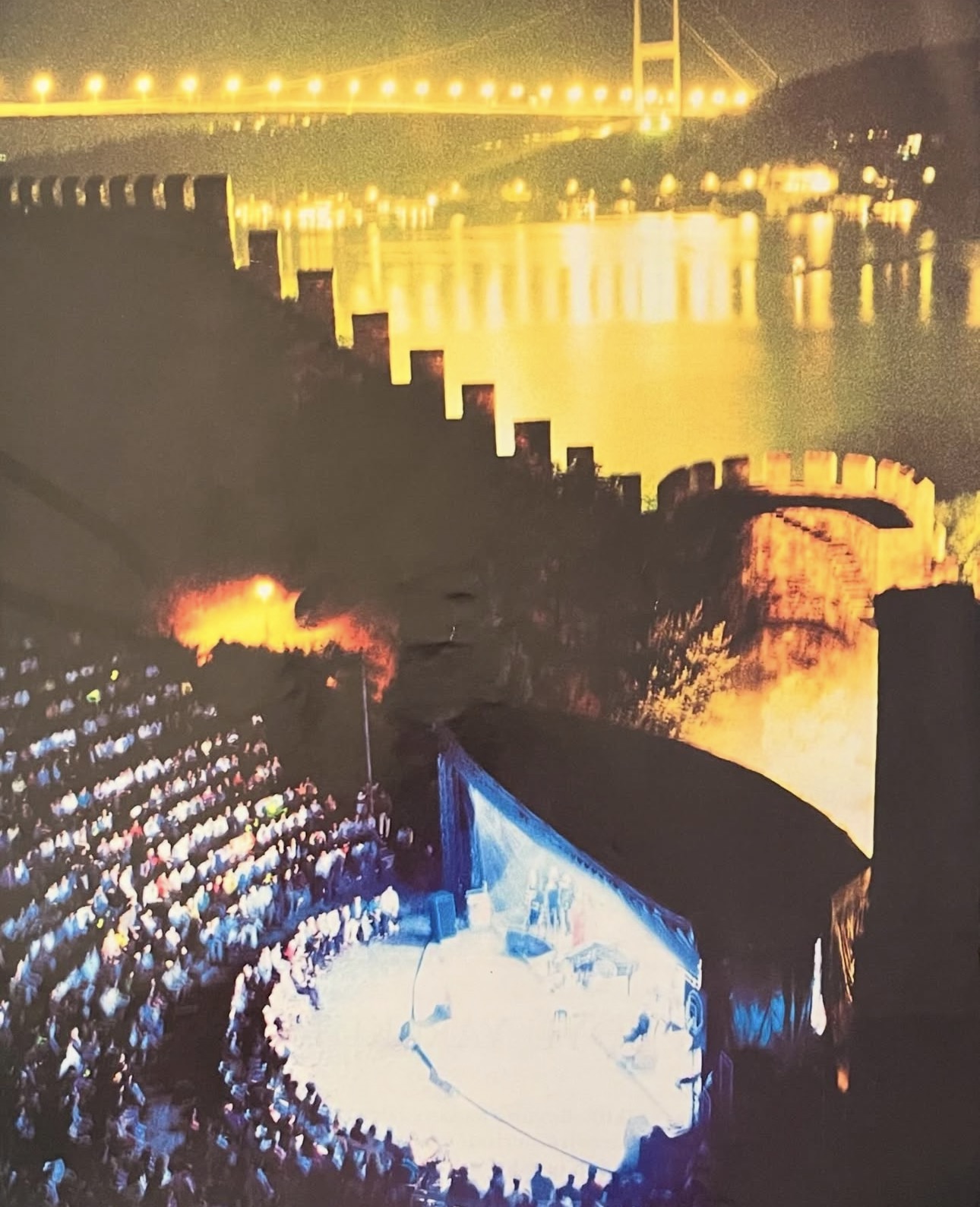
On 30 August that year, at the Türkiye Şarkıları concert in the ancient theatre at Ephesus, an Armenian church choir from Istanbul’s Feriköy district began Sarı Gelin in Turkish. Sezen finished it in Armenian. She went on to sing in Kurdish. Children from Diyarbakır came onstage. At one point in the evening, remembering Onno, she joked about the weight she had put on after meeting him, thanks to all the topik, the Armenian chickpea speciality, and the stuffed vegetables she had eaten. I love that detail. Just as you settle in for a formal speech about the ties between peoples, a woman reminds you of a table where she put on weight. There really is something persuasive about that as evidence of a life shared. Nobody remembers a second helping of something they’ve never eaten. 10
The thought of a child singing in Kurdish on that stage on Victory Day leaves my love for the Republic perfectly intact. Indeed, a republic with room for one more language strikes me as a more beautiful and more durable proposition. Necati Akpınar, who organised the concert, recalled that the same audience had sung the March of the Tenth Anniversary of the Republic together. I know this much. Had I been there I would have sung the march and stayed to listen to Sarı Gelin. Anyone looking for the moment I began to pull away from Sezen is at the wrong concert. 10
A prime minister calls to say thank you
The echoes of Diyarbakır reached a courtroom years later. In 2008 Aksu brought a complaint against the journalist Burhan Ayeri over a column that set the slogans shouted on the Nevruz grounds against what she had written about Turkish soldiers. Aksu told the court that the piece had made her out to be a PKK sympathiser and had put her family in danger. Someone might suppose that my affection for her voice makes me reluctant to entertain a grave accusation. For me there is a question of evidence. I cannot put a crowd’s chant in the mouth of the woman holding the microphone. In the public record I have examined, I find no statement in which Aksu endorses the armed actions of the Kurdistan Workers’ Party, the PKK. Whether she spoke about the organisation as plainly as I wanted her to is a fair question, and a harder one. My own objection deserves the trouble of answering it. 11
In January 2009, on the second anniversary of the murder of the Armenian journalist Hrant Dink, Sezen sang Güvercin, “Dove”. She invited his widow Rakel onstage and the two embraced. Rakel addressed the audience with an allusion to Hâkim Bey, a song Sezen sang. I am moved by the fact that at a memorial a widow could step out of the part so often assigned to her, the woman to whom people listen, whom they comfort and lead gently back to her seat. Here she was answering the singer from inside her own song. Sezen had a gift you can see at work that night. Even with the microphone in her hand, she could sense where to leave an opening for someone else. A few months later, when she addressed a whole country, I wish she had left a little more of one. 12
August 2009. The country was debating the government initiative that came to be known as the Kurdish opening. Sezen Aksu let Recep Tayyip Erdoğan, then prime minister, know that she and her family supported the process. He rang to thank her. In the remarks reported at the time, she said that those who stood in the way of a settlement would bear responsibility for the sons and daughters who would be lost in the future. Then came the word I still feel the weight of. A stain. One that could never be washed away, in this world or the next. The claim that she said this to people voting No in the following year’s constitutional referendum has been repeated ever since. She said it in August 2009 about the opening. Getting the date right does nothing to lighten the sentence for me. 12
What could possibly offend me about a singer getting in touch with a prime minister? Let her call. Like anyone who has feared sending a friend to war or a son to do his military service, she was entitled to hope for good news from the other end of the line. What angered me was the moment her faith in a government became a test of the rest of us as moral beings. You can take a risk on your own account. What entitles you to charge the future death of somebody’s child to that person’s conscience in advance?
I listen to her now with the ears of a citizen who wanted to know the terms of the opening. Where would the armed organisation’s role in the negotiations begin and end? What guarantees would there be that weapons would be laid down? Who at the table would speak up for a Kurd who felt the organisation did not represent him? When the mother of a fallen soldier asked why her son had died, who would answer her, and what would they say? You could ask every one of those questions and still wish with all your heart that no other child would die. The people setting that table had considerably more information and authority than those of us watching from a distance. By referring to a listener’s conscience a question a politician ought to have answered, Sezen brought the full weight of her standing to bear in precisely the wrong place.
I measure some of my anger against the delicacy I learnt from her songs. From a woman who could hear every possibility between going and staying even as she sang Git, I had expected a better ear for a citizen’s hesitation. I think she forgot that day where her power had come from. People felt close to her because each could find room for a different life in her songs. Then one morning they woke to hear their concern for the country pronounced a source of shame, in the very voice to which they had gone for comfort. I still catch on the difference between hearing those words from a government official and hearing them from her. I could have turned the official down. Hers was a voice I had invited into my home years before.
What fits on a ballot paper
On 12 September 2010 she went to vote at Sedat Simavi Primary School in Beykoz. The archive even gives us the ballot-box number. 1216. She had announced beforehand that she would vote Yes. Outside the polling station she said she took it for granted that those who disagreed should be able to say so. She added that she would be watching Turkey play the United States in the basketball final that evening. Of all the things in that day’s report, it is the match that catches me unawares now. People who had spent the morning arguing about the future of the political system could spend the evening willing the same ball through the same hoop. In the years since, we have learnt how little even that could do to keep us as close as we thought we were. 13
My difficulty with the 2010 referendum went well beyond which box Sezen put her stamp in. Removing the constitutional obstacle to prosecuting the leaders of the military coup, granting individuals the right to petition the Constitutional Court, changing the composition of that court and of the High Council of Judges and Prosecutors, all came in one package. A person could want the first two and still ask how the latter changes would keep a government’s power in check. There was nowhere on the ballot to enter those reservations separately. A celebrity had the same right as any citizen to say how she intended to vote. What that declaration did politically was add the trust her songs had earned to the weight of an entire package. Reading a constitutional provision takes work. Recognising a face you trust takes a second. 13
That is where my argument with some Turkish liberals of those years begins. It mattered that they recognised the damage done by the military’s long hold over civilian politics. I wish they had listened as carefully to those asking against whom a government might one day turn the powers it was acquiring. It would be too easy to hand Sezen the bill for an entire political milieu. Her own share is smaller and more tangible. In a 2015 interview she said she had wanted to give a chance to those promising peace and democracy. She answered her wounded listeners with some grace, too. They could be cross with her. She wasn’t cross with them. I give her credit for that answer. There is still some distance between defending your right to hope and taking stock of the people in whom you invested that hope, and what you asked of them in return. 14
Stop the story in 2010 and what you have is a cardboard figure. Sezen supported the Gezi protests. Writing on their first anniversary, she saw in the solidarity of people quite unlike each other the beginnings of another way to be citizens together. In 2016 she called for the release of academics imprisoned over a petition. Speaking up against a government she had once supported tells me little about whether she agreed with my assessment of the consequences of that support. It does make it hard to sustain the picture of a singer who always turned her voice towards whoever held power. I have given up expecting her to be consistent enough to make my job easy. Come to that, if I made the same demand of myself, how confidently could I walk into the newspaper archives? 15
The subject of the sentence
In September 2015 she answered a short questionnaire for the magazine Yumuşah G. Asked what angered her most, she spoke of waking every day to another funeral, and of the indifference of the state. Asked what public gesture had stirred her, she cited Lieutenant Colonel Mehmet Alkan’s outcry. Alkan had spoken out in Osmaniye at the funeral of his brother, Gendarmerie Captain Ali Alkan, who had been killed in Şırnak. One was an elder brother speaking beside his brother’s coffin. The other was an artist who wanted people to hear him. I can understand them both. My anger comes from somewhere else. The state was named in those answers. The PKK was not. 16
At moments like that I care about grammar. People died. Clashes broke out. Grief came to a home. Turkish has any number of graceful ways to make the subject disappear. They fit a newspaper headline as neatly as the metre of a folk song. Yet somebody planned an attack, somebody carried a weapon, somebody chose to open fire. There is a price to writing the perpetrator out of sentence after sentence about the PKK’s violence. Seldom is it paid by people like me who get to write about it. It falls to the family whose son’s name makes the headlines for a day and who, the next morning, go back to the silence in their house. If my citizenship entitles me to be angry with the state, I owe that same family the courtesy of naming the organisation responsible for its own acts.
In December Sezen wrote at greater length. This time she was sitting beside her mother in İzmir, a news channel on, one eye on her mother. What was happening in Sur, in Dargeçit, in Nusaybin, in Silopi, in Cizre, she asked. She spoke of those killed in and out of uniform, of the homes to which news of a fallen soldier had come. She set out the duty of the state in plain terms. And in writing she went back to the word that had wounded me six years earlier. “Democracy takes no stain,” she wrote. The stain she had once seen on people who questioned the opening was something she now wanted to keep off the dignity of the citizen. Reading those two pieces side by side years later, I was struck by the way that one word had changed hands. 17
There we part company again. In parts of south-eastern Turkey that December, fighting between the security forces and the PKK’s armed youth wing was upending civilian lives. We hardly needed the state’s leave to question its conduct. A person whose street had been drawn into the fighting ought equally to have needed nobody’s leave to challenge the armed organisation. Most of Sezen’s questions went to the state. I wanted her to turn with the same clarity to whoever put the barricade there. By what right does an armed group claiming to speak for a people decide that the street outside one of those people’s homes is to become a battlefield? Why did I feel so alone trying to finish that half of the sentence? 17
Here is where I am quite capable of an injustice of my own. To pass judgement on a woman’s entire life because she failed to name an organisation in one interview would be to do precisely what I have charged her with doing. In September 2012, in Harbiye, she sang Tanrının Gözyaşları, a song she had written for fallen soldiers. She spoke afterwards of her own sense of guilt and how little heart she had for the jokes she had prepared for the concert. Consider the strangeness of that evening. A crowd had bought tickets, she had funny stories to tell, a professional had done everything she needed to do to be ready on time. And then the country had come onstage with her, and she had to explain why none of that preparation would serve. Knowing she sang that song, I have no patience with the charge that a soldier’s death meant nothing to her. I believe in her grief. What I sometimes take issue with is the language she used when, in public, she apportioned responsibility. 18
The black rubber shoes from Maçka
On 11 August 2017, in the Maçka district of Trabzon, fifteen-year-old Eren Bülbül and Ferhat Gedik, a senior non-commissioned officer in the gendarmerie, were killed by PKK gunfire. Sezen shared a video that included a photograph of Eren, set to Bir Çocuk Sevdim. His mother, Ayşe Bülbül, was asked about it. In that interview is one of the truest things I have read about whom a song can reach. “Sezen Aksu is a mother too. She knows what I’m going through,” Ayşe said. In the same interview she spoke about her son’s black rubber shoes. She was now wearing the pair he had on the day he died. She wanted the people who killed him caught. 19
Stay with those shoes a moment. A mother accepts the comfort Sezen offers. In the same interview she asks for justice. Two truths we seem determined to set against each other can sit quite peaceably together in her house. She wants another mother to recognise her grief and she wants the people who brought that grief upon her to be caught. Nobody is entitled to make her choose. Of a singer, of a writer, of myself, I ask for the clarity of those two sentences, which this woman could hold together without apparent effort. To say we share her grief and let her request go unheard would be an exquisitely polite way to wrong her.
Two years later another mother called out to Sezen from Diyarbakır. Families had gathered outside the provincial offices of the Peoples’ Democratic Party, the HDP, demanding their children back from the PKK. One of those mothers, Ayşegül Biçer, named the artists she hoped would help. Alongside Cem Yılmaz, Yılmaz Erdoğan and Tarkan, she named Sezen Aksu. I know too little to say what answer one woman gave the other. What stays with me is who called to whom. A mother in Diyarbakır is wondering which door in Istanbul to knock on so that someone will hear about her child, and the name that comes to her is Sezen’s. That, too, is what becomes of the intimacy the singer invited over the years. Sometimes the trouble that knocks at your door is one you never chose. 20
There is room for both mothers in my love for this country. Part of what it means to me to be loyal to the Republic Atatürk founded is that a mother in Diyarbakır should have more say over her child’s fate than an organisation does. By the same token, I want a mother who goes to the state seeking redress to find someone there willing to hear her. Put those two sentences in the same piece and people imagine you have found a comfortable seat somewhere in the middle. It is surprisingly uncomfortable. Try to keep faith with both and the people you are most likely to anger are your own. I ask that much of myself when I defend Sezen, and when I am angry with her.
Who keeps a record of a friendship?
For a long time I hardly knew what to do with some of Sezen’s friendships. There is something faintly ugly in wanting to know who sat at the same table as a singer you love. Yet when those relationships become public they do leave a political impression. You see which words move an artist to tears, which deaths call forth a song, behind which political initiative she is willing to throw her entire reputation. Despite yourself you begin to draw a map. Some of the affinities on that map troubled me. In particular, at a time when people who pinned their hopes on political negotiations with the PKK had ample opportunity to make their case, I wanted those describing the pressure the organisation exerted on Kurds themselves to receive the same hearing. There are two scenes against which I can test that feeling.
The first takes us to Germany. In Munich in June 2014, Sezen was moved to tears as she sang Ağladıkça, a song many associate with Ahmet Kaya. Gülten Kaya wrote its Turkish words, Ara Dinkjian its melody. In Greece the same tune had a life in the voice of Eleftheria Arvanitaki, with quite different words. To read a single political allegiance off that performance you would first have to squeeze all those people into a single idea. I am still angry about the humiliation inflicted on Ahmet Kaya at an awards ceremony in 1999 when he announced that he would record a song in Kurdish and make a video for it. Even if Kaya and I could never have agreed on one sentence about politics, I could not defend what was done to him in that room. If we have to agree with everything an artist thinks before we can recognise an injustice done to him, we are going to be of very little use to anybody but ourselves. 21
The second scene comes from Ceren Önder Kandemir, the daughter of Sırrı Süreyya Önder. Her father was still trying to get his film Beynelmilel made. At home they had lived through the anxieties of leaving the detergent business for the cinema. Now there was a script. He wrote Sezen a letter to ask whether she would appear in the film. First he read it aloud to his daughter. Seeing that she was crying, he asked her to make him a coffee. Sezen never appeared in the film. There can be few things more suited to the cinema than what survives of that offer of a part, the sound of a father’s voice in his daughter’s memory. 22
Önder went on to take part in the talks on the island of İmralı, where Öcalan was imprisoned, and became a DEM Party MP and a deputy speaker of the Turkish parliament. When he died in 2025, figures from widely different parties stood together at the ceremony in Istanbul’s Atatürk Cultural Centre. The papers reported that his close friend Sezen had sent yellow roses to the funeral. I have serious objections to aspects of Önder’s political role, particularly to the representative authority ascribed to the leader of an armed organisation. I also question the influence Sezen exercised on public opinion when she put her faith in that process. But it is hardly my place to stand before those yellow roses and cross-examine a grieving friend. Political differences may accompany you all the way to a funeral. At the coffin you still get to choose what to do with them. 22
That is why his daughter’s story about the letter matters to me. Having first known Önder by a political title, I have a tendency to start his life in my head on the day he acquired it. Before that there was a home, a job, the unfinished business of making a living, a girl making her father coffee. We know only the years of these friendships that made the papers. I can read what political support Sezen offered in those years and take issue with it. The same paper cannot tell me who loved whom and why. Set myself up as a judge of friendship and I would be the first to trespass on the private life of the citizen whose rights I claim, as a republican, to defend.
When they came for her voice
In January 2022 she came under attack over a reference to Adam and Eve in Şahane Bir Şey Yaşamak, a song she had released with Yaşar Gaga in 2017. A song that had been there for anyone to hear for years suddenly found itself in the dock. Speaking at the Çamlıca Mosque, President Erdoğan spoke of tearing out tongues that insulted prophets. He later said his words had not been directed at Sezen Aksu. On 22 January Sezen shared a new piece of writing called Avcı, “The Hunter”. A politician had once thanked her for taking a stand for peace. Now she found herself called to account for something she had imagined in a song. Some people wanted to read the intervening years as a tidy little tale of poetic justice. I took no pleasure in the telling. 23
My old anger at Sezen even proved oddly useful that day. I could hardly have devised a more honest test of what I believed about freedom of expression. Would I speak up for someone I believed to have been wrong when a wrong was done to her? The answer cost me something. To defend a woman who had once so readily dismissed my political objections risked giving the impression that I had withdrawn them. So be it. A lyric can offend a believer. They can answer the singer, write about it, throw the record out of their house. When talk of tearing out tongues comes from the highest office in the state, the scale of the argument changes. The microphones have never been shared equally between a citizen and a government. I knew that when I was angry with Sezen, too.
Besides, my generation owes her something. How often had we heard, in her Turkish, how funny a woman could be when she said things she wasn’t supposed to say? How someone who had been hurt could still feel desire, how a woman who had been left could perfectly well look in the mirror the next morning and laugh at herself? It would have been a comfortable kind of hypocrisy to love the freedom she made for women in her songs and secretly hope to see her taught a lesson for the tongue that got her into trouble outside them. The Sezen I loved had a tongue sufficiently her own to wound me occasionally too.
A younger listener’s objection
I try to picture a listener younger than I am, someone who calls himself an ulusalcı, a secular Turkish nationalist, and whose first memory of Sezen Aksu isn’t even a song. Perhaps the first thing he heard was that sentence from 2009. Perhaps he watched a prime minister express his thanks, a scene at a funeral, a singer’s show of affection for a political figure, one after the other. In the time it once took me to turn a cassette over, he might have seen five pieces of footage spanning fifteen years. Some of what divides us is as simple as the order things happened in. I loved her voice first and felt hurt by her words afterwards. He heard the words first. Why should he love the voice? He certainly doesn’t owe it to me.
I do have a confession for him. I don’t believe the media of my youth were much kinder than his phone. A newspaper could make an artist out to be an enemy of the country in a single headline. At that awards ceremony the people facing Ahmet Kaya had none of today’s phones in their hands. They still found a way to leave a man utterly alone in a crowd. So I’m unwilling to allot all the subtlety to my generation’s cassettes and all the prejudice to his screen. We had considerable experience of our own in hearing what suited us and letting the rest go by. 21
Nor could I dismiss his anger. Perhaps he too has had enough of the three paragraphs of political excuses that can precede the plain statement that the PKK killed a child. Perhaps he resents seeing his attachment to the Republic, his Turkish identity, his flag, treated as a fault that a little more education might correct. I resent it too. What I would like him to know is that if his attachment to this country is roomy enough for him to challenge Sezen, it is roomy enough for him to go to her concert in Ephesus. There is a price to praising the riches of the Turkish language while trying to tear from memory one of the women most often heard speaking and singing it over the past half-century. Especially if, one day, he should hear in her phrasing a word the way his mother used to say it.
In daily life the distance I have put between us is an undramatic thing. When I read what Sezen has said on the eve of an election, I no longer bring to the table the trust I learnt from her records. If she mentions somebody in an interview, I try to find out about that person for myself. When I criticise something she said, I check which year she said it and what the occasion was. If one of her songs happens to come on, I still listen to the end. There were years when I counted that last habit a concession. Now I have trouble understanding why. What possible service to the fight against the PKK could there have been in taking Ünzile’s fence away from me?
The listener a song comes back to
At an Istanbul concert in 2016 Sezen spoke of a farewell to the stage. Biraz Pop Biraz Sezen followed. The Demo and Demo 2 projects let us hear what songs we knew in other voices sounded like in her mouth. In 2025, her fiftieth year in music, she released Paşa Gönül Şarkıları. In April 2026 came Biz de Yeniden Başlarız. She and Murat Bulut produced the nine-song album together. Her son Mithat Can Özer contributed to the new arrangements. There is a measure of the time that has passed between the name Sezen Seley on the label of a first single and a musician who now shares an album credit with her son. The girl who left İzmir for Istanbul to make a record gets to hear what her boy has done with a song. 24
In the intervening half-century the songs have moved house several times. From the record label to the cassette inlay, from three lines of writing on a music video to a tiny set of credits you open with your thumb on a phone. In 2025 Universal Music Türkiye announced that it had acquired recorded music rights to her catalogue. There are things a contract can describe with perfect accuracy. In what contract would you put the point in a break-up song at which I always fall silent, the person another man is thinking of at that exact moment, or the reason Ayşe Bülbül, hearing about a video, remembered that Sezen too was a mother? A country’s musical memory is the sum of what was recorded and what happened, unrecorded, to the people listening. My share is in the latter. 24
I went looking for a sentence of reconciliation with which to end this essay. I couldn’t find one. Would Sezen make her pronouncement of 2009 in the same words today? If I could ask her anything it would be that. I have no need for her to name politicians one by one, to defend her friends, to repent in public for a vote she once cast. What does she hear, setting that word “stain” before her now, knowing how widely she once cast it, widely enough to take in a mother’s objection? You can listen to an old recording and pick out the inexperience in your young voice. Can you hear the place that grates in an old political sentence?
I owe it to my country to name the violence of the PKK plainly. I owe it as honest an account of what Sezen Aksu has given its music. If one debt cancelled the other, my job would have been easier. After all these years of listening, I haven’t the heart to write only what comes easily.
Sometimes I put Git on again. Once more the woman says that same word. When I was young all my attention was on the man about to step over the threshold. Now I also hear the woman who stays behind to pay the price of having said it. For a song to let you hear something new forty years on, it turns out the voice needn’t change. The listener does.
I can’t call her Sezen Hanım. I’m still hurt, Sezen.
Sources and archive notes
- Müjdat Gezen’s recollection of the studio
Cumhuriyet · 21 July 1996, p. 20 - Sarayköy, İzmir and the first records
Kral Müzik · Biography of Sezen Aksu · Türk Pop Müziği archive · Record labels and credits · Cumhuriyet · A biographical profile - Kaybolan Yıllar
İstanbul Müzik Atölyesi · Score and credits · Söz Müzik · The early recordings - The records of the 1980s
Sezen Aksu · Firuze, original recording · Sezen Aksu · Git · Kral Müzik · Album release dates - Ünzile, Şinanay and the Kardelenler project
Sezen Aksu · Ünzile · Sezen Aksu · Şinanay · MediaCat · The education project and the concert - The two sides of Gülümse and the words of Kemal Burkay
Deform Müzik · Track listing on the 1991 cassette · Sinema Müzik · Album entry · Cumhuriyet · Interview with Kemal Burkay - Sezen Aksu and cultural intimacy
Martin Stokes · The Republic of Love, University of Chicago Press, 2010 - The records and musicians of the 1990s
Kral Müzik · Yengi, Erener, Yüksel and Heparı · İBB Kültür · Recordings from the period · Hürriyet archive · The death of Onno Tunç and his memorial - From Işık Doğudan Yükselir to Deliveren
Kral Müzik · Albums and song credits · Qobuz · Düğün ve Cenaze - The concerts in Diyarbakır and Ephesus
Sezen Aksu · Her account of Nevruz, March 2002 · Milliyet · Report from Ephesus, via the HyeTert archive - Aksu’s testimony in court
Yeni Şafak · The hearing in Bakırköy · Patronlar Dünyası · The 2007 column and Aksu’s testimony - The memorial with Rakel Dink and the 2009 Kurdish opening
bianet · The Hrant Dink memorial · bianet · Aksu’s support for the initiative, 19 August 2009 · Habertürk · The prime minister’s phone call, 21 August 2009 · Teyit · The context of the remark about “this world or the next” - The 2010 referendum
Habertürk / İHA · Aksu’s remarks outside the polling station · Anadolu Agency · The constitutional amendments put to the vote - Aksu looks back in 2015
Cumhuriyet · Interview on the 7 June election and her estranged listeners - Gezi and the imprisoned academics
Sözcü · The letter on the Gezi protests · Sözcü · Aksu’s appeal for the academics’ release - The Yumuşah G questionnaire and the funeral of Ali Alkan
Türkiye · Aksu’s answers to the magazine’s questions · Cumhuriyet · Ali Alkan’s funeral, 23 August 2015 - South-eastern Turkey in December 2015 and Aksu’s account
Sezen Aksu · Her essay for bianet, Bir Yol Var: Yaşamak ve Yaşatmak… · Amnesty International · Annual report on Turkey, 2015/16 - The song for fallen soldiers in Harbiye
Habertürk · Tanrının Gözyaşları and Aksu’s remarks onstage, 6 September 2012 - Eren Bülbül, Ferhat Gedik and Ayşe Bülbül’s response
Anadolu Agency · Maçka on 11 August 2017 · Cumhuriyet · Ayşe Bülbül in her own words - Ayşegül Biçer’s appeal
Anadolu Agency · The Diyarbakır mothers’ appeal to artists, September 2019 - Ahmet Kaya’s awards night and the travels of Ağladıkça
Cumhuriyet · The 1999 awards ceremony · Habertürk · The Munich concert · Cumhuriyet · Recordings of the same melody in four languages - Sırrı Süreyya Önder’s letter and funeral
Ceren Önder Kandemir · On the writing of Beynelmilel, in Serbestiyet · DW Türkçe · The ceremony at the Atatürk Cultural Centre · Halk TV · The yellow roses Aksu sent - The dispute over a song in 2022
Habertürk · The course of the dispute and Aksu’s response, Avcı · Cumhuriyet · Erdoğan’s statement on 26 January - From the stage to the studio and the later records
Cumhuriyet · The 2016 farewell to the stage · Medyascope · Paşa Gönül Şarkıları · Söz Müzik · Production and arrangement credits for Biz de Yeniden Başlarız · Music Business Worldwide · Recorded music rights, 30 April 2025