A 1,500-year-old blacksmith’s workshop at Seleukeia Sidera. Melian obsidian at Çaltılar Höyük, evidence of Bronze Age exchange across the Aegean. A 5,000-year-old sacred area at Tadım Höyük. Layers from the Early Bronze Age to the Ottoman period inside Bayburt Castle. In the summer of 2026, Türkiye’s archaeological news began to read less like a season and more like a geological event.
The scale is real. Recent official reporting counted more than 250 active excavation sites across 65 provinces, supported by hundreds of museums and archaeological areas. Conservation laboratories, international missions and year-round projects have turned Türkiye into one of the world’s most consequential archaeological landscapes—not simply because so much lies underground, but because an enormous apparatus now exists to bring it into knowledge.
A country becomes an archaeological superpower not when it finds more objects, but when it can care for every consequence of finding them.
The press release is the first layer
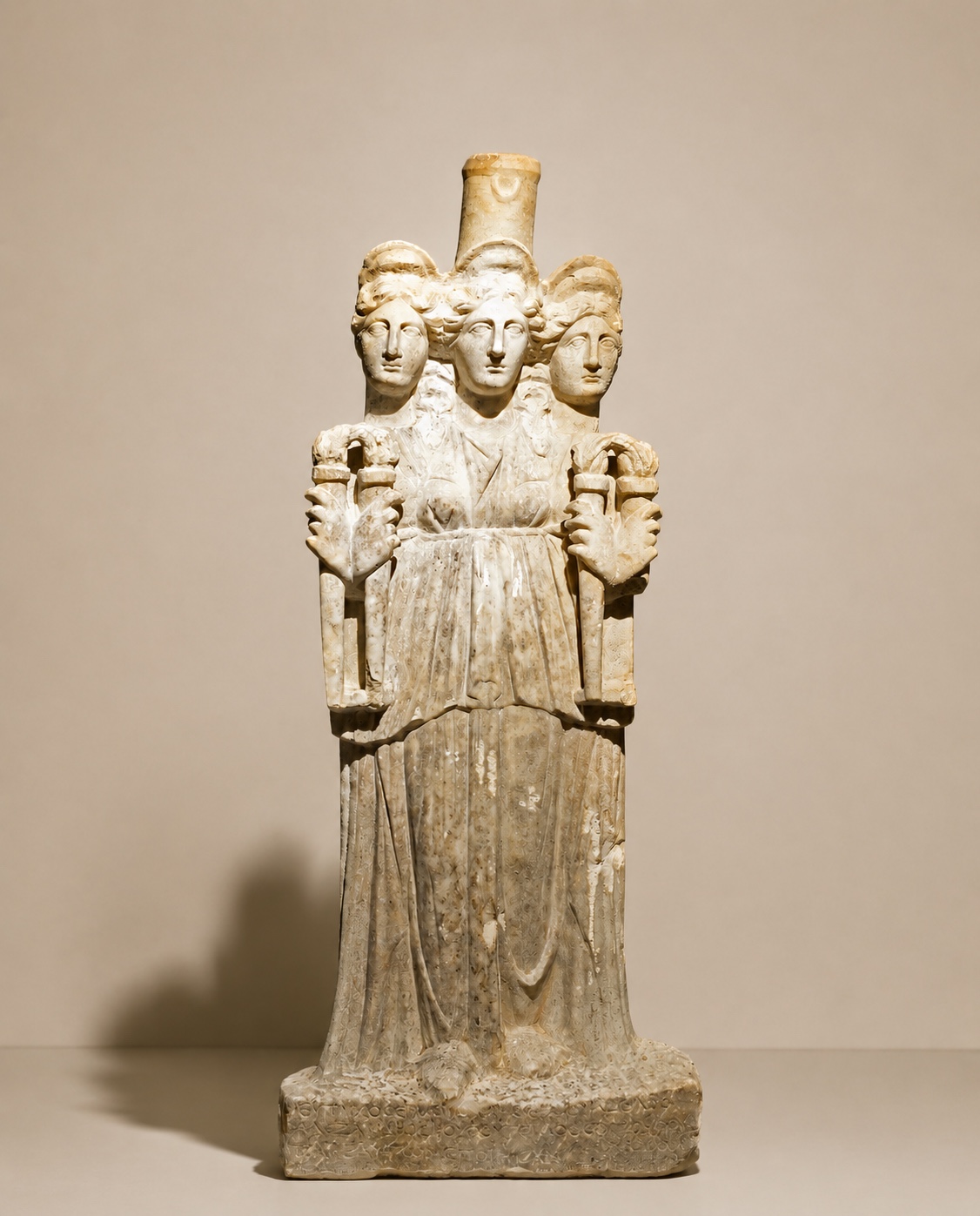
Discovery has a seductive grammar. An object is “uncovered”, a city is “brought to light”, a mystery is “solved”. The language compresses months of trench work, ceramic sorting, soil analysis and conservation into a single photogenic moment. Gold, monumental sculpture and intact mosaics travel internationally. A drain, carbon sample or box of animal bones may transform scholarship while remaining invisible outside the field report.
This imbalance is not uniquely Turkish. Archaeology everywhere competes for attention through the exceptional. But Türkiye’s extraordinary volume of fieldwork makes the distance between excavation and public memory especially important. A discovery that cannot later be located in a catalogue, read in a final report or understood by the community beside the site has had only half a life.
What happens after the object leaves the trench?
First comes conservation: stabilising metal, desalinating ceramics, controlling humidity, documenting fragments before restoration creates a false whole. Then analysis, publication, storage and interpretation. Each step requires specialists, money and time. The greater the number of active excavations, the greater the risk that resources concentrate around spectacular sites while modest assemblages accumulate out of sight.
The Ministry’s Höyük journal tells a revealing story. After long interruptions, it resumed regular publication in response to the increasing number of excavations and the need to share results. Türkiye also supports peer-reviewed journals, an annual international archaeology symposium and new open repositories. These are not decorative additions to fieldwork. They are the infrastructure that turns a season’s find into durable evidence.
Storytelling is not publicity
Pompeii understands that a discovery needs several languages at once: the excavation diary, the scholarly paper, the museum label, the classroom resource, the documentary and the image that invites a person to care. Anatolian archaeology too often arrives abroad as a brief marvel detached from the geography that made it possible. Better storytelling would not mean louder superlatives. It would mean continuity.
That continuity should be bilingual at minimum, digitally stable and attentive to people living near a site. A village should not learn what was found beside it from a foreign-language headline. Nor should an archaeological park treat the local community as scenery after depending on its roads, labour and memory.
The task is not to make every excavation go viral. It is to prevent every discovery from becoming disposable.
Slow is not failure
There is an important counterargument. Archaeology should resist the speed of the news cycle. Premature claims harden into myths; precise locations can invite looting; conservation and scientific dating take years. A project that publishes cautiously may be serving the evidence better than one that posts daily.
The choice, however, is not between patient science and public access. It is between systems that make patience legible and systems that allow silence to become disappearance. A useful excavation page can say what is known, what remains provisional, when results are expected and where the archive will live.
A superpower measured in aftercare
Türkiye does not need fewer excavations. It needs a standard by which every excavation creates a lasting public record: conserved material, accessible inventories, peer-reviewed results, long-term digital files, fair local employment and interpretation that survives the ribbon-cutting.
The real golden age of archaeology will not be measured by how often Türkiye appears in the discovery pages. It will be measured by whether a student in 2036 can open the record of a 2026 trench, follow the evidence and understand not only what was found, but what the country chose to do next.