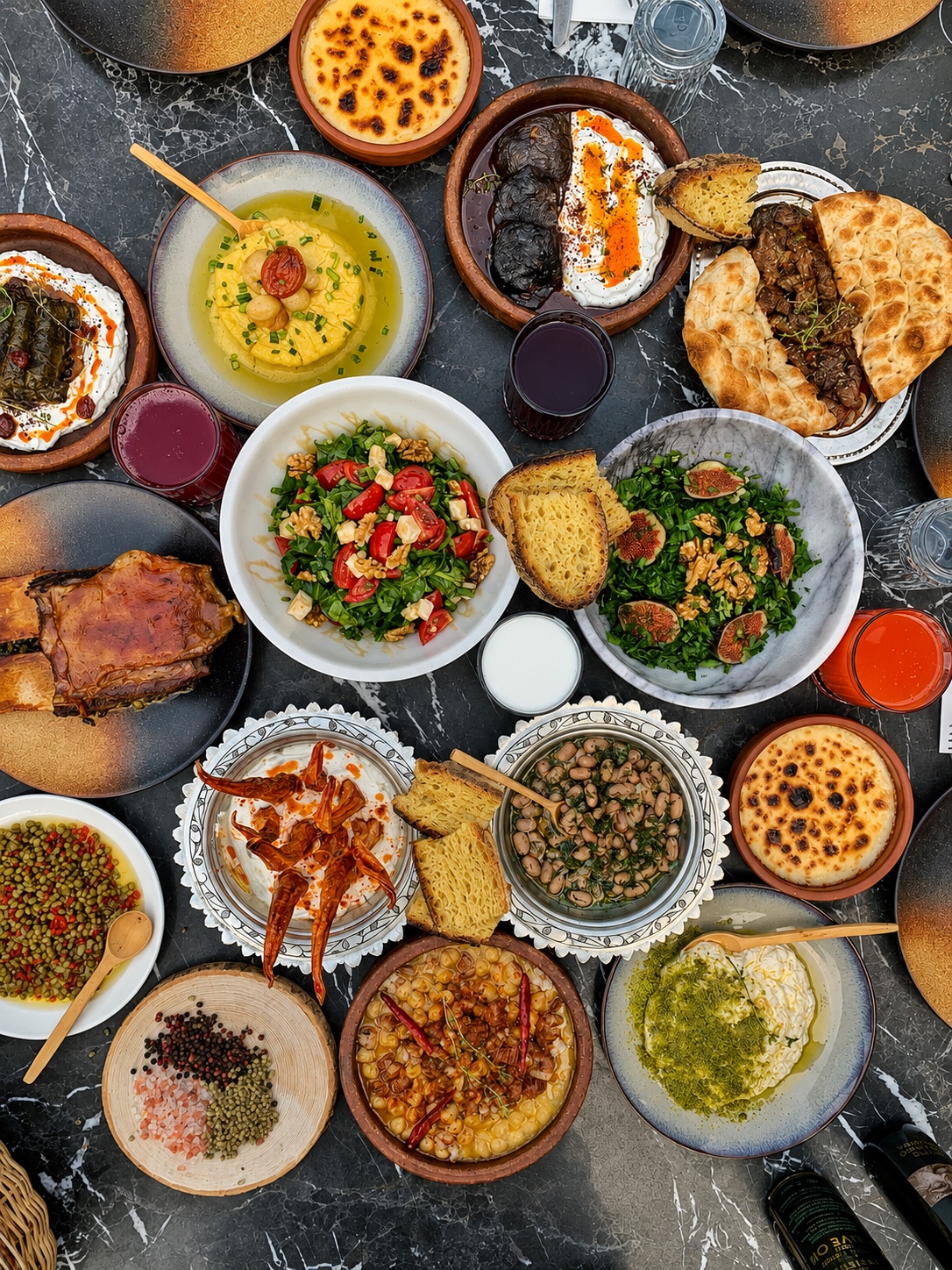
You can order mantı in New York and finish dinner with baklava in Sydney. Döner, meanwhile, needs little introduction in Germany. Turkish food has made itself at home in plenty of places. This selection follows twenty dishes on that journey, from the familiar takeaway to the bowl of soup that rarely gets the headline.
What the numbers can tell us
This is our 2026 edition, researched on 22 November. We could not verify a comparable worldwide dataset ranking the twenty most-consumed Turkish dishes in 2026, and the year is not yet complete. The twenty entries below are an editorial selection supported by published order data and documented overseas availability, not a global consumption ranking. Their numbers are a reading order.
We keep three kinds of evidence separate: measured domestic orders, an explicitly attributed overseas industry estimate, and published menus showing where dishes are offered. A menu proves availability, not how many people ate a dish. Ratings and search interest are different measures again. This feature is independent of our Istanbul restaurant guide.
A measurable starting point: Türkiye
The Ministry of Trade’s report, published in May 2026, counts 2025 quick-commerce food-delivery units in Türkiye. Selected categories appear below. They are neither 2026 figures nor worldwide totals; they exclude much eating at home and in restaurants. Broader categories cannot be assigned entirely to one dish. [1]
| Source category | Million units |
|---|---|
| Chicken döner | 56.64 |
| Lahmacun | 33.16 |
| Börek and pastries | 23.09 |
| Çiğ köfte | 21.64 |
| Grilled meatballs and meat dishes | 16.85 |
| Soup | 15.84 |
| Pide | 13.07 |
| Tantuni, beef and chicken | 12.59 |
| Rice | 11.21 |
| Adana and Urfa kebab | 8.61 |
| Meat döner | 8.11 |
| Simit | 7.53 |
| Chicken shish and grilled chicken | 6.06 |
| Salad, cacık and meze | 5.08 |
| Milk puddings | 4.69 |
Beyond Türkiye: döner’s scale in Germany
A report published on 1 November 2026 relays a DW interview with Gürsel Ülber, chair of the European Turkish Döner Manufacturers Association. He estimates average German consumption at about 1.3 billion portions a year, or roughly 3.5 million a day, explicitly describing the figures as the industry’s estimates. This is a country-specific estimate of annual scale, not a completed 2026 census or a worldwide total. [2]
It is the clearest numerical overseas signal in our research. It does not make the other nineteen entries statistically comparable. To document their international presence, we consulted published menus in London, New York, Sydney and Romania. These examples are evidence, not restaurant recommendations or a representative survey of the world.
Twenty dishes, many ways of travelling
01. Döner
The turning spit is the clearest example here of a Turkish dish becoming an everyday meal abroad. Germany’s bread, salad and sauce combinations also show how a dish changes as it travels. Both chicken and red-meat versions belong to the story.
Evidence: Germany’s industry estimate above [2].
02. Lahmacun
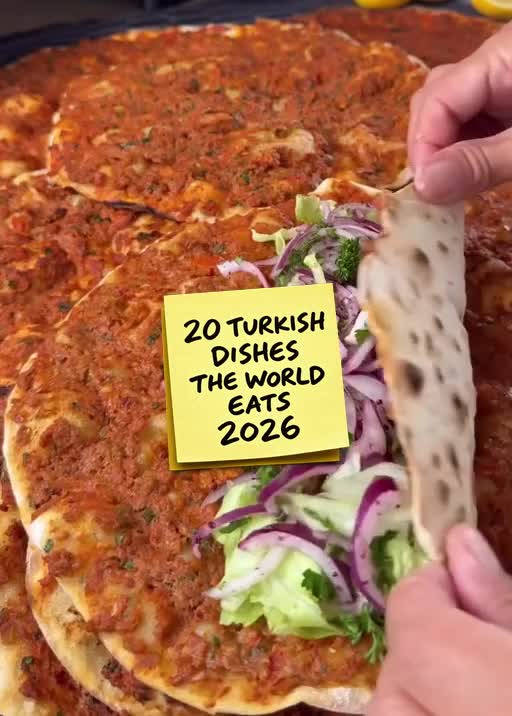
Thin dough carries a finely spread mixture of meat, vegetables and seasoning. Its portability makes the format easy to recognise across borders. Published menus in London retain the name lahmacun, even where an English explanation calls it a kind of pizza.
Overseas record: London menu [3].
03. Börek
A whole tray, a coil, a triangle or a crisp roll: börek is a family of pastries rather than one fixed shape. Cheese-filled rolls appear on overseas menus alongside other forms, carrying the pastry tradition well beyond the breakfast table.
Overseas records: London and New York menus [4, 5].
04. Çiğ köfte
The meat-free bulgur version has a life of its own as a takeaway meal. Lettuce, herbs and lavaş change how it is eaten without obscuring the seasoned mixture at the centre. In London it is offered both by the piece and as a wrap.
Overseas record: London menu [4].
05. Köfte
Köfte moves between home cooking, street food and the grill. There is no single recipe that can stand for all its regional forms. Overseas menus offer another reminder of that variety: a meatball sandwich and a plate of pan-fried patties are different meals.
Overseas records: London and New York menus [4, 5].
06. Mercimek çorbası
Lentil soup gives this selection a quieter centre: a bowl rather than a skewer or a pastry. Its appearance on a New York Turkish menu documents its journey abroad, including a vegan version. Soup deserves a place in the story of this cuisine’s reach.
Overseas record: New York menu [5].
07. Pide
The long shape is familiar; the filling changes the meal. Minced meat, cheese, vegetables and egg allow pide to move between tastes without losing its identity as bread baked with a topping. London’s published selection includes several of those variations.
Overseas record: London menu [3].
08. Tantuni
Small pieces of meat and a warm wrapping give tantuni its compact form. Its overseas life extends beyond a generic kebab category: a London menu names it directly, with meat and chicken options and a yoghurt-topped serving.
Overseas record: London menu [4].
09. Pilav
Pilav often arrives beside the dish that gets the attention. Rice and bulgur preparations nonetheless form part of the meal’s structure, carrying juices and providing a change of texture. Overseas Turkish menus offer them both as accompaniments and separate sides.
Overseas records: London and New York menus [3, 5].
10. Adana and Urfa kebab
These minced-meat kebabs are grouped together in the domestic dataset, so we keep that grouping visible. Their combined number cannot tell us which sells more. Adana’s name also appears on overseas menus, where ingredients and presentations can differ from the regional original.
Overseas records: Adana in London and New York [3, 5]; Adana and Urfa in Romania [7].
11. Tavuk şiş
Chicken on a skewer is one of the most accessible formats in a Turkish grill menu. It is also a useful check on the statistics: a category covering grilled chicken cannot be treated as a count of chicken şiş alone.
Overseas records: London and New York menus [3, 5].
12. Simit
The sesame-coated ring is small enough to eat on the move and substantial enough to anchor breakfast. Its presence on menus in London and New York shows that Turkish food abroad includes the bakery and breakfast table as well as the evening grill.
Overseas records: London and New York menus [3, 5].
13. Baklava
Fine pastry, nuts and syrup create a dessert whose texture matters as much as its sweetness. Pistachio and walnut versions are familiar within Türkiye. A published Sydney menu offers pistachio baklava: a concrete overseas presence, without a claim about how many portions were sold.
Evidence: Sydney dessert menu [6]; culinary background [8]. No comparable worldwide portion count verified.
14. Künefe
Shredded pastry surrounds a soft cheese centre, with syrup added to the hot dessert. Serving it warm is part of the experience. Sydney’s published version uses cow’s-milk mozzarella, illustrating how an overseas kitchen can adapt the ingredients while keeping the recognisable form.
Evidence: Sydney dessert menu [6]; culinary background [8]. Availability is not consumption volume.
15. Mantı
Small filled dumplings bring another texture to the table. The combination of dough, meat and yoghurt makes mantı distinct from a generic pasta dish, while versions differ in size and finish. It appears under its own name on menus in both London and New York.
Evidence: overseas menus [3, 5]. No separate comparable consumption total verified.
16. Dolma and sarma
Vegetables can be filled; leaves can be wrapped. The forms and fillings make this a broad family rather than a single standardised item. A New York Turkish menu includes both stuffed aubergine and grape leaves, showing that the story extends beyond meat-led dishes.
Evidence: New York menu [5]. Menu listings do not establish a global rank.
17. Menemen
Eggs, tomatoes and peppers make a breakfast dish that needs bread more than elaborate presentation. Its place on a London brunch menu is a small but useful example of Turkish breakfast travelling as an individual dish, alongside the larger mixed breakfast plate.
Evidence: London breakfast menu [3]. No annual worldwide total verified.
18. İçli köfte
A bulgur shell around a seasoned filling brings a different kind of craftsmanship to the köfte family. The contrast between the exterior and the centre is the point. Its presence in London and New York documents an overseas life beyond the better-known grilled forms.
Evidence: overseas menus [3, 5]. These are availability records, not popularity scores.
19. Cacık
Yoghurt and cucumber supply a cool counterpoint to a hot meal. The dish also sits comfortably among small plates, as overseas menus demonstrate. It belongs to a wider regional family of related preparations; including it here does not imply exclusive national ownership.
Overseas records: London and New York menus [4, 5].
20. Sütlaç
Rice pudding closes the selection with milk rather than syrup. The baked version brings a browned surface to a soft interior. A Romanian Turkish menu lists it, giving a documented example outside Türkiye; it does not supply the sales needed for a global ranking.
Overseas record: Romanian menu [7]; culinary background [8].
A cuisine is larger than its bestselling dish
The evidence gives us a partial picture: strong domestic delivery demand, substantial estimated döner consumption in Germany, and a wider repertoire offered abroad. It cannot tell us whether mantı outsells menemen worldwide, or put every home-cooked pot of rice into a spreadsheet. Leaving those gaps visible makes the account more useful.
These foods are part of Turkish culinary life, often with close relatives across the Balkans, the Caucasus, Central Asia and the Middle East. Migration and adaptation belong in their story. For this edition, the journey matters as much as the number.
Sources and method
Sources checked on 22 November 2026. We selected recognisable dishes and dish families with traceable evidence of overseas availability, adding order figures where the source category allowed it. We did not combine markets, convert revenue into servings, infer sales from menus, or use TasteAtlas ratings as consumption counts. This is not an exhaustive list or a statistically sampled top twenty. Menus can change; historical menu dates are retained below.