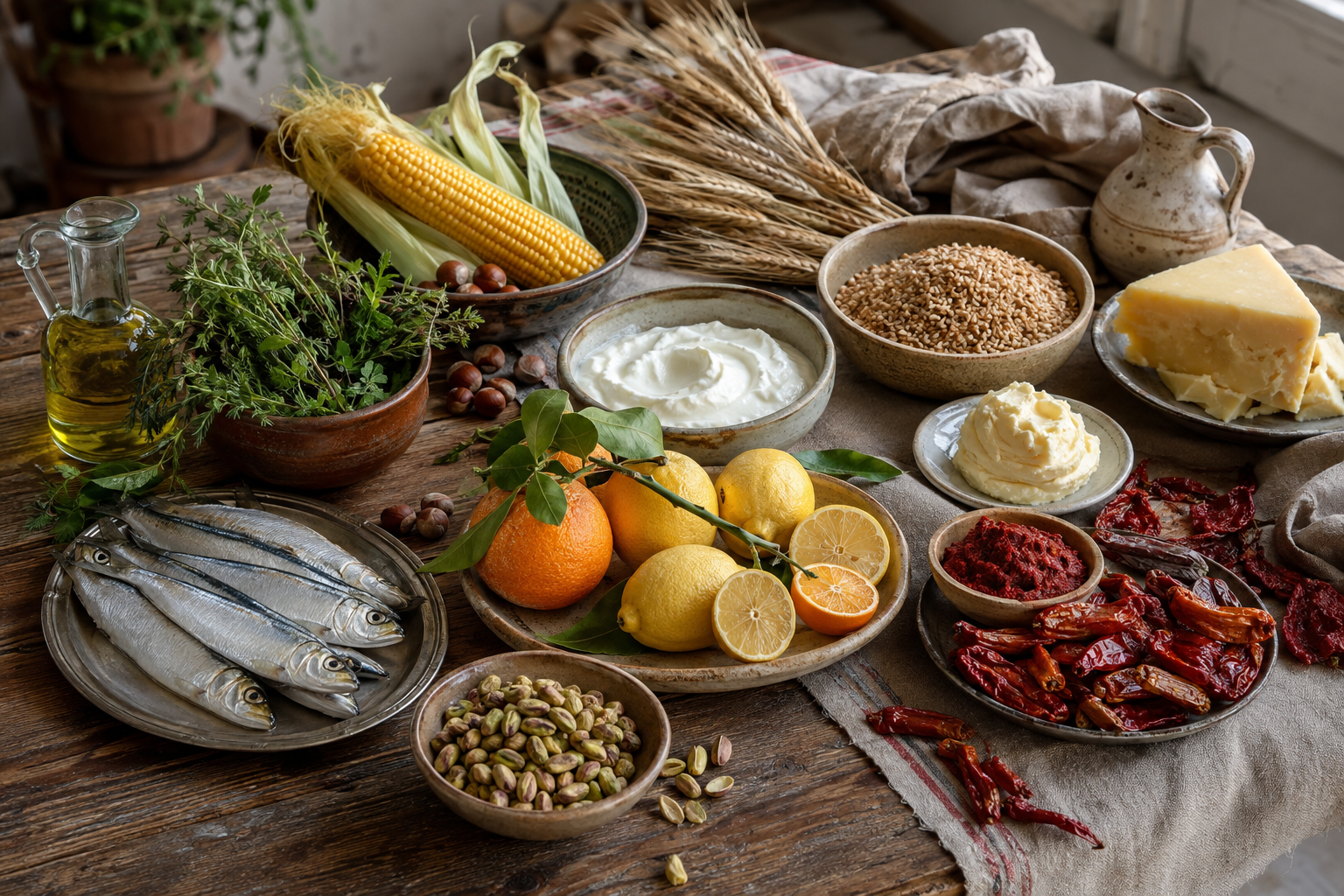
November is a particularly interesting month to eat in Türkiye. The summer produce has largely disappeared from the neighbourhood markets, the fishing season is well underway, olives are being harvested along the Aegean coast, and the first mandarins begin to fill fruit stalls across the country.
In Istanbul, chestnut sellers become more noticeable as the evenings grow colder. In Trabzon, conversations turn to the quality of the hamsi. Around Ayvalık, much of the agricultural calendar revolves around the olive harvest.
There is no single November in Türkiye. Geography, altitude and climate mean that the country experiences autumn in remarkably different ways. While parts of eastern Anatolia prepare for snow, the Mediterranean coast is harvesting citrus fruit.
For those interested in understanding Türkiye through its food, November is an excellent place to begin.
The Black Sea and its beloved hamsi
Few ingredients are as closely associated with a region of Türkiye as hamsi, the small European anchovy, is with the Black Sea.
As the waters cool, anchovies become an increasingly important presence in fish markets and home kitchens. Along the coast, particularly in Trabzon, Rize, Giresun and Ordu, the fish has developed a culinary repertoire far beyond what its modest size might suggest.
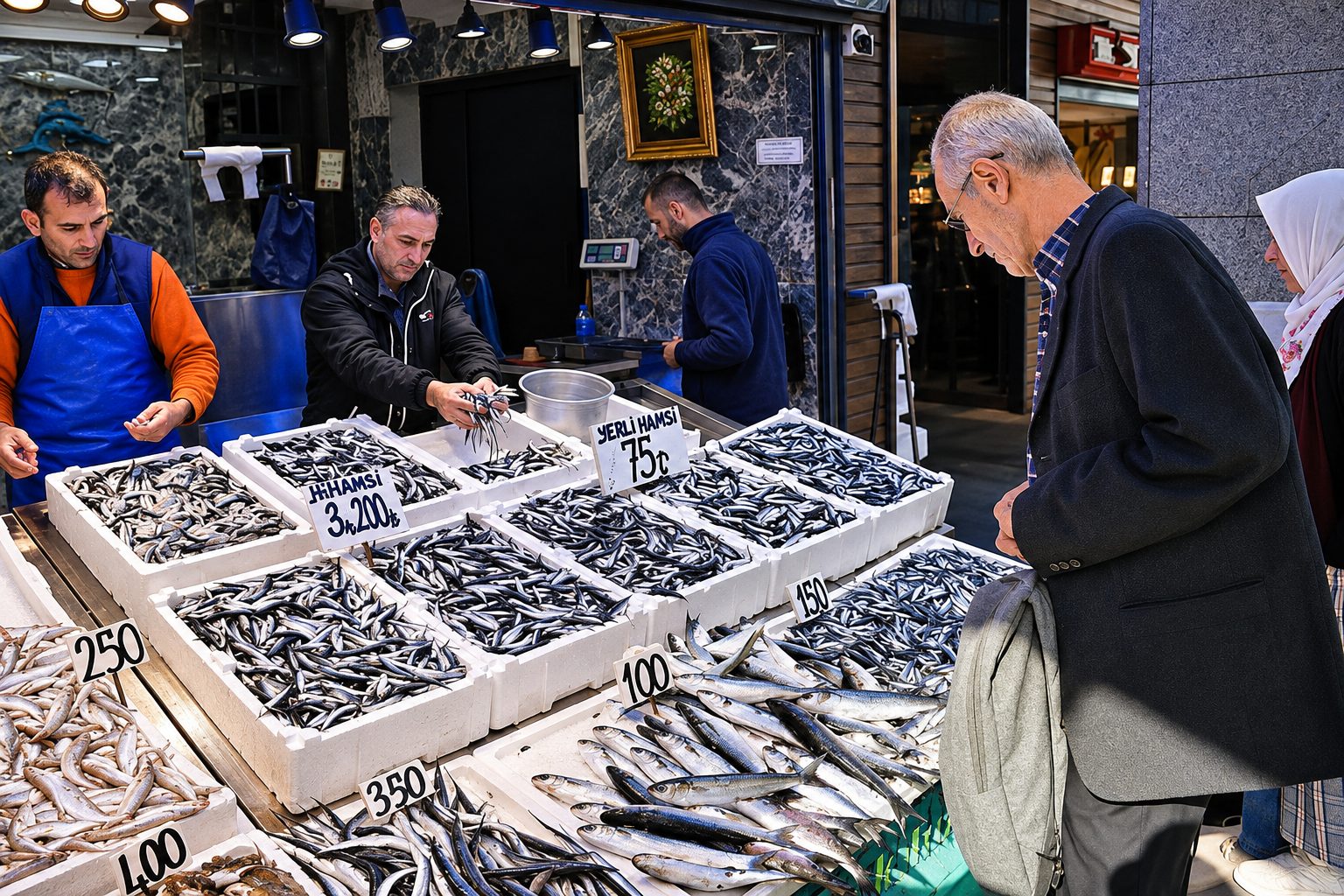
There is hamsi tava, arranged in a circular pattern and fried in cornmeal until crisp. There is hamsili pilav, in which anchovies enclose a filling of seasoned rice. There are oven-baked preparations, steamed versions and even breads made with anchovies.
To understand the place of hamsi in Black Sea culture, one must appreciate how thoroughly a single ingredient can shape a regional cuisine.
November is also an excellent time to look for lüfer, the bluefish long prized in Istanbul, as well as palamut, the Atlantic bonito. At a good fish counter, the choice should ultimately be dictated by the day’s catch rather than a predetermined menu.
The Aegean olive harvest
From Ayvalık and the Gulf of Edremit to the olive-growing districts of İzmir, Aydın and Muğla, autumn marks one of the most important periods of the agricultural year.
November falls within the olive harvest and pressing season. Groves become workplaces again, and freshly harvested fruit makes its way to local mills.
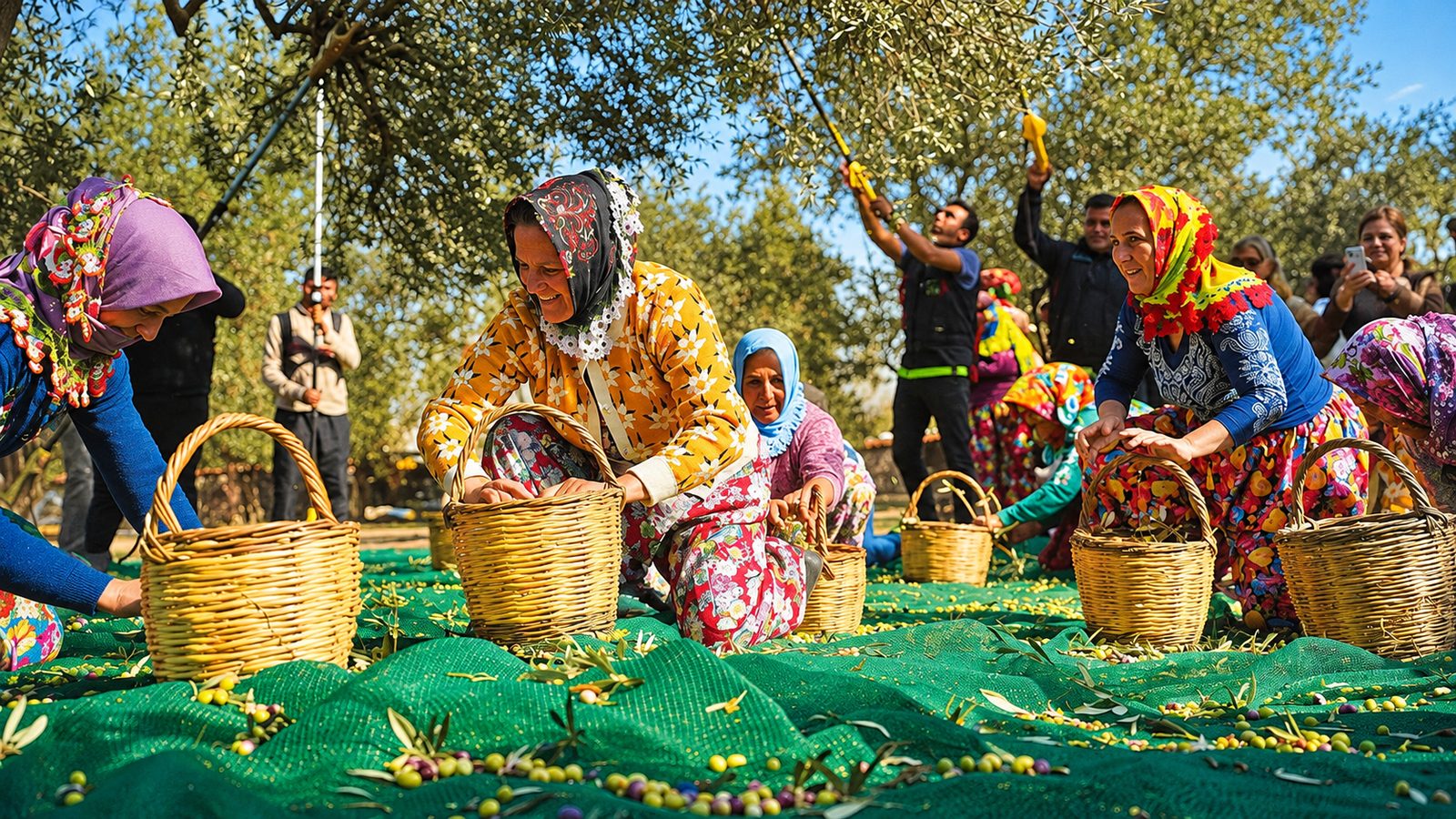
Fresh olive oil can be strikingly different from the oil most people are accustomed to buying. Depending on the variety and maturity of the olives, it can be grassy, bitter, fragrant and distinctly peppery.
It needs very little accompaniment. A piece of good bread, perhaps a few locally cured olives, is enough.
Olive oil is also central to an entire category of Turkish cooking: zeytinyağlılar. As autumn turns to winter, summer vegetables gradually give way to dishes of leeks, celeriac and other seasonal produce, cooked gently in olive oil and often served at room temperature.
For anyone travelling through the northern Aegean in November, visiting an olive oil producer can be as rewarding as visiting a restaurant.
Chestnuts, from the street to the table
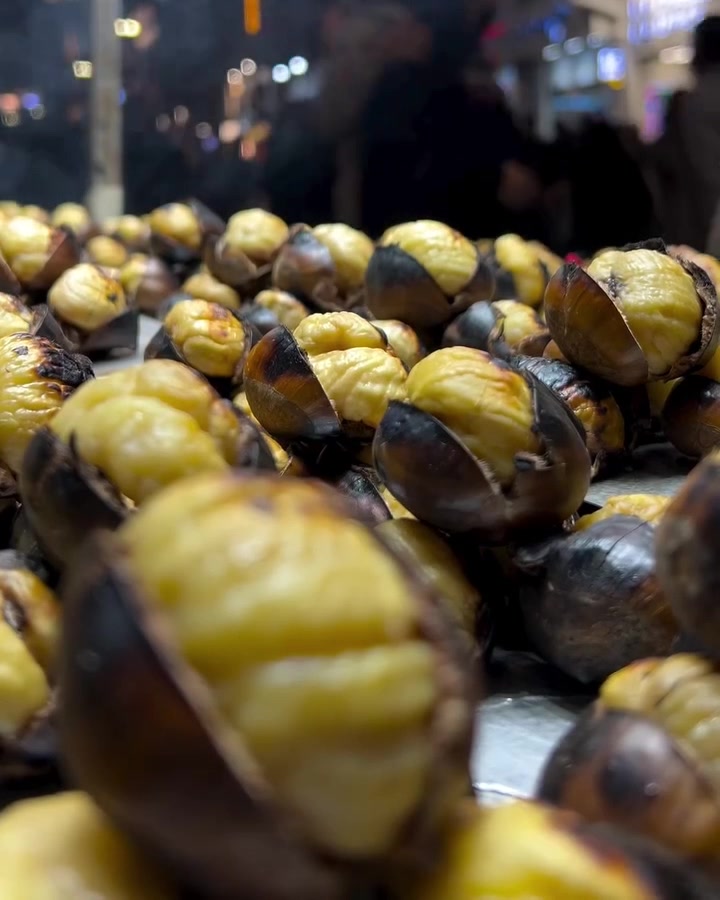
In Istanbul, roasted chestnuts are among the most recognisable signs of approaching winter.
Sold from street carts and served in small paper bags, they are one of the city’s simplest seasonal pleasures. Walking through Beyoğlu or along the Bosphorus with a handful of warm chestnuts remains an entirely ordinary way of experiencing Istanbul in the colder months.
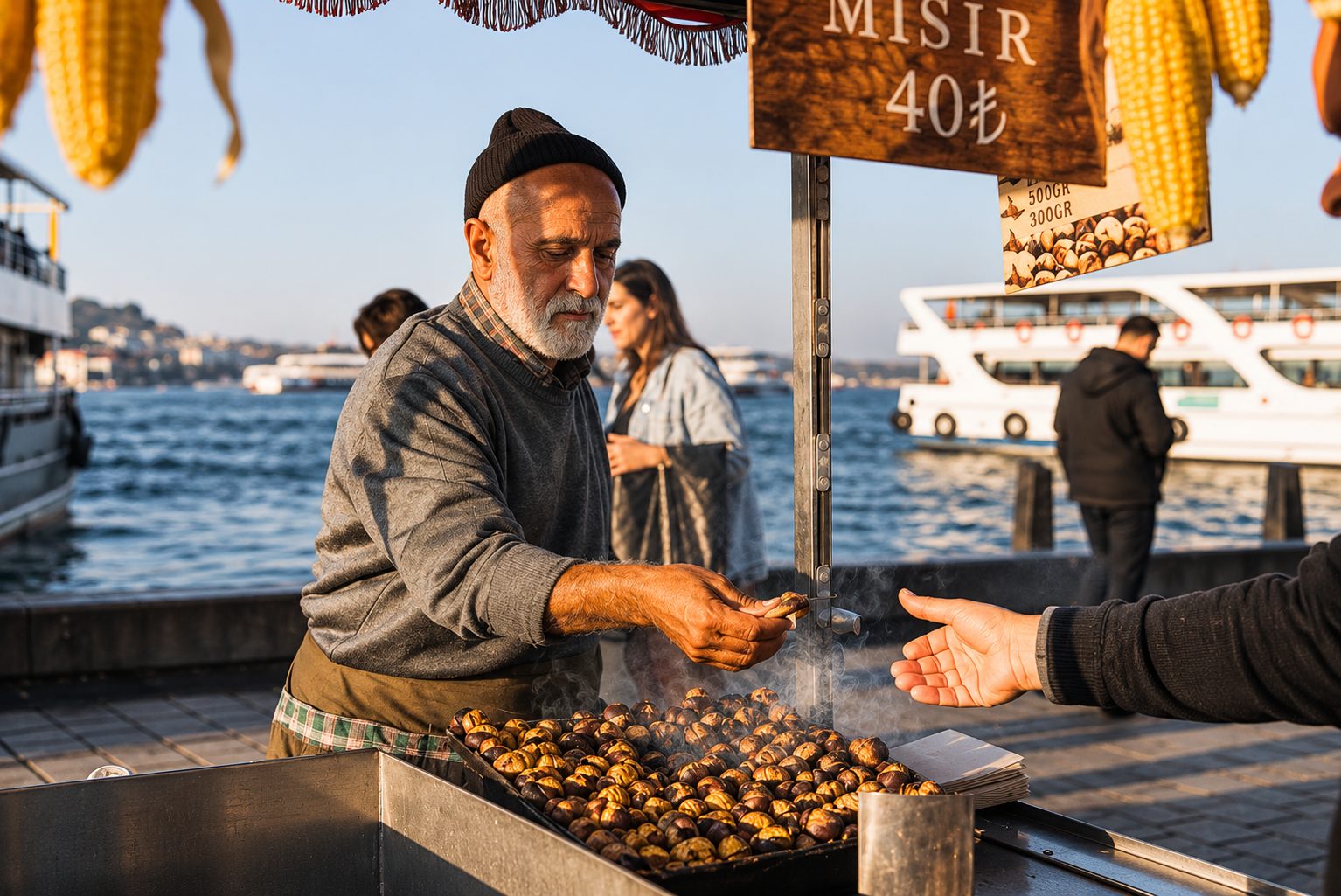
Yet the chestnut’s place in Turkish cuisine extends considerably beyond street food.
In Bursa, it is transformed into kestane şekeri, candied chestnuts that have become one of the city’s defining products. In Aydın, chestnut cultivation forms an important part of the local agricultural economy. In traditional kitchens, chestnuts also find their way into rice dishes, stuffings and desserts.
The same ingredient connects agricultural communities, urban street vendors and the country’s confectionery traditions.
The return of boza
Boza occupies an unusual place in Istanbul’s culinary identity.
A thick, fermented grain drink with a mildly sweet and tangy flavour, it is traditionally served with ground cinnamon and roasted chickpeas.
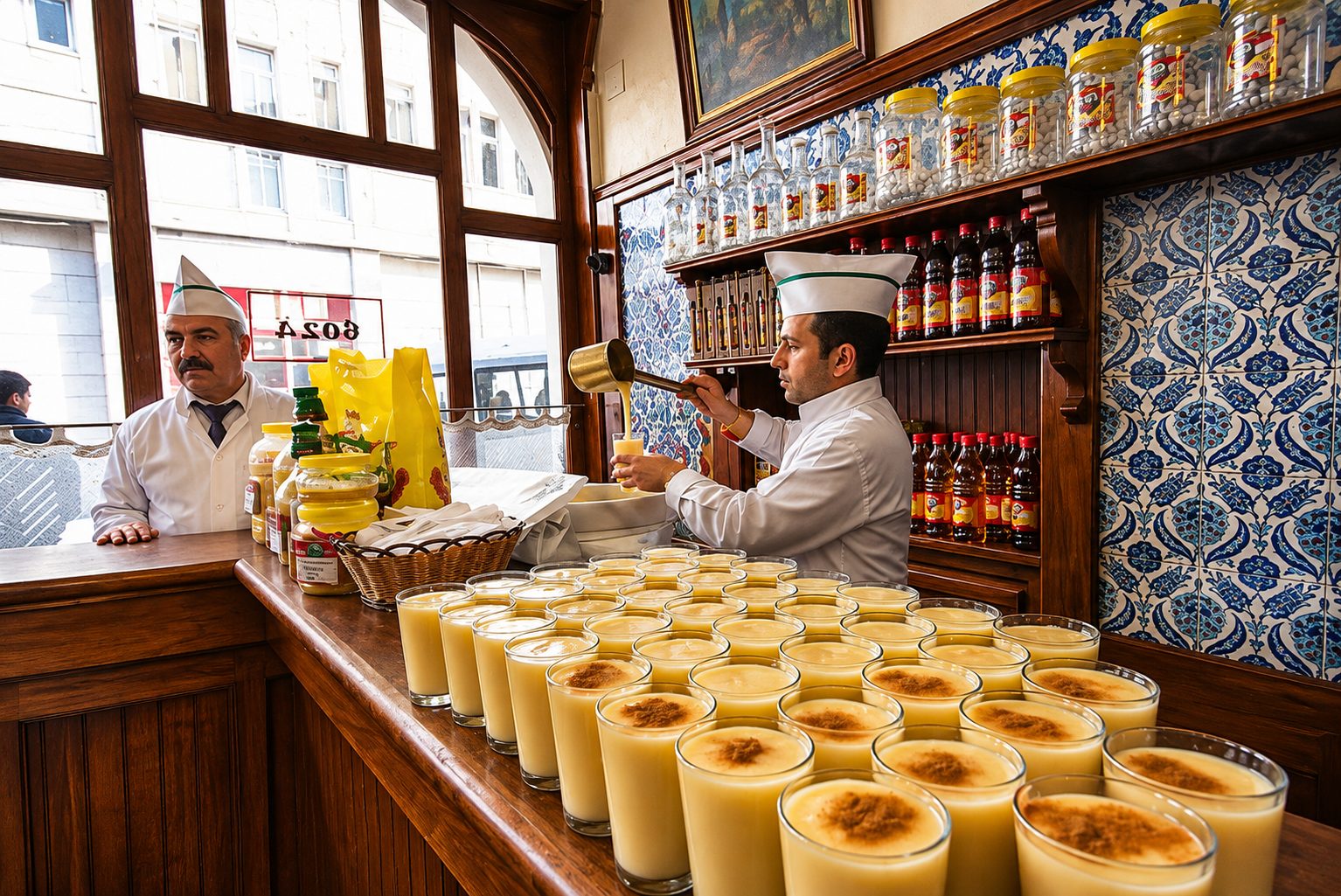
Although served cold, boza is closely associated with winter. Its appeal belongs as much to the season and the ritual of drinking it as to the drink itself.
In the historic neighbourhood of Vefa, the celebrated boza shop preserves one of Istanbul’s best-known culinary traditions.
Boza has also found its way into the city’s literature. In Orhan Pamuk’s A Strangeness in My Mind, the life of an Istanbul street vendor becomes a means of examining the transformation of the city itself.
Few drinks offer such a direct connection between food, literature and urban history.
The quiet excellence of quince
Quince is a fruit that asks for patience.
Firm, fragrant and often astringent when raw, it reveals a different character when cooked slowly. In Turkish kitchens, this transformation is perhaps best expressed through ayva tatlısı.
The fruit is gently poached in syrup until tender, sometimes taking on a deep reddish colour, and traditionally served with kaymak. Walnuts can provide an additional contrast in texture.
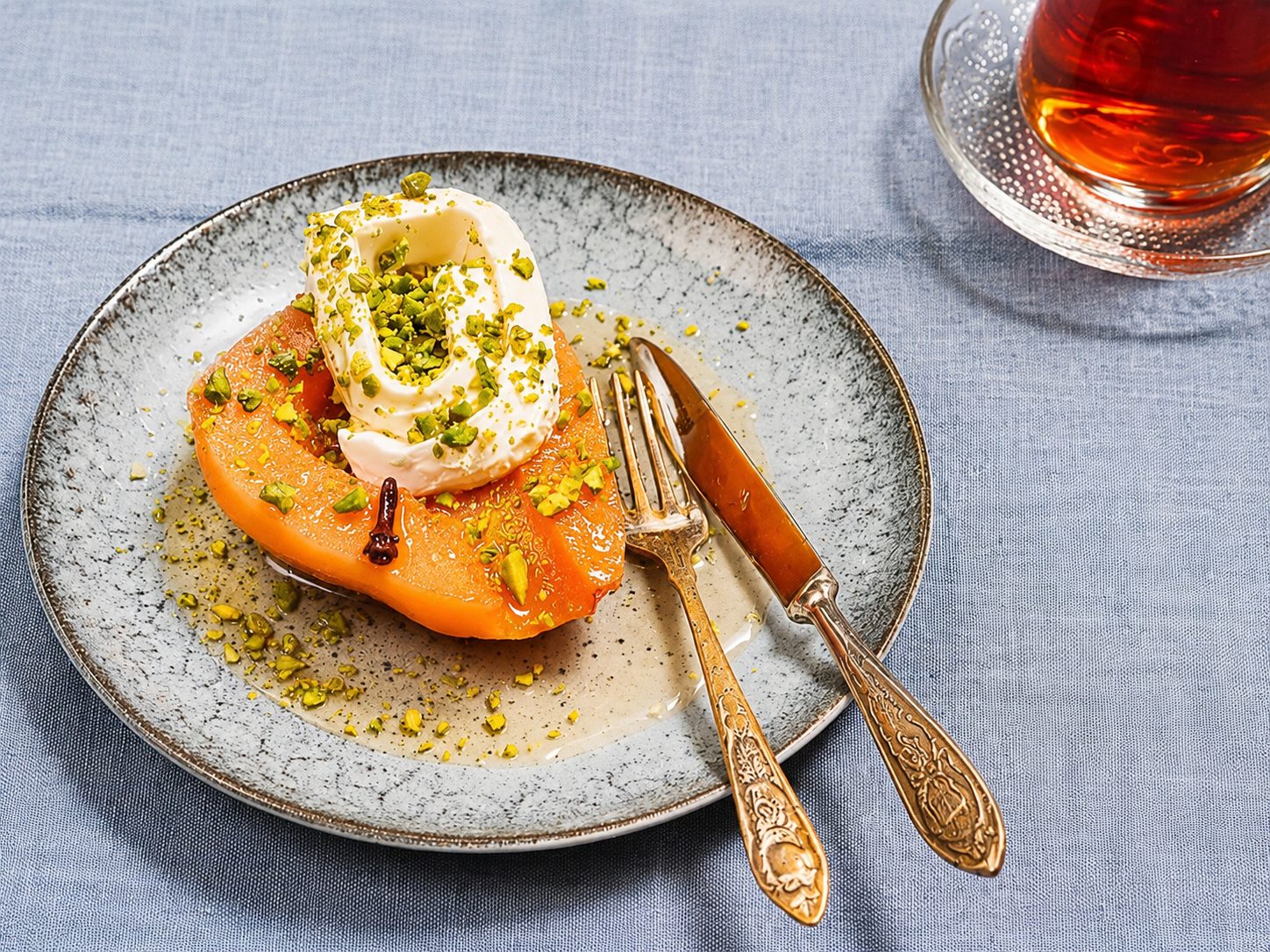
It is a dessert built around a small number of ingredients, yet its success depends on the quality of the fruit and the care taken in its preparation.
Quince has a savoury life, too. Its acidity and fragrance lend themselves to meat dishes and stews, reflecting a longstanding place for fruit in Anatolian and Ottoman cooking.
November is also a good month for pomegranates, persimmons and pears. Together, they bring an entirely different palette to the table from the soft fruits of summer.
The art of preparing for winter
The November table is shaped partly by work carried out in the preceding months.
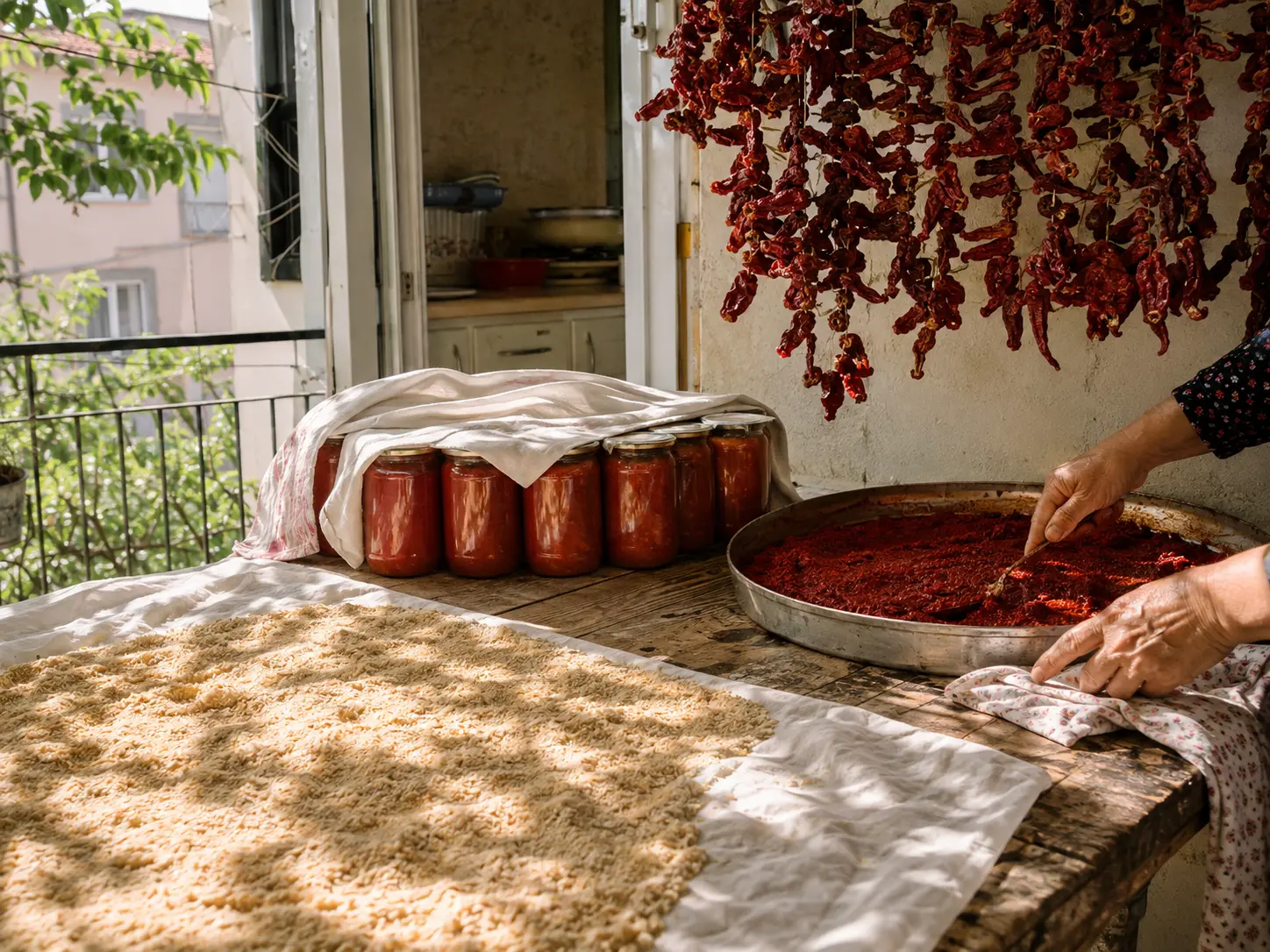
Peppers and aubergines have been dried, tomatoes have been turned into paste, tarhana has been prepared, and jars of pickled vegetables have been set aside.
These traditions developed from the practical need to preserve food beyond its natural growing season. They remain an important part of Turkish domestic cooking, even in an age when supermarkets offer much of the same produce throughout the year.
A bowl of tarhana soup, a plate of dried stuffed aubergines or a few pieces of homemade turşu are reminders that eating seasonally does not necessarily mean eating only what has just been harvested.
It also means knowing how to make one season last into the next.
Citrus and the Mediterranean coast
While much of the country turns towards winter, the southern coast enters one of its most productive fruit seasons.
Across the citrus-growing areas of Antalya, Mersin, Adana and Hatay, mandarins, lemons and early varieties of orange become increasingly abundant.
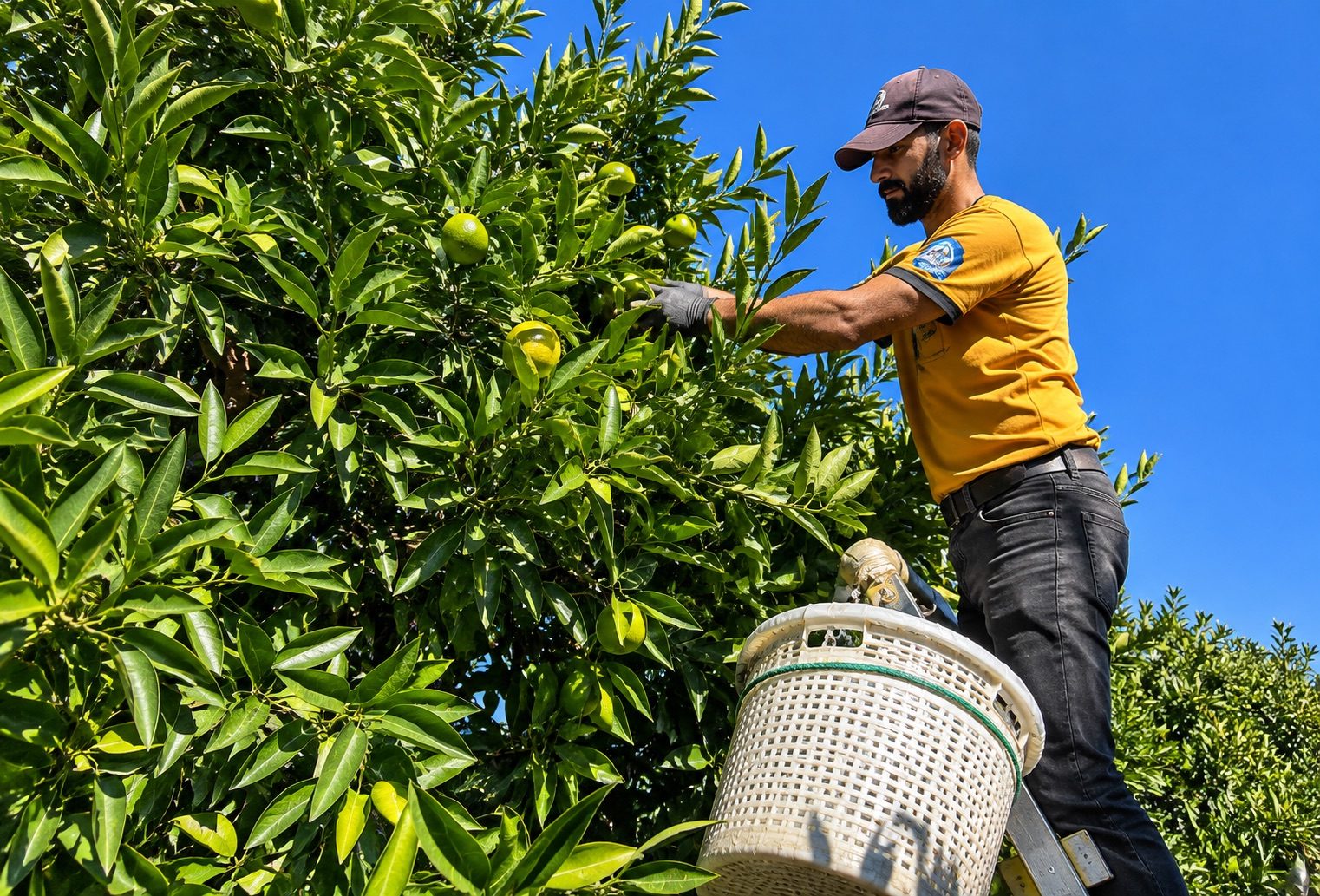
In local markets, mandarins are often at their most appealing when sold with their leaves still attached. Their fragrance, colour and acidity stand in marked contrast to the heavier dishes associated with the colder regions of Anatolia.
This is one of the peculiar pleasures of Türkiye’s geography: the possibility of experiencing the beginning of winter and the abundance of a Mediterranean harvest within the same month.
A country worth eating through the seasons
It is tempting to think of Turkish cuisine as a collection of familiar dishes. Kebabs, mantı, baklava, börek.
But a more complete understanding of the country’s food begins with its agricultural calendar, its regional differences and the habits of the people who cook it every day.
What arrives at the fish market matters. So does the timing of the olive harvest, the ripeness of a quince and the first cold evening that makes a glass of boza feel appropriate again.
November offers a particularly good introduction to this way of eating.
Visit a neighbourhood market. Ask a fishmonger what is good that day. Buy olive oil from someone who knows where it was pressed. Order the dessert that belongs to the season rather than the one you already know.
There are many ways to discover Türkiye. Following its seasons is one of the most rewarding.
Türkiye in Season is a monthly BeingTurkish series exploring the country’s food, landscapes and living traditions through the changing seasons.