Yalı Çapkını. Pembe İnci. Poyraz. Kingfisher, Pink Pearl, the north-easterly wind. They sound like names you might find painted on fishing boats. In a 2023 agriculture ministry announcement, they belonged to newly registered crop varieties. Even a seed catalogue has room for a little imagination. 1
Behind the names is a slower story. The ministry’s 2023 annual report recorded 64 domestically developed varieties: 42 field crops and 22 horticultural crops. That is the year the figure belongs to. It offers a useful starting point for looking at work that rarely reaches the dinner table as a subject of conversation, even when its results do. 2
We have plenty to say about the bread, the beans and who made the better pilav. The question of what was planted usually gets less attention. Yet a recipe depends on someone being able to grow its ingredients again next season.
A new variety takes its time
The ministry put the development of a new variety at an average of ten to fifteen years. Registration is one visible moment in a much longer process. Its research network, TAGEM, develops varieties that can then be transferred to private seed companies to reach farmers. The announcement is therefore a milestone, rather than proof that every grower already has the seed in hand. 1
The 42 field-crop registrations ranged widely: cereals including bread wheat and durum wheat, oil and industrial crops, forage plants, thyme and a dry bean. Cotton and tobacco were on the list too. The familiar shorthand “64 new seeds” can hide the breadth of the work. These are varieties within crops, with uses extending beyond the kitchen. 1
For a farmer, the useful questions are specific. How does a variety perform here? When does it mature? What happens in a difficult season? Who will buy the harvest? A registration total cannot answer all of them. The number is worth reporting; the work after the number is worth watching.
Yerli and ata tohumu describe different things
Yerli means domestic or local. In a breeding programme, it can describe a newly developed Turkish variety. Ata tohumu—literally ancestral seed—refers to a different history: local crop populations associated with the knowledge and cultivation practices of farmers over time. A new domestic variety should not automatically be introduced as an heirloom. 3
The 2023 report separately recorded 37 local varieties registered under the Ata Tohumu project. They were a distinct conservation effort, not another way of describing the 64 newly developed varieties. Nor does that historical figure represent a current inventory of every local seed grown in Türkiye. 2
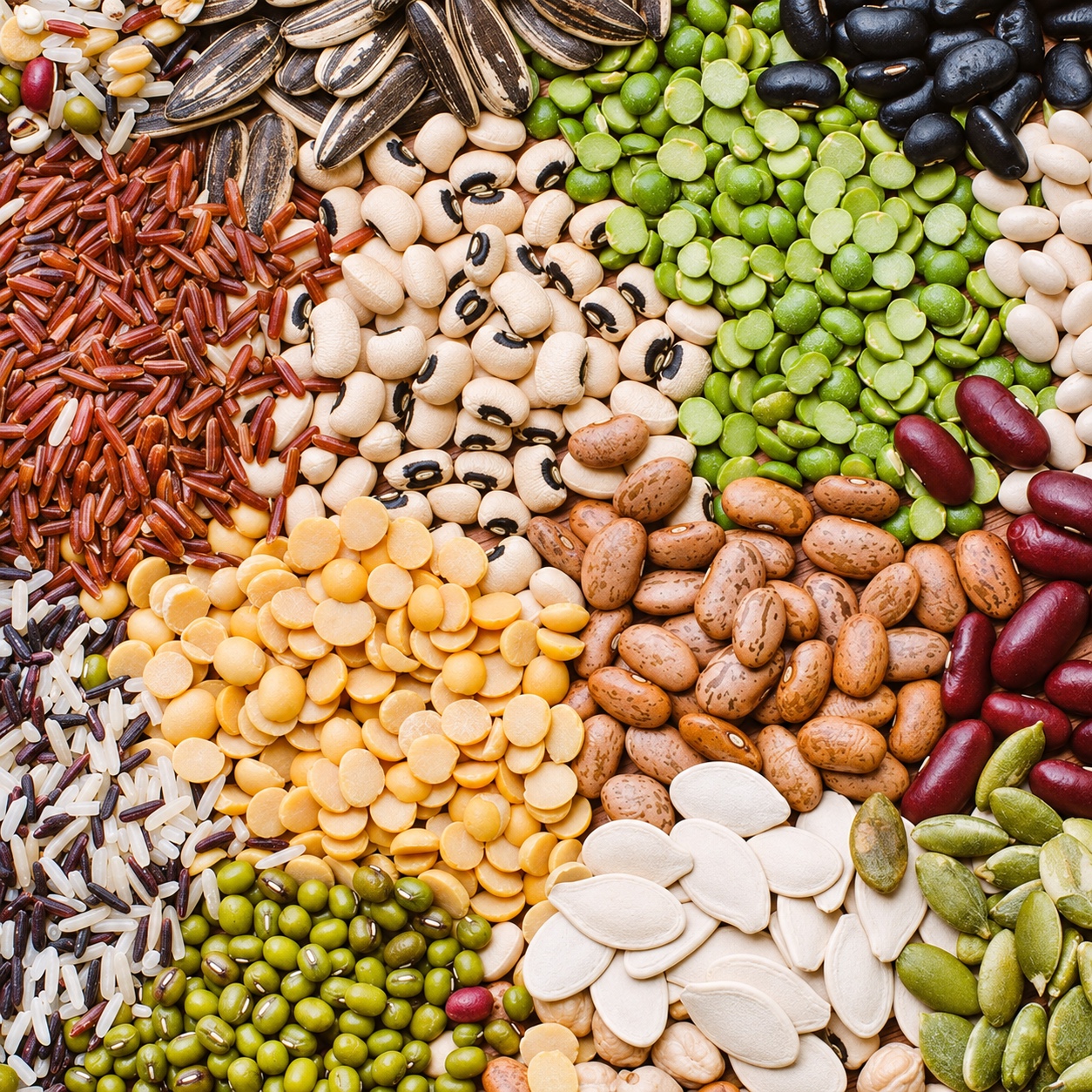
There is considerable traffic between these two worlds. Local varieties can provide genetic material for breeding new ones. FAO also warns that replacing local crops with a narrower selection of modern varieties can erode diversity. The sensible ambition is to make room for improvement while keeping a wide range of plants available. Age alone is no guarantee of performance; novelty alone is no reason to discard what farmers already grow. 3, 4
The other kind of seed saving
At the Aegean Agricultural Research Institute, conservation has a very particular temperature. Its National Seed Gene Bank keeps long-term collections at around minus 18 to minus 20 degrees Celsius. The holdings include local varieties, improved varieties, breeding lines and wild relatives of cultivated crops. Safety copies are exchanged with the Türkiye Seed Gene Bank in Ankara. 5
A bank is only part of the arrangement. The institute also describes conservation on farms and in natural habitats, alongside field collections and other techniques for material unsuited to ordinary seed storage. FAO makes the same broader point: growing diversity and storing a backup serve complementary purposes. A packet in cold storage and a crop in a farmer’s field do different jobs. 4, 5
That distinction matters to anyone interested in food culture. Keeping a plant available for research preserves possibilities. Keeping it in cultivation also keeps people working with it. A local crop has a better chance of remaining familiar when there is someone to grow it, someone to buy it and a kitchen that knows what to do with it.
Water gets a say
The original seed story sat within a broader change in agricultural planning. In 2023, technical committees were established across all 81 provinces, bringing together farmers, public bodies, universities and other representatives to prepare three-year production plans. Water availability was central to the approach. 2
This is no longer a proposal waiting for the 2024–25 season. An August 2024 ministry announcement set out crop-production planning beginning that season, alongside support for the 2025–27 production years. It included additional support tied to planned production, suitable planting in water-constrained basins and the use of nationally developed seed. Those were the policy’s stated incentives, not evidence that every intended benefit had already arrived. 6
A more resilient variety is valuable, but it still needs a workable place in a farm’s year. Seed, water, costs and a market for the harvest have to meet. That is where an impressive research announcement becomes something a grower can use.
The Turkish table gives us plenty of reasons to care about the outcome. A bowl of kuru fasulye does not arrive with a breeding history attached. Somewhere before the soaking, the simmering and the argument about how much tomato to add, someone chose a bean to plant. Next season, they will need a choice again.
Reading & context
- The 2023 field-crop registrations and the time involved in breeding
Ministry of Agriculture and Forestry · 4 May 2023 - The 64-variety figure, the separate 37 local varieties and provincial planning committees refer to the 2023 reporting period
Ministry of Agriculture and Forestry · 2023 annual report - Local varieties, farmer knowledge and their use in breeding
Ministry background document · local varieties, pp. 28–30 - Genetic diversity, crop wild relatives and complementary conservation
FAO · Plant Genetic Resources - How the seed collections are kept, and conservation outside the bank
Aegean Agricultural Research Institute · Biodiversity and Genetic Resources - The planning timetable and the original 2025–27 support announcement
Ministry of Agriculture and Forestry · 29 August 2024